Winter Decor After Christmas: 20 Cozy January Ideas That Still Feel Festive

Christmas is over, the tree is starting to shed, and the house suddenly looks either half finished or completely bare. Taking everything down in one go leaves the rooms feeling cold and empty, but leaving the Christmas decor up for another month isn’t the answer either.
The fix isn’t a shopping trip. It’s an edit. Most of what makes your home feel festive in December is winter decor, not Christmas decor: the evergreen, the warm lights, the candles, the pinecones. The Christmas part is a much smaller layer on top: the red bows, the Santa figures, the “Merry Christmas” signs, the ornaments with reindeer on them. Remove that layer, keep the winter base, and add a few January touches, and your home stays warm and finished all the way through winter.
This guide shows you how, room by room. Every idea uses things you probably already have, and most of them take under an hour.
The Method: Edit, Don’t Start Over
Before you touch a single decoration, work through these three steps. They take about 20 minutes and they decide everything else.
Step 1: Remove the Christmas markers. Walk each room with a laundry basket and take out anything that only reads as Christmas: red and green together, Santa and reindeer figures, nativity pieces, “Merry Christmas” and “Ho Ho Ho” signs, stockings, advent calendars, and any ornament with a Christmas character or message on it. Put them straight into their storage box. This is the step most people skip, and it’s the one that makes the difference between “winter home” and “Christmas, two weeks late.”
Step 2: Keep the winter base. Leave everything that reads as winter rather than Christmas: evergreen garlands and wreaths, white fairy lights, plain candles, pinecones, bare branches, wood, wool, and neutral plaid. If you’re not sure whether something counts, ask one question: would this look right in a photo taken in February? If yes, it stays.
Step 3: Add January touches. Now add the things that make it feel intentional instead of leftover: white and cream instead of red, silver instead of gold, frosted textures, bare branches in a tall vase, and a winter scent (a simmer pot on the stove costs almost nothing and changes the whole house). Three or four of these, spread through the rooms, are enough.
That’s the whole method for winter decor after Christmas. The 20 ideas below apply it room by room.
Start Here: The Tree and the Colour Swap
Take the Tree Down, or Keep It Up, Bare
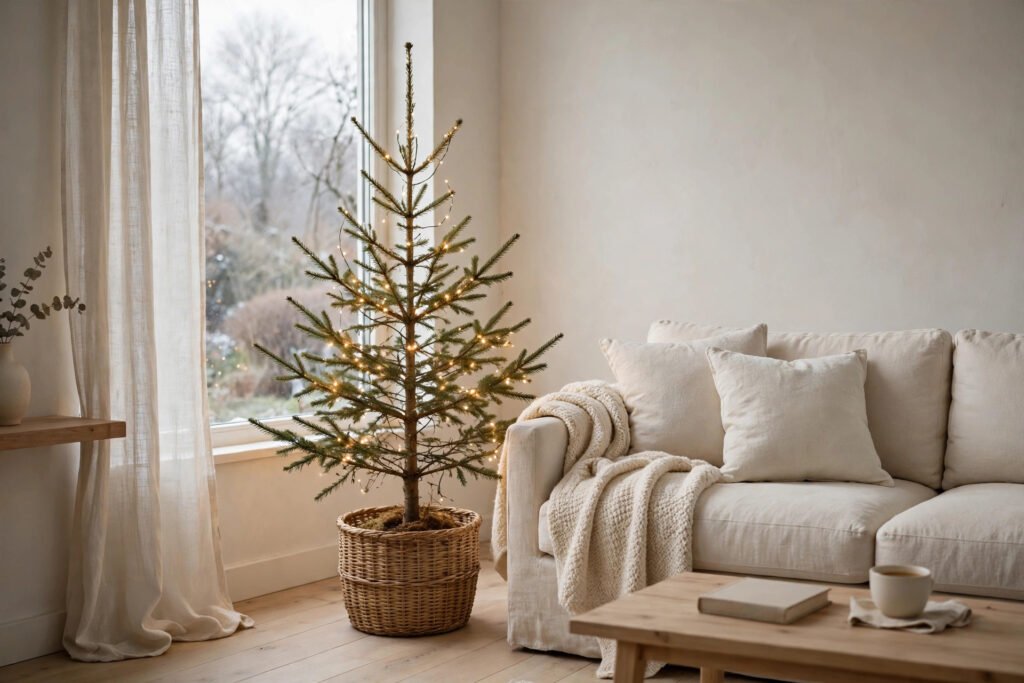
The right choice depends on what kind of tree you have. If your tree is artificial, you can keep it up as a “winter tree”: take off every ornament, the topper, and the tree skirt, and leave the white lights on. A bare, lit evergreen reads as winter, not Christmas, and it looks genuinely lovely in a dark January living room. It’s the one decoration people are always surprised by. If your tree is a real cut tree, take it down. A cut tree dries out fast indoors, and a dry tree is a fire risk: keep it watered in its stand while it’s up, keep it away from fireplaces, heaters, and candles, and never keep it up once the needles fall at a touch or the branches feel brittle. Take it outside for recycling or disposal rather than leaving it in the house.
Whichever kind of tree you have, replace it with something tall and simple in the same spot: bare branches in a tall floor vase, or a large potted evergreen. The room keeps its height and structure, and you get the floor space back. Decide this first, because the tree sets the tone for the rest of the room. If you want the full guide to getting the tree right in the first place, how to decorate a Christmas tree like a designer covers the structure that makes either version work.
Swap Red for White and Silver

This is the fastest single change in the whole guide, and it takes about ten minutes. Red is the colour that says “Christmas” more than any other. Take the red throw pillows, the red candles, the red ribbon on the wreath, and the red table runner, and swap them for white, cream, and silver versions of the same things. You don’t need to buy anything new. Move the cream pillows from the bedroom, use the white candles from the kitchen drawer, and tie the wreath with a plain cream ribbon instead.
What you’re left with is the same warmth, minus the holiday label. Silver works the same way gold did in December, but it reads as frost and winter light instead of Christmas glamour. If you only do one thing from this list, do this one.
Keep the Evergreen, Lose the Ornaments

Your garlands don’t need to come down. They need to be edited. Take the baubles, the red berries, and the Christmas picks out of the mantel garland and the stair garland, and leave the greenery itself in place. Then add back a few touches that read as winter only: pinecones tucked into the garland, a few sprigs of white berries, or a length of plain cream ribbon woven through it.
The same rule works on wreaths. An evergreen wreath with the red bow removed and a few pinecones added is a January wreath. How long it lasts depends on the greenery, where it hangs, the weather, and how you care for it. A fresh evergreen wreath typically lasts a few weeks indoors, sometimes longer outside in cold weather, and misting it lightly every few days helps. A faux wreath needs no care at all and lasts all winter. A year round wreath base, one base with the seasonal pieces swapped on it, means you never start from scratch again.
Living Room
Restyle the Mantel for Winter

The mantel is where Christmas concentrates: stockings, garland, signs, candles, and a dozen small things. Take it all off, wipe it down, and rebuild it with three layers. Bottom layer: the evergreen garland, kept from December. Middle layer: white pillar candles in different heights (three is enough; odd numbers look better than even). Top layer: something tall and simple at each end: bare branches in a vase on one side, a stack of two books with a pinecone on top on the other.
Stand back and check it from the doorway. A winter mantel should look calm and a little empty compared with a Christmas one. If it still looks busy, take one thing away. That’s usually the right call. Keep the candles clear of the garland and never leave them burning unattended. Battery candles work just as well if you have pets or small children.
Layer Cozy Textures

January is the coldest, darkest month, and the living room should feel like the warmest place in the house. This is where texture does the work that colour did in December. Put a chunky knit throw over the arm of the sofa, add a faux fur or wool cushion in cream or soft grey, and lay a folded wool blanket at the foot of the sofa where someone can actually reach it.
The rule is simple: two textures per seat, not five. A knit throw plus a wool cushion is cozy; a knit throw plus a faux fur cushion plus a velvet cushion plus a plaid blanket is clutter. And keep the colours in the white, cream, grey, and wood family. A red plaid throw will pull the whole room back to Christmas.
Keep the White Lights

Don’t pack the fairy lights away with the Christmas boxes. White lights are winter lights. They’re what makes a January evening feel warm instead of dark. Keep a string along the mantel, put a short string in a large glass jar on the side table, or leave the lights in the front window. Use warm white lights (around 2700K). Their soft yellow glow reads as candlelight, not the cold blue glow of a shop window. Battery operated lights on a timer (on at 4 pm, off at 10 pm) cost almost nothing to run and you never have to remember them.
One caution: take the coloured lights down. Red and green lights are Christmas lights, full stop. White or warm white only, from now until spring.
A Winter Coffee Table Centerpiece
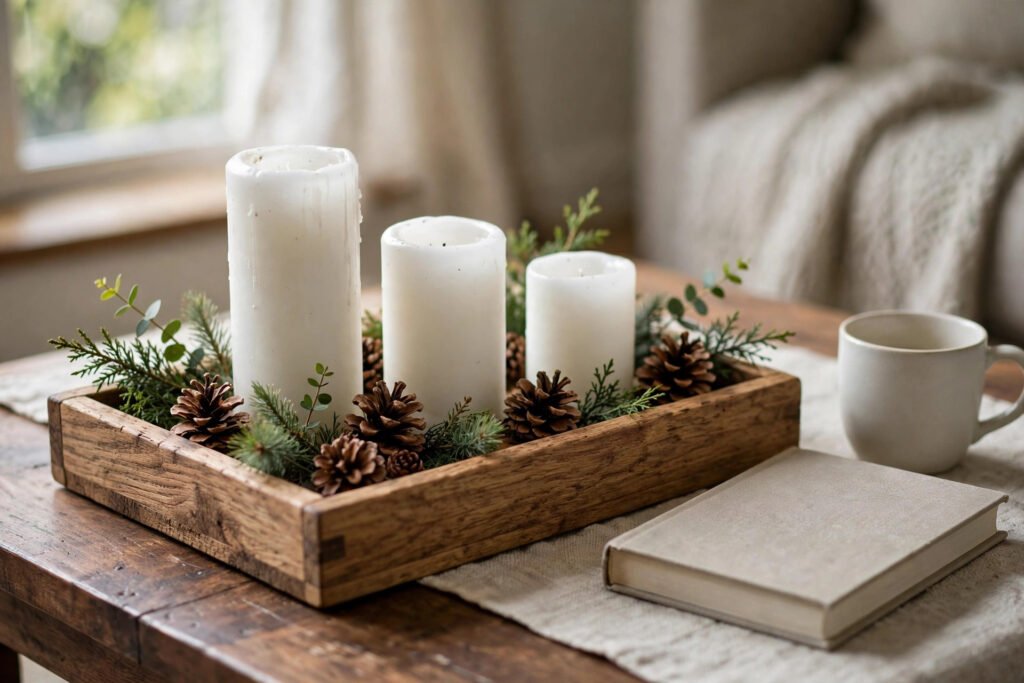
Clear the coffee table completely, then build one low arrangement in the middle: a wood tray, three white candles in different heights, a small handful of pinecones, and a few sprigs of evergreen. That’s it. It should take up about a third of the table and leave room for cups and books.
This is the piece guests actually notice, because it’s at eye level when they sit down. Change the evergreen sprigs every week or so, since they dry out faster indoors than the garland does, and the arrangement stays fresh all month.
Entryway and Porch
A Winter Entryway That Still Welcomes

The entryway is the first thing you see when you come home, and in January it usually looks bare the moment the Christmas wreath and the “Merry Christmas” doormat come down. Fix it in three moves. First, swap the wreath: take the red bow and Christmas picks off your evergreen wreath, add white berries and pinecones, and hang it back up, or use the reusable wreath base from our front door wreath guide. Second, put a lantern with a white pillar candle beside the door; it reads as winter and it lights the step on dark evenings. Third, add a folded wool throw over the entryway bench and a small basket for hats and gloves, so the space looks used and warm instead of empty.
If your entryway needs a fuller refresh on a budget, our 25 entryway decor ideas on a budget has plenty that work just as well in January as they do the rest of the year.
The Porch, Minus the Christmas
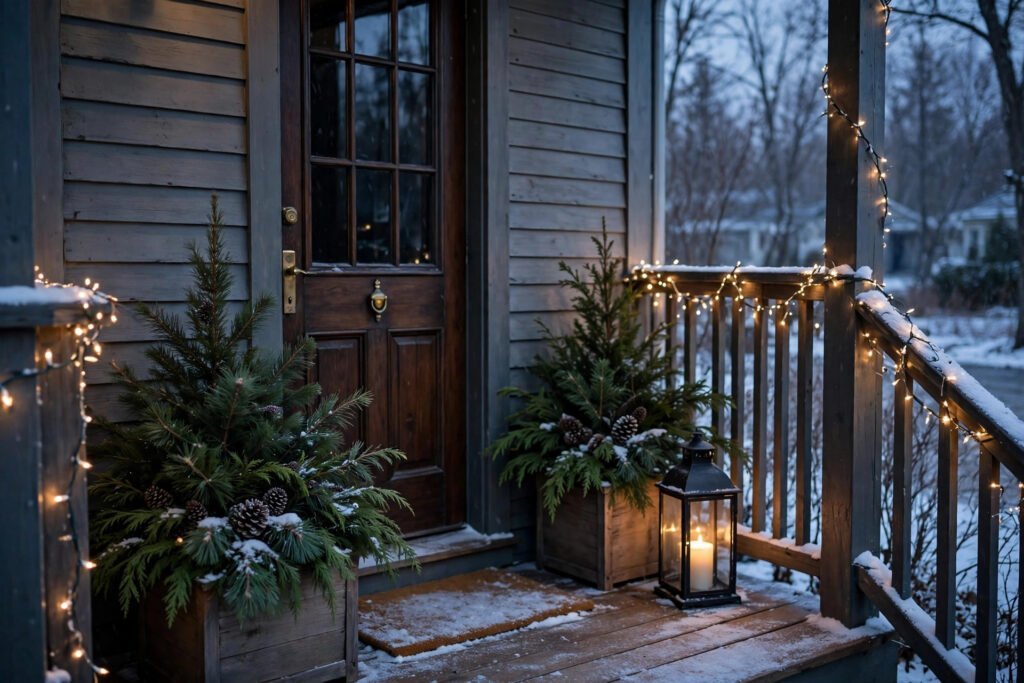
The porch follows the same edit as the inside. Take down the Santa, the reindeer, and anything that lights up in red or green. Keep the lanterns, the evergreen planters, and the white lights. They are winter porch decor, and they look better in January than they did in December, because there’s nothing competing with them.
If your planters are looking tired, refresh them rather than emptying them: push fresh evergreen branches into the soil, add pinecones, and tuck in a few white berries. A planter with greenery and white lights beside the front door is the whole of January curb appeal. For the full porch treatment, our 15 Christmas front porch decor ideas shows the structure, the planters, the lanterns, the layering, and every bit of it works once the Christmas pieces are removed.
A Winter Wreath for the Front Door

If your Christmas wreath is past saving, January is the right time to make the swap properly. A winter wreath is simpler than a Christmas one: an evergreen base, pinecones, white berries, and a plain cream or burlap bow. No red, no gold, no ornaments. How long it lasts depends on the greenery, where it hangs, the weather, and how you care for it. A fresh evergreen wreath typically lasts a few weeks, longer in cold weather out of direct sun, and misting it lightly every few days helps. A faux wreath lasts all winter with no care at all.
The budget version costs almost nothing: a grapevine wreath base from the dollar store, evergreen cuttings from the garden, pinecones collected on a walk, and a ribbon you already own. Our easy DIY dollar tree Christmas wreath shows the same build. Just leave the Christmas picks out and use white berries instead of red ones.
Dining Room and Kitchen
A Winter Tablescape
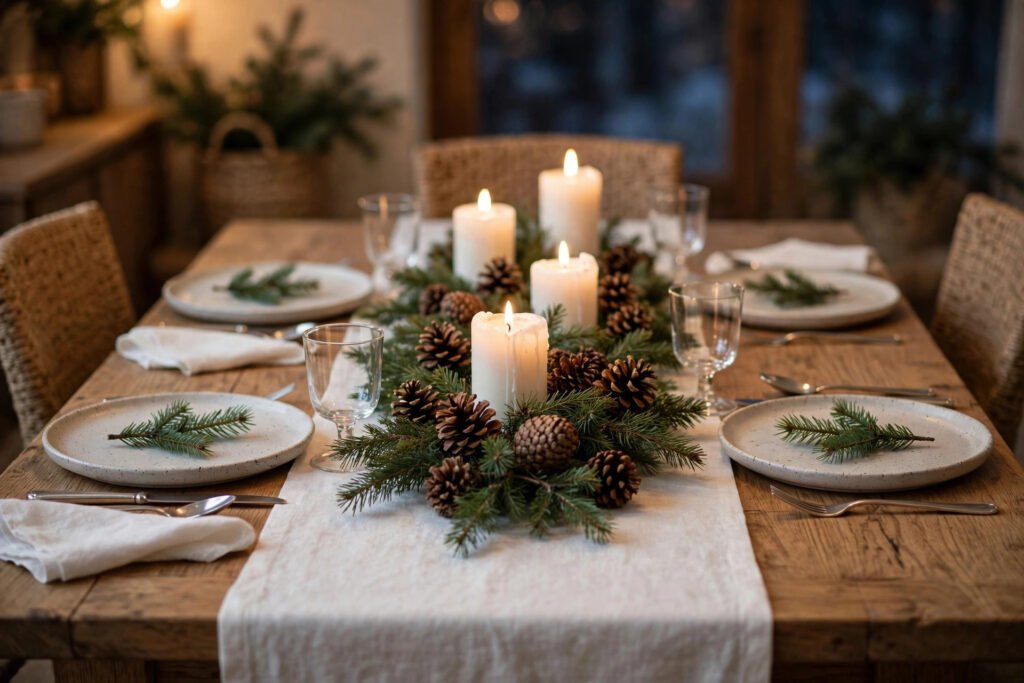
The dining table doesn’t need to go bare in January. It needs a quieter version of December. Take off the red table runner, the gold chargers, and the Christmas crackers. Put down a plain white or cream runner (or a length of unbleached linen), then build a low centerpiece the length of the table: an evergreen garland or a row of small white candles, with pinecones scattered between them. Keep it low, under 12 inches, so people can see each other across the table.
If you host in January, this is the tablescape that works for a winter dinner, a birthday, or a quiet Sunday lunch, because nothing about it says a specific holiday. Add a small sprig of evergreen on each plate and it looks considered without any extra effort.
A Winter Simmer Pot on the Stove

Scent is the fastest way to make a house feel like winter instead of “after Christmas,” and a simmer pot costs almost nothing. Fill a small pot with water, add orange slices, two cinnamon sticks, a few whole cloves, and a sprig of rosemary, and keep it on the lowest heat. It will scent the kitchen and the rooms next to it for hours; top up the water every hour or so so the pot doesn’t boil dry, and never leave a simmer pot unattended.
It’s the same idea as a Christmas simmer pot with the Christmas spices left out. No cranberries, and no star anise shaped like a snowflake. If you want the full set of recipes, our 12 Christmas simmer pot recipes includes several that work just as well in January once you drop the red fruit and keep the citrus and cinnamon.
Clear the Counters, Keep One Winter Vignette
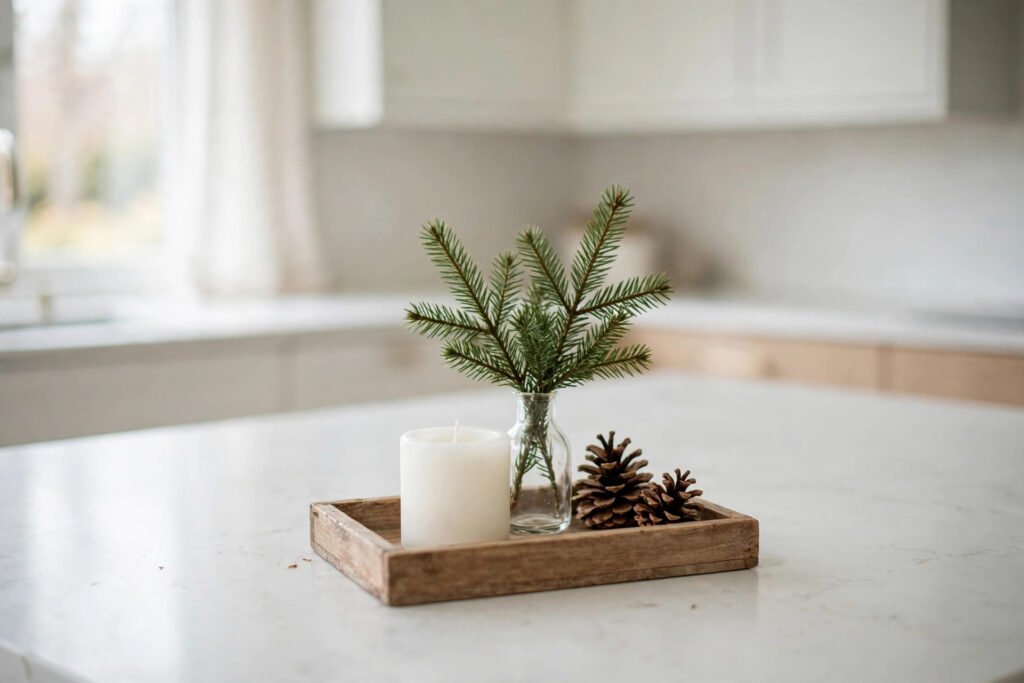
January is the best time to clear the kitchen counters properly, because the Christmas clutter (the cookie tins, the extra mugs, the plates of ornaments waiting to be packed) is already half out the door. Take everything off, wipe the counters down, and put back only what you use daily.
Then add one small winter vignette in a corner that doesn’t get used for cooking: a wooden tray with a white candle, a small vase with a few evergreen sprigs, and two or three pinecones. One vignette, in one spot. The rest of the counter stays clear, and the kitchen feels calm instead of stripped.
Bedroom
A Winter Bedding Swap

The bedroom is where January feels coldest, and the fix is the same texture trick as the living room, applied to the bed. Swap the Christmas red or novelty bedding for white or cream sheets and a plain duvet cover, then layer a chunky knit throw across the foot of the bed and add one wool cushion in soft grey. It doesn’t need to match the living room. It needs to feel warm when you get into it.
Put a small sprig of evergreen in a bud vase on the nightstand, and a white candle beside it. It takes five minutes, and it’s the one you’ll notice every night.
Bare Branches in a Tall Vase

This is the cheapest winter decor there is, and one of the best looking. Cut a few bare branches, from the garden, a park walk, or a florist, and stand them in a tall floor vase in a corner that looks empty now the tree is gone. No leaves, no ornaments, nothing added. The bare, branching shape is winter itself, and it fills vertical space the way the tree did.
If you want a little light, wrap a short string of white fairy lights loosely around the branches. Don’t add baubles or ribbon. The moment you decorate the branches, they become a Christmas tree again.
Around the House
Pinecones, Three Ways
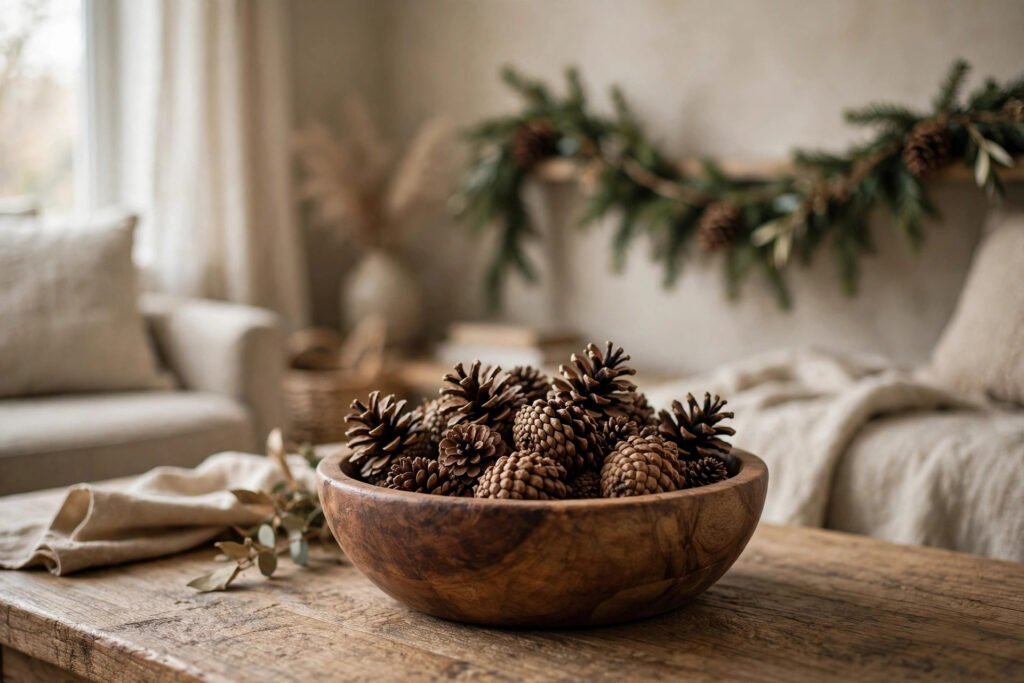
If you collected pinecones in December, January is when they earn their keep. They work in three places, and each one takes five minutes. One: a large bowl or wooden tray of pinecones on the coffee table or the dining table, a filler that looks intentional. Two: pinecones tucked into the mantel garland and the stair garland, where the baubles used to be. Three: pinecones as gift toppers and place card holders. Tie one to a wrapped gift with twine, or tuck a small name card into the scales of a pinecone at each place setting. It costs nothing and it looks considered.
Collect them on a walk if you don’t have any; a bag of pinecones from the garden centre costs a couple of dollars and lasts the whole season. Shake off loose dirt outdoors and let them air dry for a day or two before bringing them inside; if you’d rather skip the cleaning, pinecones from a craft store are already cleaned and ready to use.
Frosted Glass and Mirrors
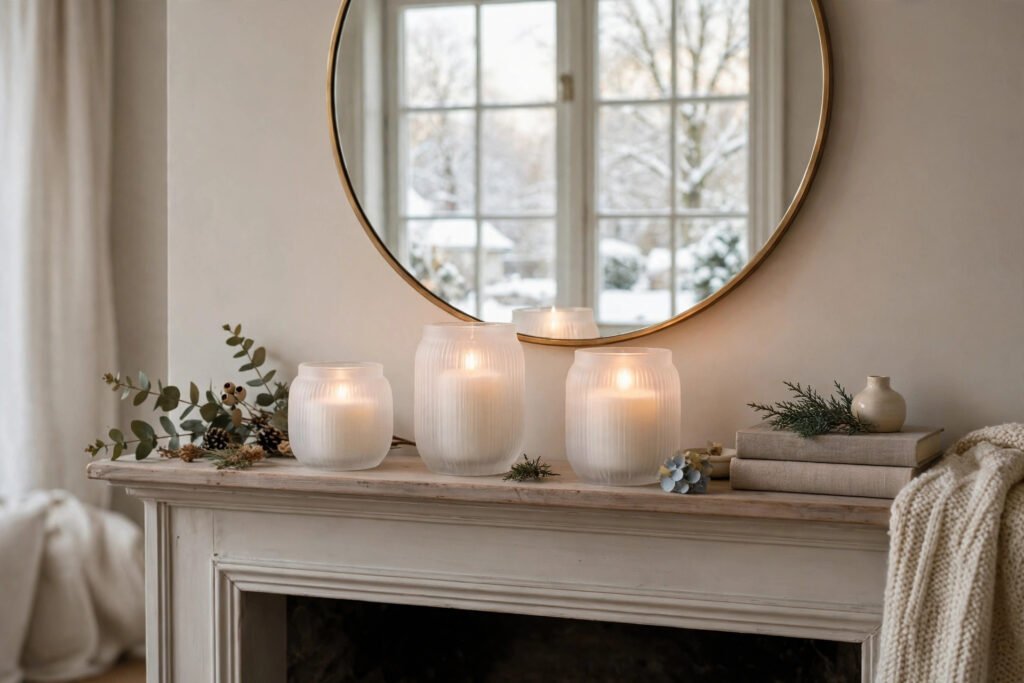
January light is low and grey, and the house needs help bouncing it around. Frosted glass does that work: swap clear candle holders for frosted ones, put a white candle inside a frosted glass hurricane, and the light goes soft and wide instead of sharp. A mirror does the same thing on a bigger scale. Hang one opposite a window and it reflects daylight deeper into the room.
This is also the moment to take down anything that blocks light: heavy Christmas window clings, the extra garland across the window, the wreath hanging inside the glass. Clean the windows while you’re at it. It sounds like housework, not decor, but clean glass in January is worth more than any new decoration.
Winter Window Boxes and Planters

Don’t empty the window boxes when Christmas ends. Replant them for winter. Pull out the red berries and Christmas picks, and push in fresh evergreen branches, a few pinecones, and white berries. The structure is already there; you’re just changing the accents. They should carry you through winter. Swap them for spring bulbs when the weather turns.
The same refresh works for the porch planters in idea 9, same accents, same timing, and then the outside of the house is done for the season.
Store It Right, So Next Year Is Easy
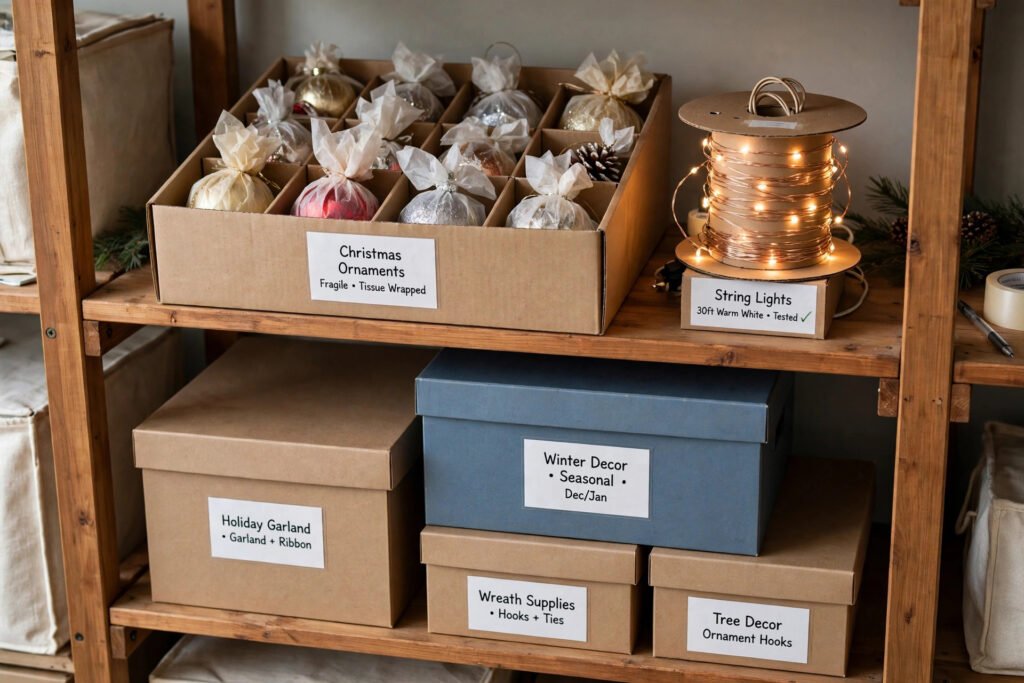
This is the unglamorous idea that saves you an hour next December. As you pack the Christmas decor away, do it properly: ornaments wrapped in tissue and stored in divided boxes, lights wound around a piece of cardboard (not in a tangled ball), and every box labelled on two sides with what’s inside. Keep the winter base, the plain garlands, the white lights, the pinecones, in a separate, clearly labelled box, so next January you can pull it out without opening the Christmas boxes at all.
Write the date on the box. Next year, when you open it, you’ll know exactly how old the garland is and whether it needs replacing. Thirty minutes of careful packing now is the difference between a calm December and a frustrating one.
One Simple Winter DIY: A Pinecone Garland or Paper Snowflakes

Finish with one new thing, made rather than bought. Two options, both cheap and both genuinely winter. Option one: a pinecone garland. Tie pinecones along a length of jute twine with small knots between them, and hang it across the mantel or a doorway. It takes about 30 minutes and costs almost nothing if you collected the pinecones. Option two: paper snowflakes with the kids. Fold white paper, cut, unfold, and hang them in a window with thread. They catch the light, they cost nothing, and they’re the one decoration that is unmistakably January and not Christmas at all.
If you want more DIY ideas on a budget in the same spirit, our 25 DIY home decor ideas on a budget has plenty that work through winter, not just at Christmas.
Frequently Asked Questions
When should I take down my Christmas decorations?
There’s no rule. Traditionally, decorations come down around Twelfth Night (5 or 6 January), but the timing is personal. Take yours down whenever suits you. What matters more than the date is the method: take the Christmas layer off in one go, keep the winter base, and add a few January touches the same day, so the house never sits bare in between.
What winter decor can I leave up after Christmas?
Evergreen garlands and wreaths, white fairy lights, plain candles, pinecones, bare branches, wood, wool, and neutral plaid. Anything that would look right in a photo taken in February counts as winter decor. Anything red and green together, or shaped like Santa, a reindeer, or a snowman with a Christmas hat, is Christmas decor and should come down.
Can I keep my Christmas tree up in January?
Only if it’s artificial. An artificial tree can stay up as a “winter tree”. Take off every ornament, the topper, and the tree skirt, and leave the white lights on. A real cut tree should come down: it dries out fast indoors, and a dry tree is a fire risk. Take it down once the needles fall at a touch or the branches feel brittle, and replace it with bare branches in a tall vase (idea 15).
How do I make my house feel cozy in January without Christmas decor?
Three things: texture, light, and scent. Add chunky knit and wool textures to the sofa and bed, keep the white fairy lights up on a timer, and run a winter simmer pot on the stove. Those three do more than any new decoration, and they cost almost nothing.
What colors work for winter decor after Christmas?
White, cream, silver, soft grey, deep green, and natural wood tones. Avoid red and gold together. That’s the Christmas combination. Silver replaces gold as the metallic, and deep green (from the evergreen itself) replaces red as the colour.
How do I store Christmas decorations so next year is easy?
Wrap ornaments in tissue in divided boxes, wind lights around cardboard, and label every box on two sides. Keep the winter base, plain garlands, white lights, pinecones, in a separate labelled box, so next January you can decorate for winter without opening the Christmas boxes at all.
Final Thoughts
January doesn’t have to look bare. The house you decorated for Christmas is already 80% decorated for winter. The evergreen, the lights, the candles, and the pinecones were never really Christmas things. They were winter things that Christmas borrowed for a month.
Take the Christmas layer off, keep the winter base, and add three or four January touches. Do it in one afternoon, room by room, and the house will feel finished and warm until spring. No shopping trip required.
That is what good winter decor after Christmas looks like: not a bare house, and not Christmas in January, just winter, done properly. If you try one idea from this list, make it the colour swap (idea 2) or the mantel restyle (idea 4). They’re the fastest changes, and they’re the ones you’ll notice every time you walk into the room.