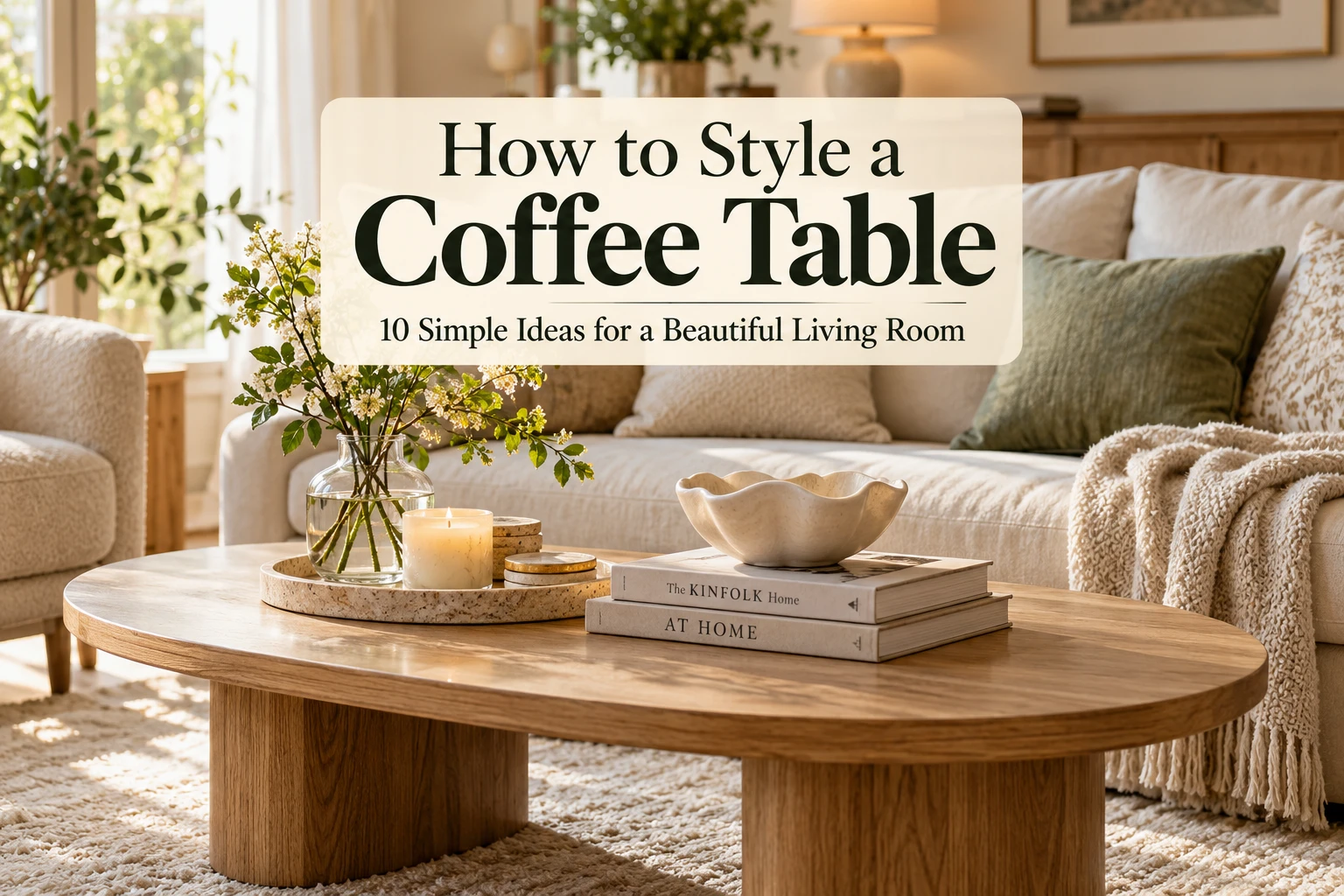
How to Style a Coffee Table: 10 Simple Ideas for a Beautiful Living Room
A coffee table can make your living room feel complete, but styling it is not always as easy as it looks. Too many accessories can create clutter, while a few items placed without a plan may leave the table looking unfinished.
The secret to learning how to style a coffee table is to balance beauty with everyday function. A thoughtfully arranged tray, a stack of favorite books, a little greenery, and a few accessories with different heights can transform an ordinary table into a natural focal point.
You do not need expensive designer decor to achieve the look. Whether you have a round wooden table, a modern glass coffee table, or a small table in a compact apartment, these coffee table styling ideas will help you create a space that feels inviting, personal, and practical.
1. Start With a Simple Coffee Table Styling Formula
The easiest way to style a coffee table is to begin with a few complementary pieces instead of filling the entire surface with decorations.
Start by choosing one anchor item, such as a decorative tray, a substantial bowl, or a stack of books. Add a taller accessory to create visual interest, then introduce a smaller object that reflects your personality.
A simple arrangement can include:
- One anchor piece: A tray or book stack that gives the display structure.
- One taller element: A vase, candleholder, or small plant.
- One decorative accent: A sculptural bowl, handmade object, or meaningful souvenir.
- Open tabletop space: Room for coffee cups, snacks, and everyday essentials.
These elements are flexible. A tiny table may look best with just two accessories, while a larger rectangular table can accommodate several distinct groupings.
Place the largest item first and arrange the smaller pieces around it. Step back to view the table from your sofa, then remove anything that feels unnecessary.
2. Use a Decorative Tray to Keep Accessories Organized
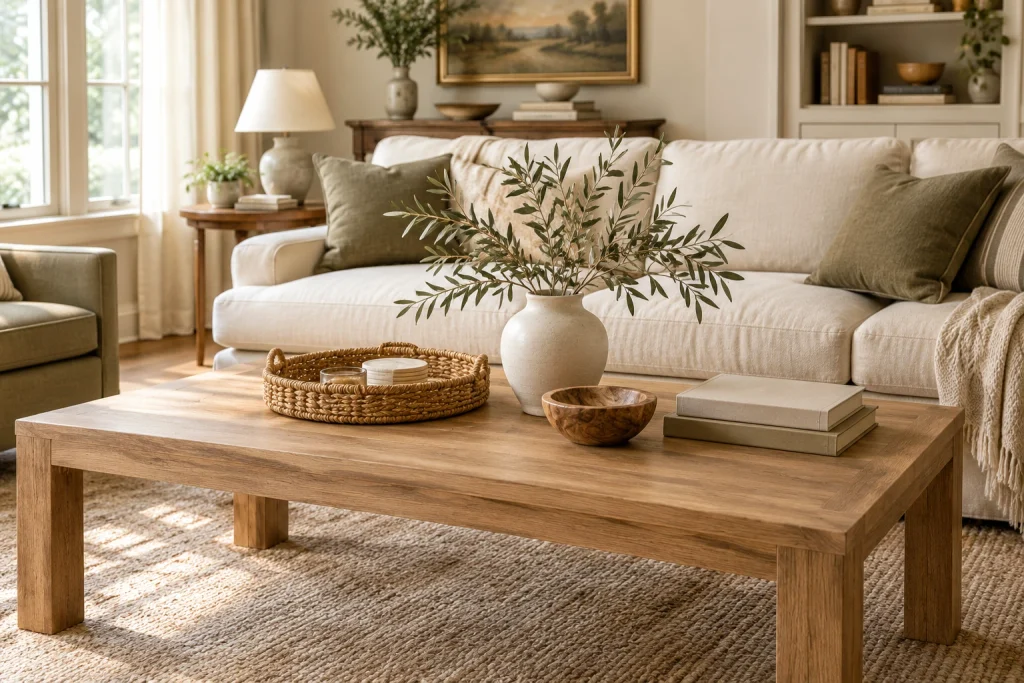
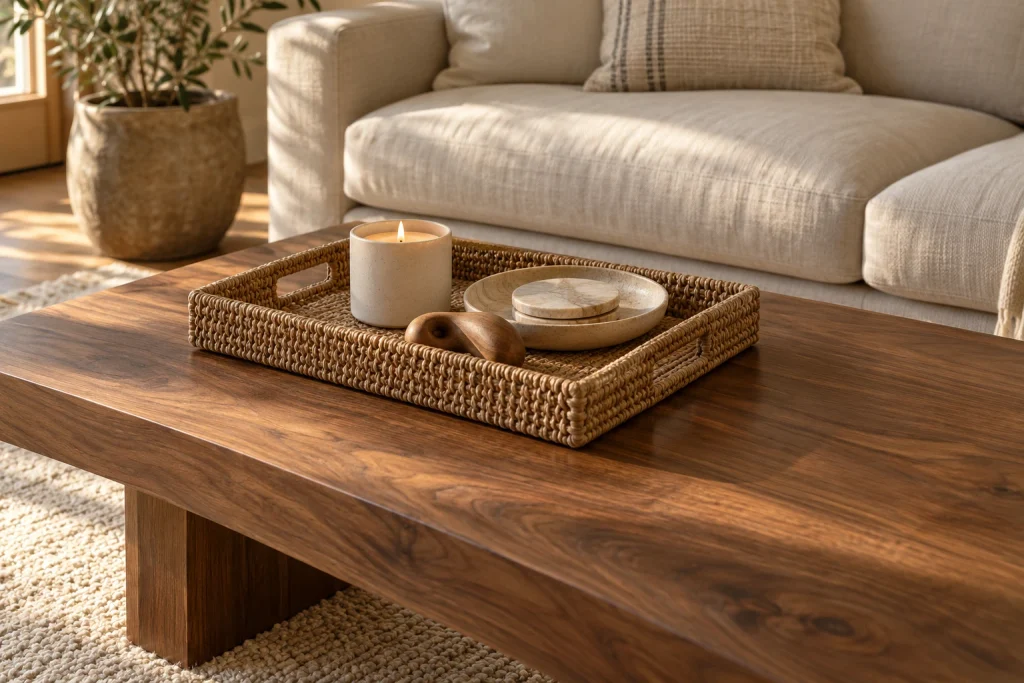
A decorative tray is one of the simplest ways to make coffee table decor look intentional. It creates a defined area for smaller objects and makes the entire arrangement easier to move when you need extra space.
Choose a tray that complements your table rather than competing with it. Woven rattan adds warmth to a wooden table, marble introduces a refined finish, and a dark wooden tray creates contrast against a lighter surface.
Try arranging a small candle, a ceramic dish, and a pair of coasters inside the tray. You can place a small decorative object on a book to introduce another level without overcrowding the arrangement.
For a small coffee table, choose a shallow tray that leaves plenty of room around it. On a larger table, a generously sized tray can anchor one side while leaving the other side available for everyday use.
The key is to group a few useful and decorative items together rather than collecting everything you own in one place.
3. Layer Coffee Table Books for Height and Personality
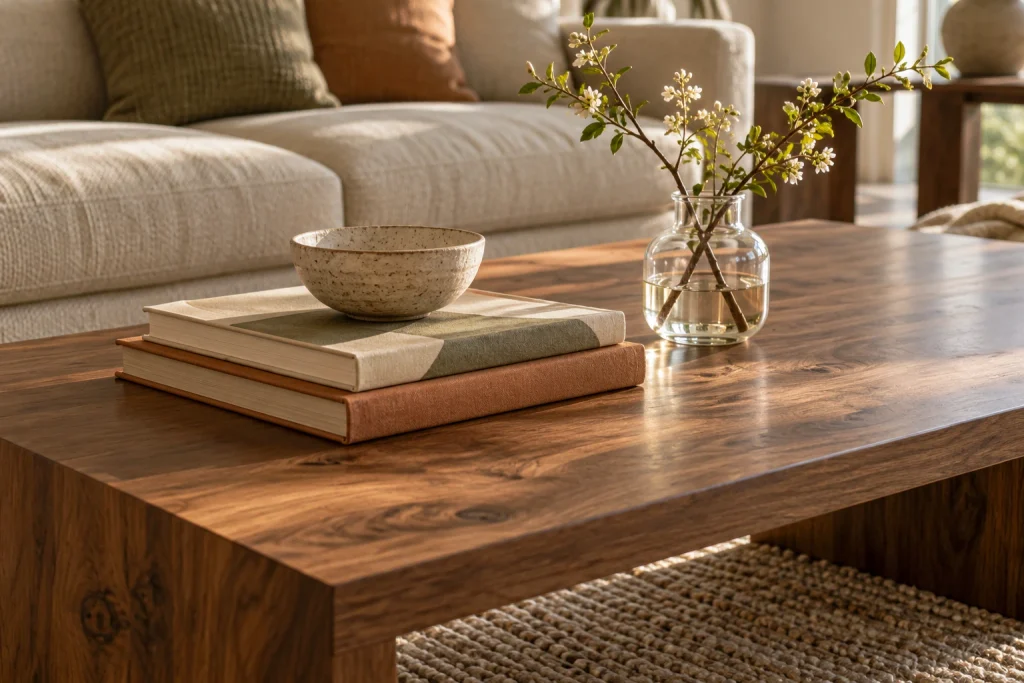
Coffee table books are both decorative and practical. Their covers introduce color, their pages add texture, and their stacked shapes provide a useful foundation for smaller accessories.
Choose books that reflect your interests, whether that means interior design, photography, architecture, gardening, art, or travel. Neutral covers work well in a calm living room, while muted green, terracotta, or navy can add color to a more expressive space.
To create a balanced book arrangement:
- Stack one or two substantial books with their edges aligned.
- Place the stack slightly off-center instead of automatically positioning it in the middle.
- Add a small bowl or sculptural object if the proportions feel right.
- Leave enough room around the books for the rest of the table to remain functional.
On a compact table, a single stack may be enough. A large rectangular coffee table can accommodate two separate stacks, but they should not make the surface feel crowded.
4. Add Flowers or Greenery for a Fresh, Natural Look
Flowers and greenery bring softness to a coffee table and help connect the room with nature. They also introduce organic shapes that contrast beautifully with the straight lines of furniture and the smooth surfaces of decorative objects.
You do not need an elaborate floral arrangement. A few branches in a ceramic vase, a small potted plant, or a handful of seasonal flowers can be enough.
Consider these options:
- Leafy branches: Ideal for a relaxed, organic arrangement.
- Fresh flowers: Add color and a seasonal touch.
- Small potted plants: Provide greenery without requiring frequent replacement.
- Dried stems: Create a soft, neutral look with minimal maintenance.
Choose the arrangement according to your table’s size and how you use the room. A low bowl of greenery can work beautifully on a round table, while a modest vase suits a longer rectangular surface.
If people regularly sit opposite one another, avoid placing tall flowers directly in their line of sight. Use a stable vessel and keep delicate arrangements away from the edges.
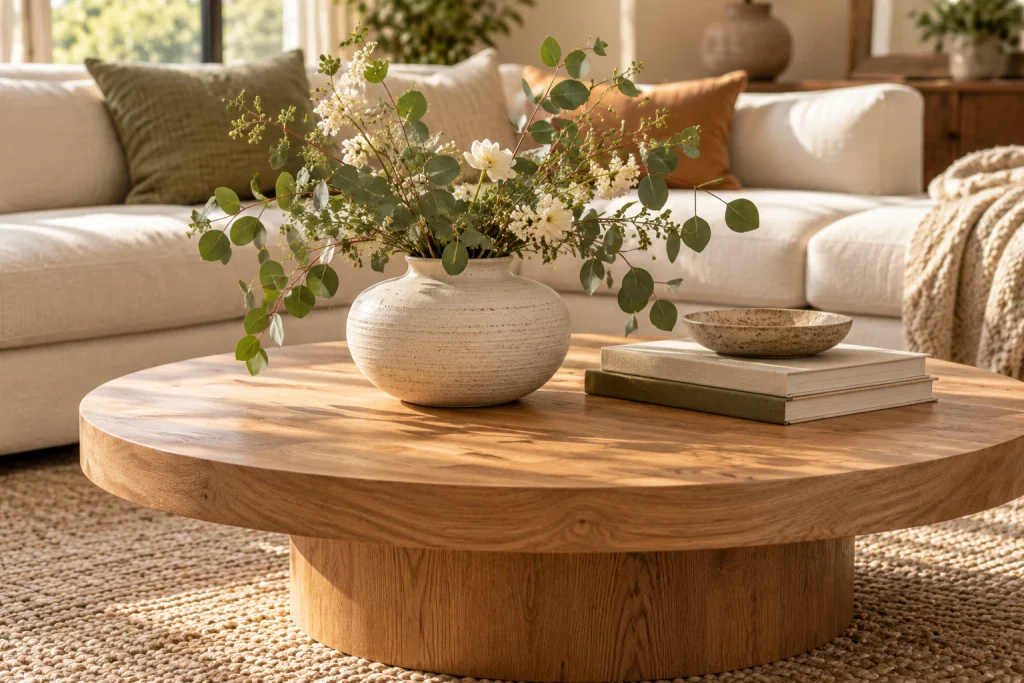
5. Mix Heights, Shapes, and Textures
One reason a coffee table arrangement can look unfinished is that every object sits at the same height or has a similar shape. Introducing a few contrasts gives the display depth without requiring additional decorations.
Think about three visual levels:
- Tall: A modest vase or candleholder.
- Medium: A book stack or decorative box.
- Low: A shallow bowl, coaster set, or small dish.
Next, combine different materials. Wood adds warmth, ceramic introduces a handmade quality, glass keeps the arrangement visually light, and woven textures create softness.
For example, a rounded stone bowl can balance a stack of rectangular books. A glass vase can soften the heavier appearance of a dark wooden table. A brass candleholder can connect with metallic details elsewhere in the living room.
You do not need to follow the rule of three every time. Two carefully chosen objects can look just as effective when their heights, shapes, and visual weight complement one another.
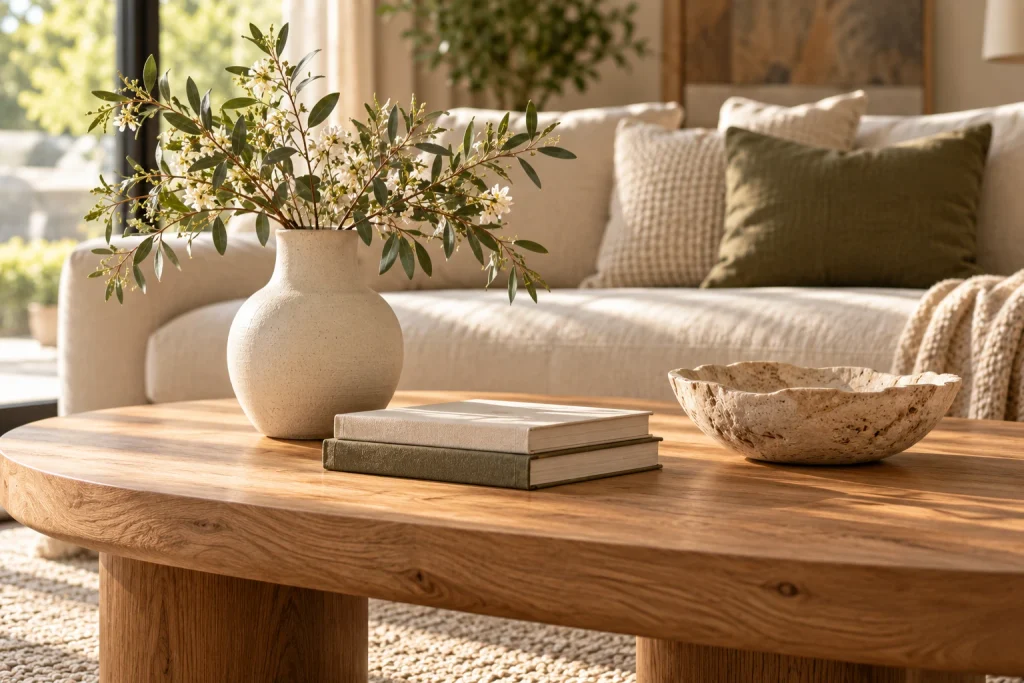
6. Style Your Coffee Table According to Its Shape
The shape of your coffee table influences how accessories should be arranged. Working with the tabletop’s natural outline usually creates a more balanced result than copying the same arrangement onto every piece of furniture.
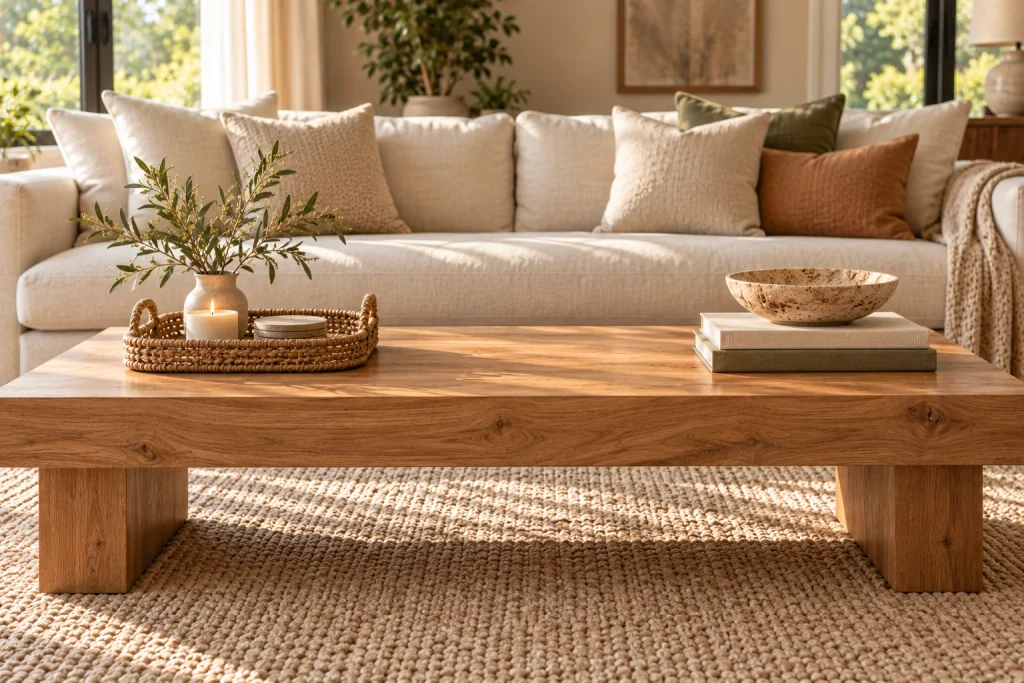
Rectangular coffee tables
Rectangular tables offer room for separate styling zones. Place a tray at one end, a stack of books near the center, and a low decorative bowl at the opposite end.
Keep the objects visually connected through repeated colors or materials. Avoid spreading small accessories evenly across the entire surface.
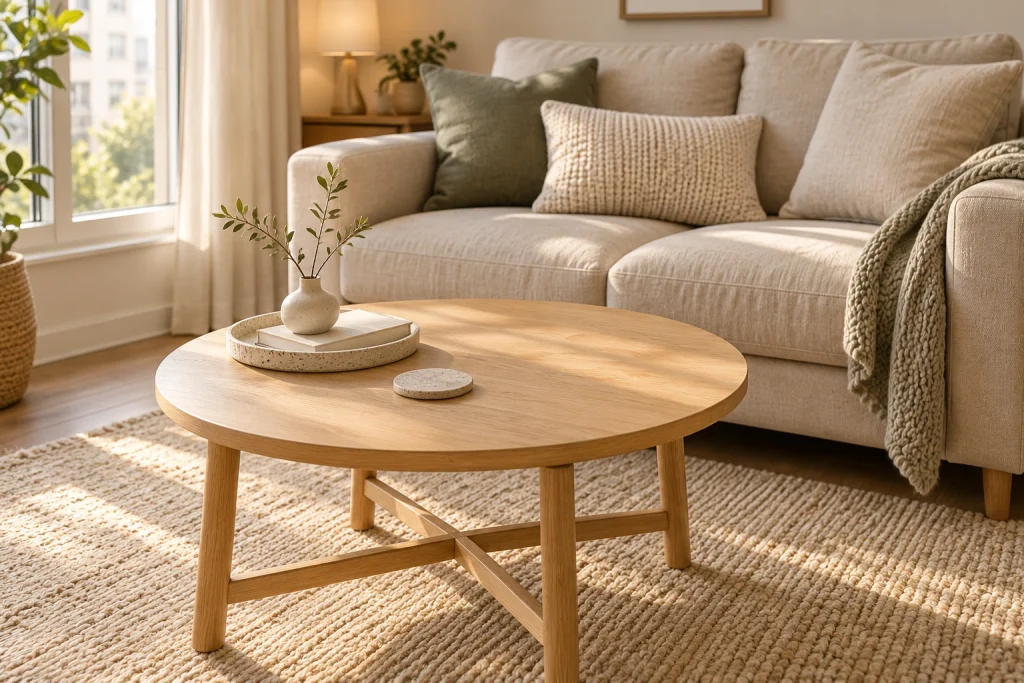
Round coffee tables
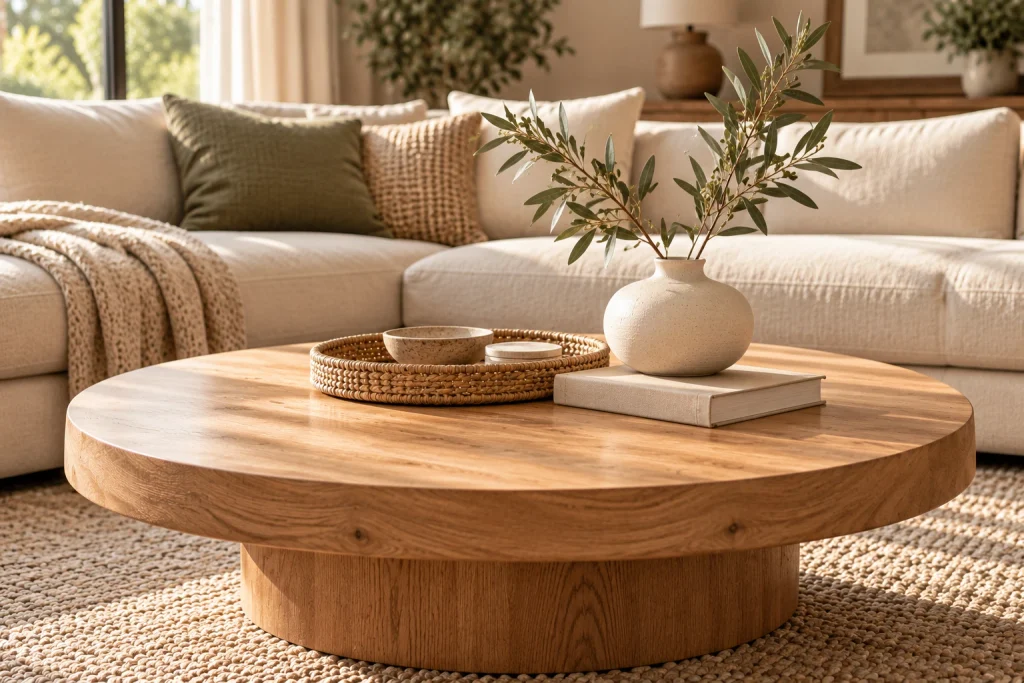
Round tables look attractive with a compact arrangement that follows their curved outline. Try a circular tray, a low vase, or a small book stack grouped slightly off-center.
Avoid placing too many large accessories around the perimeter. Keeping the arrangement concentrated leaves the tabletop looking open and balanced.
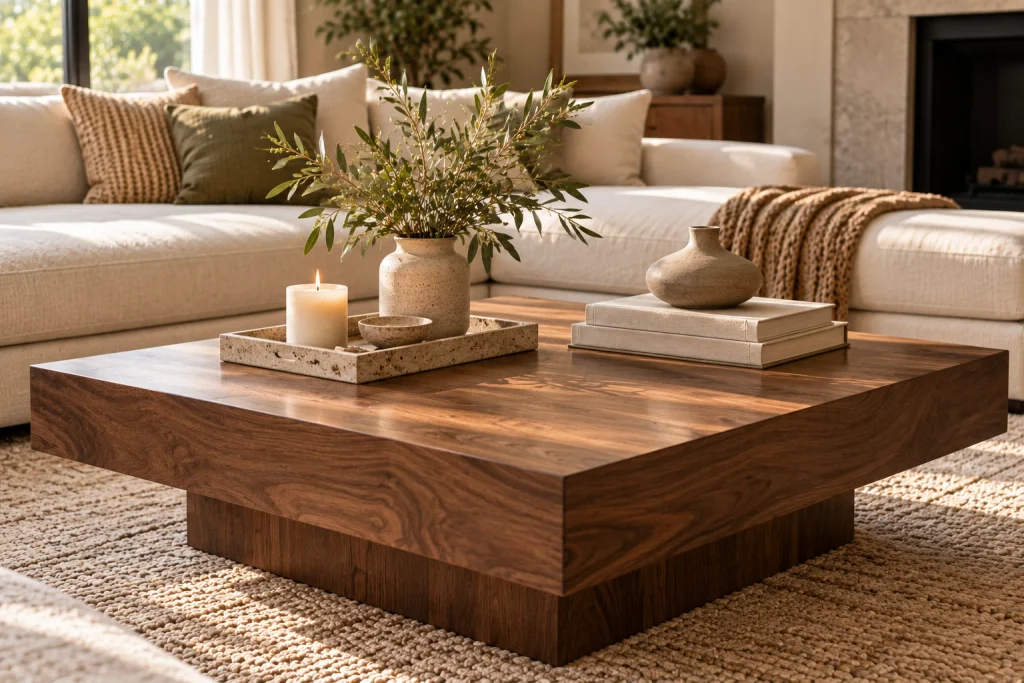
Square coffee tables
A square coffee table can support a centered tray or a compact group of objects. If the table is large, create two small groupings rather than filling every corner.
A taller vase paired with a low book stack creates visual balance without requiring identical objects on opposite sides.
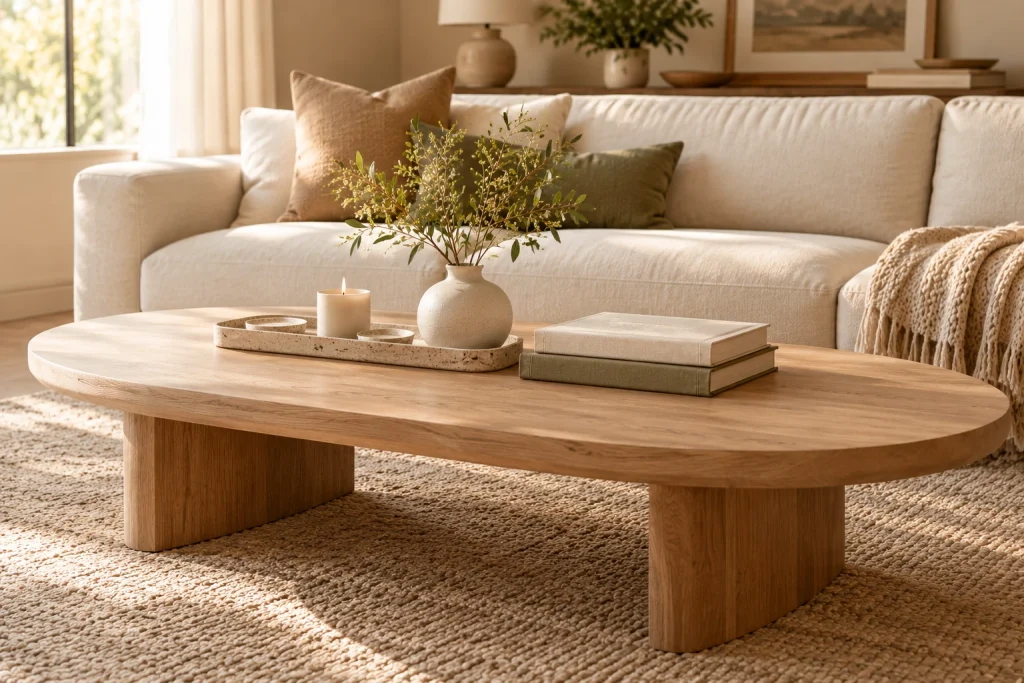
Oval coffee tables
Oval tables combine the length of rectangular furniture with softer edges. A low linear arrangement of books, a slim tray, and a small vase can complement the shape without making the table look crowded.
Leave some clear surface at both ends to preserve its graceful outline.
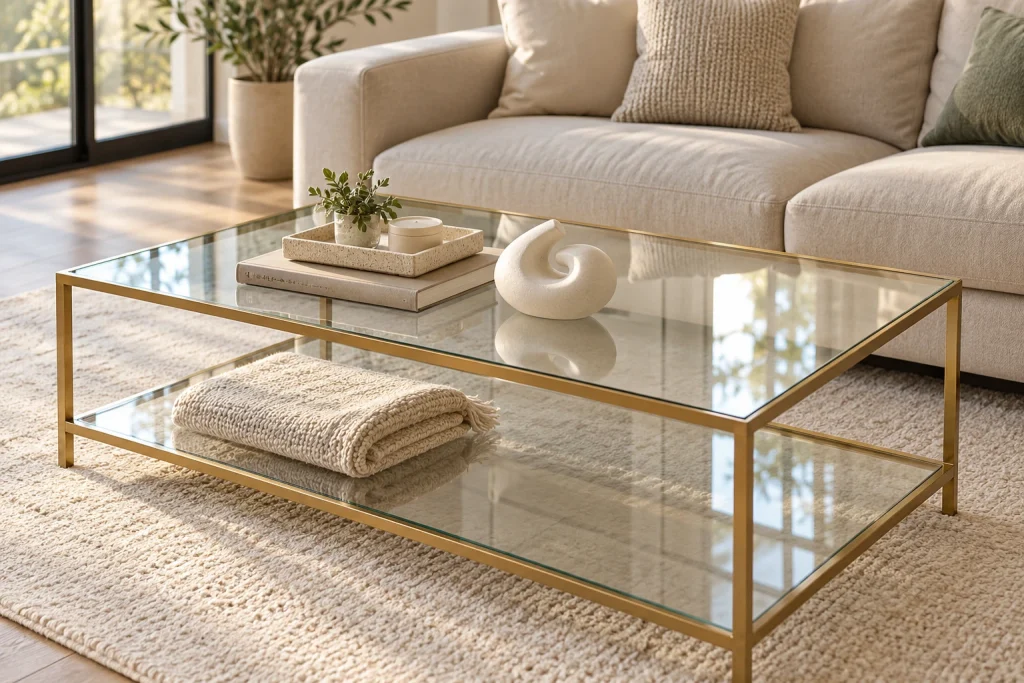
Glass coffee tables
Glass coffee tables already feel light, making them ideal for a minimal arrangement. A textured tray, one book stack, or a sculptural bowl can introduce interest without hiding the transparent surface.
If your table has a lower shelf, keep it tidy because objects beneath the glass remain visible. Use suitable coasters and clean the surface regularly to reduce distracting fingerprints
7. Keep a Small Coffee Table Simple
A small coffee table does not need a miniature version of a large designer display. It needs a few appropriately sized accessories and enough room for everyday activities.
Start with a single anchor piece, such as a compact tray or one hardcover book. Add just one supporting accessory, perhaps a small candle, a little vase, or a shallow dish for coasters.
If the table is particularly narrow, skip tall arrangements and choose low objects that will not obstruct the room. You can also move some decorative pieces to a side table when you need additional space.
Storage can make a difference, too. A coffee table with a shelf or drawer helps keep remotes, chargers, and other everyday items nearby without displaying everything.
For more ways to make a compact space feel organized and inviting, explore our guide to small living room ideas on a budget.
8. Create Beautiful Coffee Table Decor on a Budget
You can refresh your coffee table without buying a complete set of accessories. In many cases, rearranging what you already own is enough to create a noticeably better display.
Look around your home for a serving tray, a favorite book, a ceramic bowl, a small vase, or a decorative object that has been sitting unused.
Here are a few budget-friendly ways to style your table.
Shop your own home
Move a suitable accessory from a bookshelf, console, or side table. Reusing pieces helps create a fresh arrangement without adding unnecessary purchases
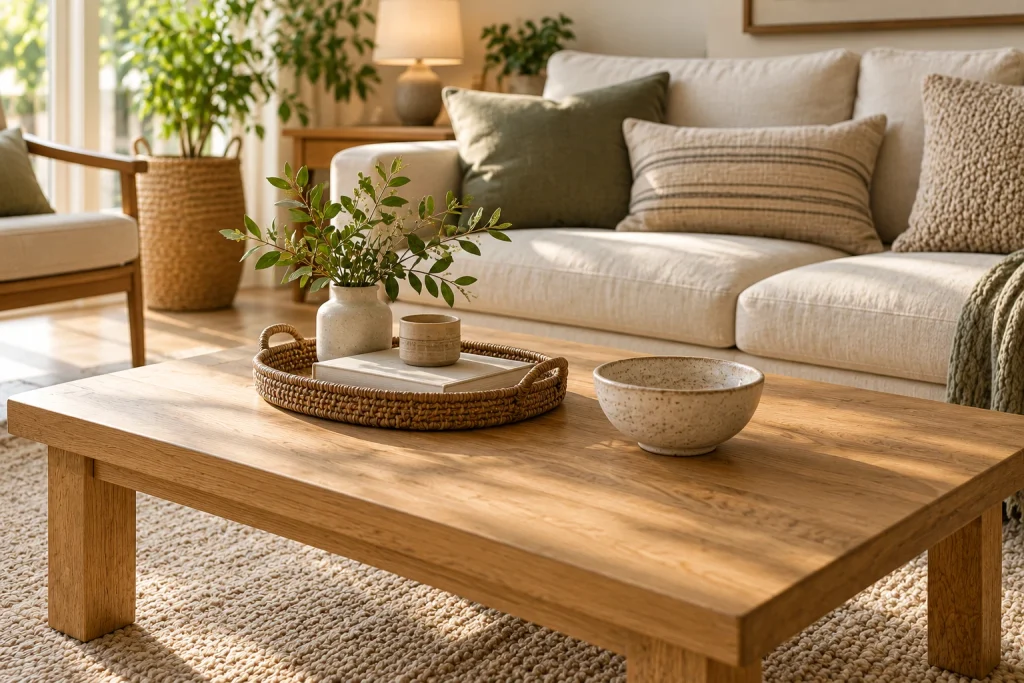
Repurpose everyday objects
A pretty bowl can hold coasters, while a small dish can organize matches or other useful items. Choose objects that are attractive enough to display and practical enough to use
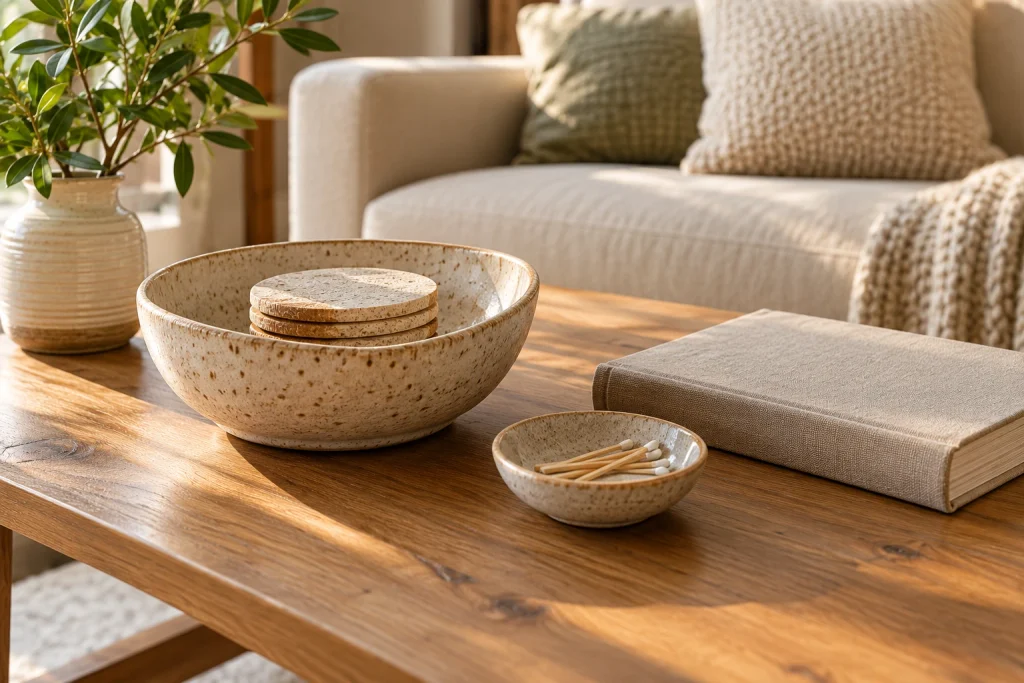
Use seasonal greenery
A few garden branches, fresh leaves, or inexpensive seasonal flowers can make a table feel refreshed. Place them in a vase you already own rather than purchasing a new arrangement every time
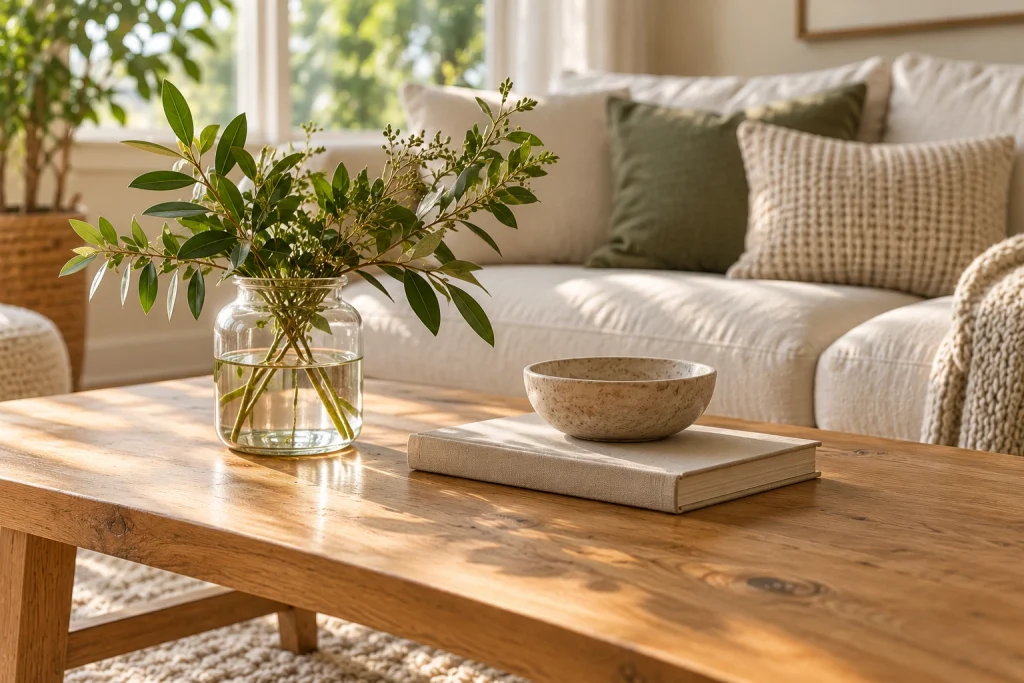
Choose one meaningful decorative piece
A handmade object, a travel souvenir, or a small piece of pottery can give your living room more character than several generic decorations. Let one special object become the focus instead of surrounding it with competing accessories
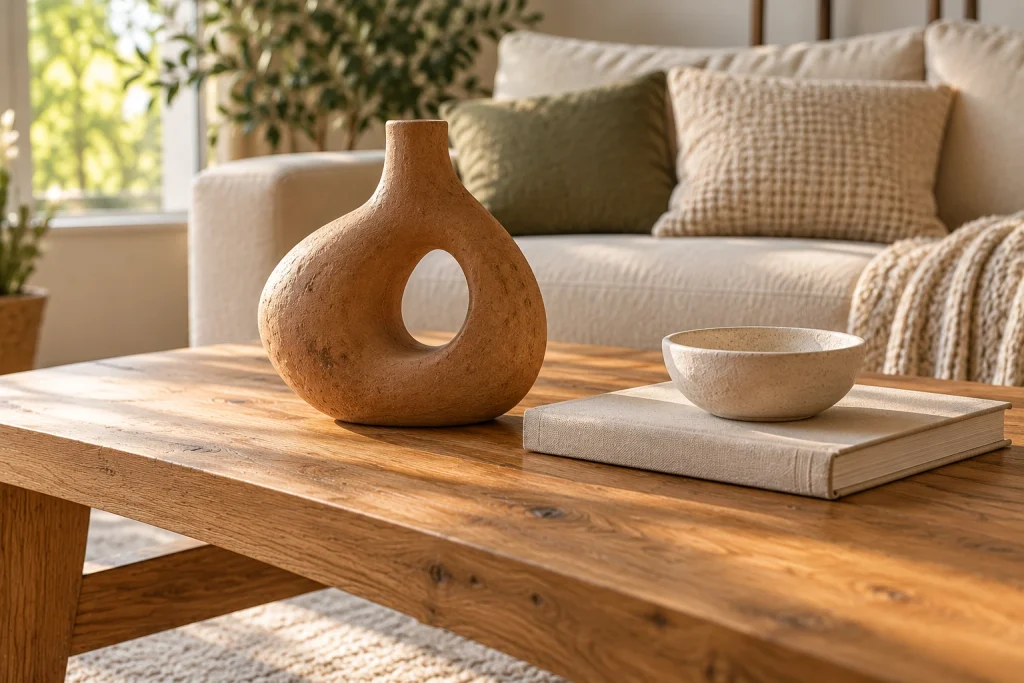
Buy only what is missing
If your arrangement genuinely needs something, add one useful piece at a time. A tray or a vase that works with your existing decor is often more valuable than a matching set of accessories that all compete for attention
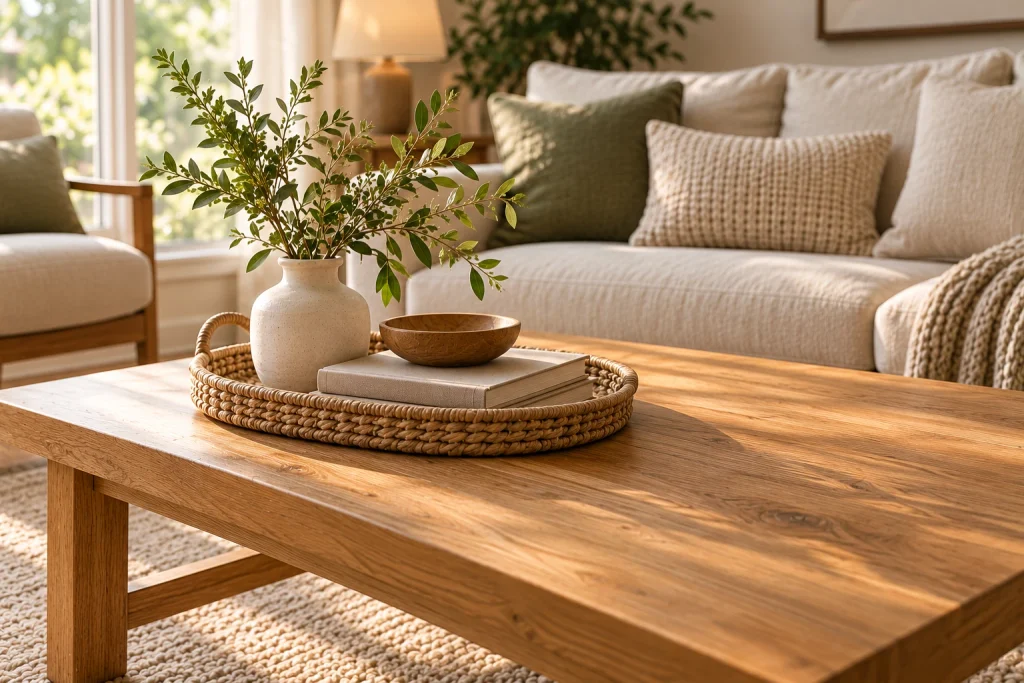
For more affordable decorating projects and ideas, see our guide to DIY home decor on a budget.
9. Match Your Coffee Table Decor to Your Interior Style
The best coffee table styling complements the rest of your living room. You can use the same basic principles while creating a look that suits your preferences.
Modern and minimalist
Choose a few accessories with simple silhouettes. A sculptural bowl, a neat book stack, and a modest vase may be all you need.
Keep the palette restrained and allow the table itself to remain part of the design
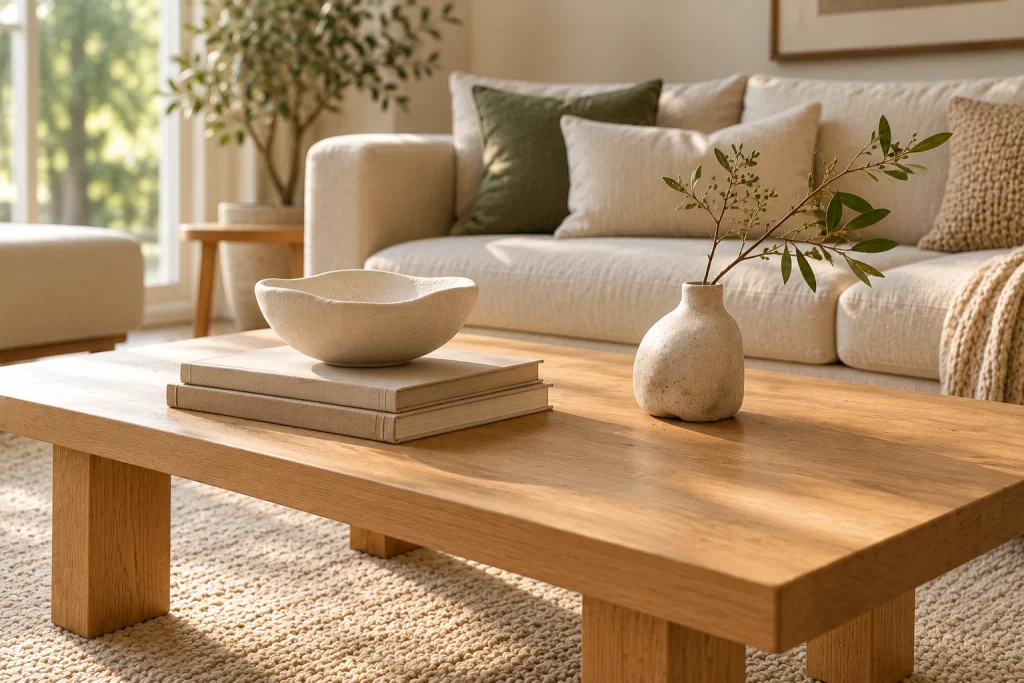
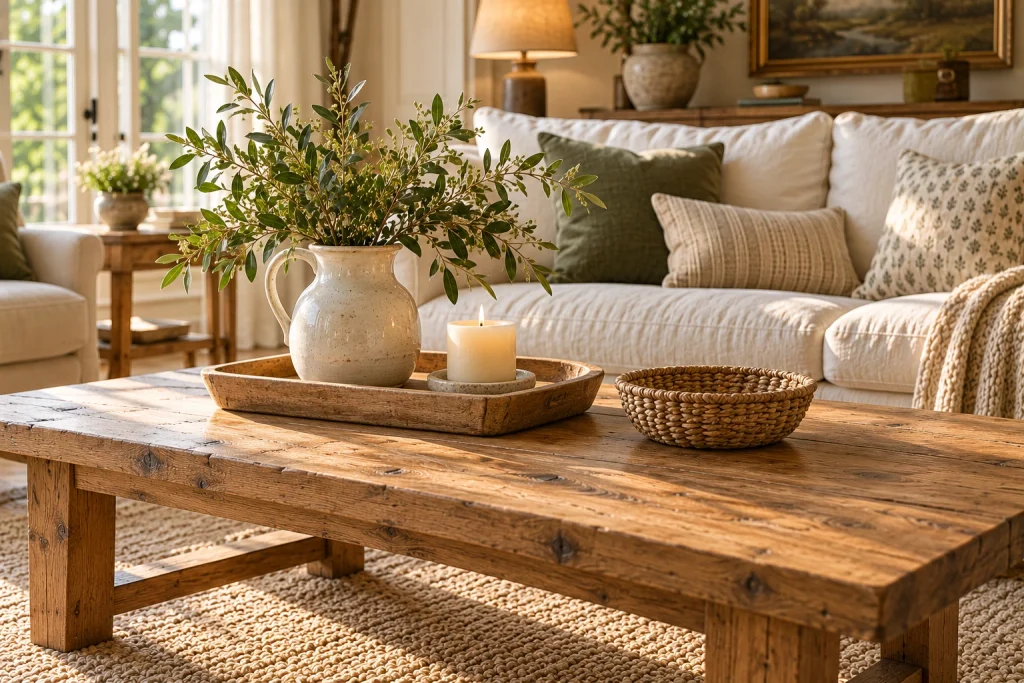
Cozy farmhouse
Combine natural wood, woven textures, ceramic vessels, and understated greenery. A shallow wooden tray can hold coasters and a small candle, while a low bowl adds a relaxed finishing touch.
Avoid overcrowding the table with matching rustic signs or distressed accessories. A few natural materials provide plenty of character
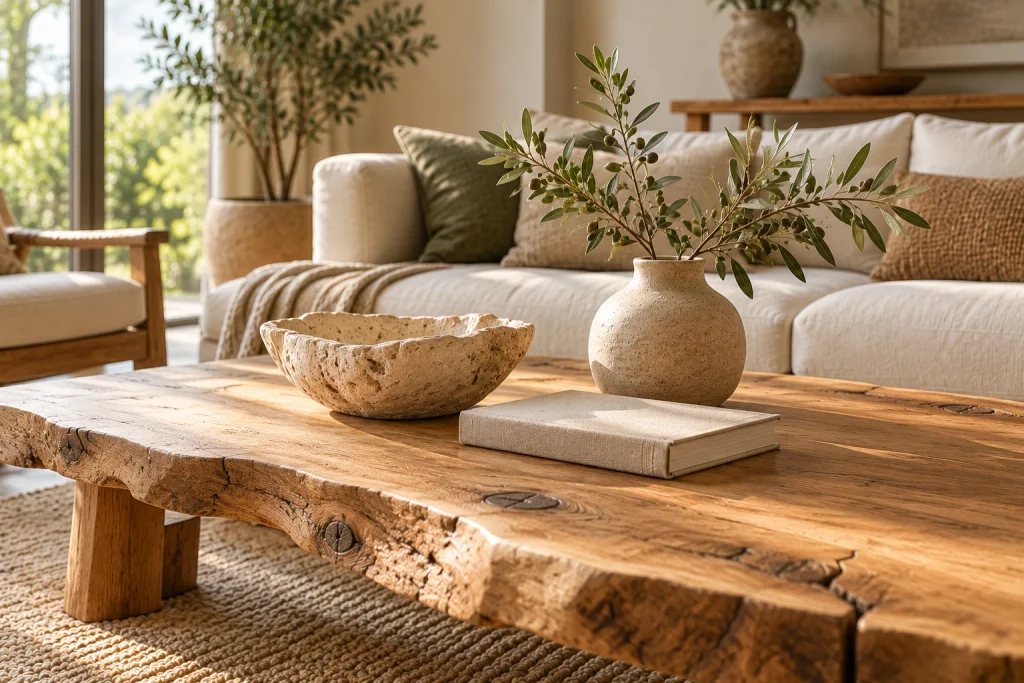
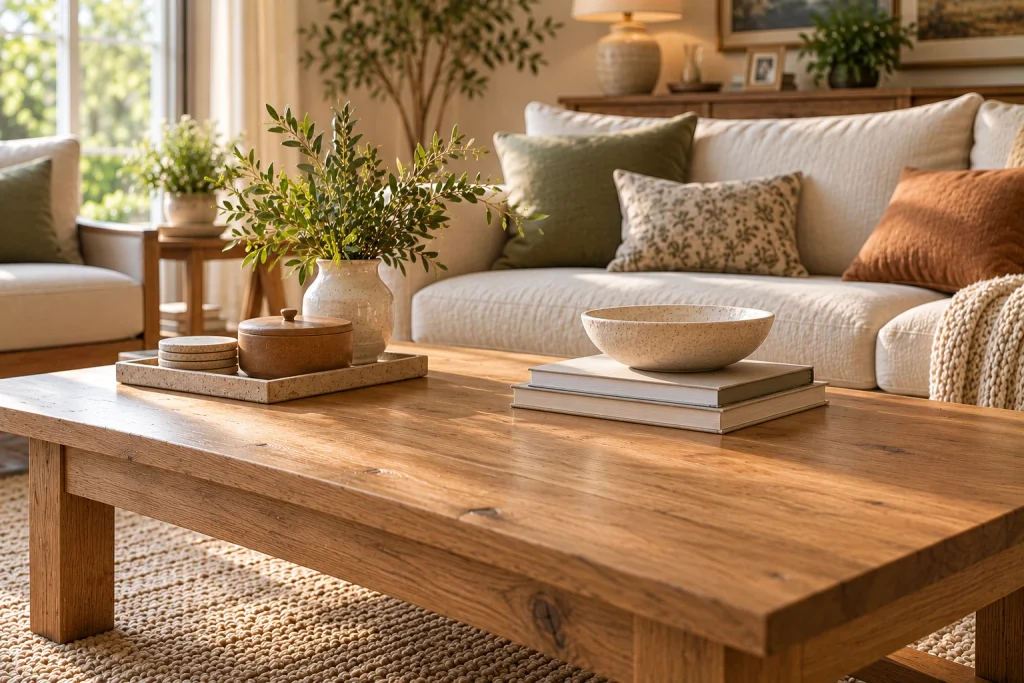
Organic and earthy
Mix wood, stone, linen, ceramic, and greenery to create a natural arrangement. Look for differences in texture rather than relying on lots of contrasting colors.
An irregular ceramic bowl and a simple vase can look especially attractive against a warm wooden tabletop
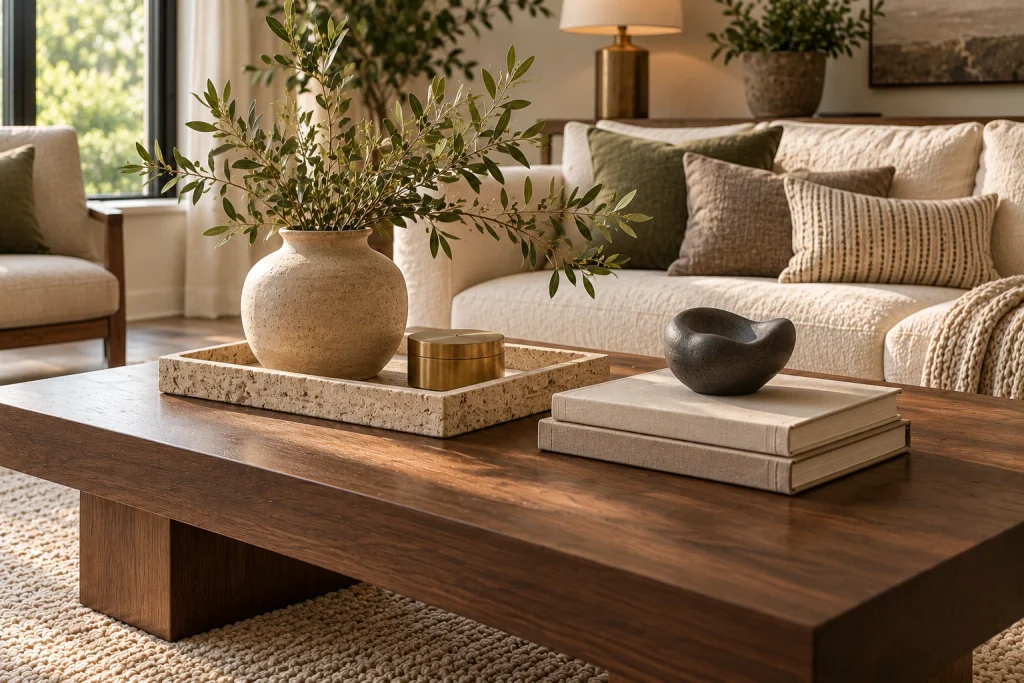
Elegant and contemporary
Choose a limited palette and a few accessories with refined shapes. A stone tray, a dark sculptural object, and a carefully selected book stack can create a polished arrangement.
Balance glossy finishes with matte textures so the table feels sophisticated without appearing overly formal
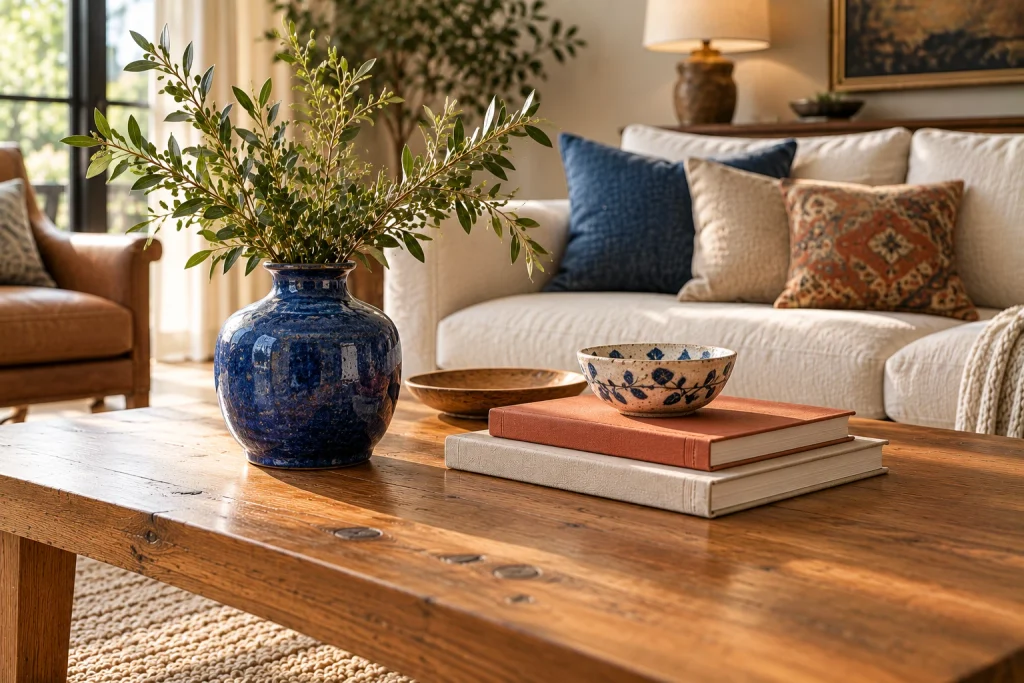
Colorful and eclectic
Let your personality guide the arrangement with art books, a distinctive vase, a collected object, or a colorful bowl. Repeat one or two colors already found in the room to help the different pieces feel connected.
An eclectic display can combine several styles, but each object should contribute something to the overall arrangement
10. Make Your Coffee Table Practical for Everyday Life
A beautiful coffee table should still be easy to use. Before finishing your arrangement, imagine sitting down with a drink, eating a snack, or relaxing with a book.
Can someone set down a mug without moving several decorations? Are the coasters easy to reach? Is the tallest accessory stable? Can you access the remote when you need it?
Make your arrangement more functional with these adjustments:
- Keep frequently used coasters within easy reach.
- Use a tray to move several small accessories at once.
- Choose sturdy, stable decorations for busy family rooms.
- Keep fragile pieces away from table edges.
- Store remotes in an attractive box or a designated compartment.
- Remove decorative pieces temporarily when you need the full surface.
If your coffee table doubles as a place to work, eat, or play games, a simpler arrangement may be the better choice. The right amount of decor depends on how your household actually uses the room
Common Coffee Table Styling Mistakes to Avoid
Even beautiful accessories can look awkward when their proportions or placement are wrong. A few small adjustments can make the entire arrangement feel more intentional.
Using oversized accessories
A large vase or tray can overwhelm a small table. Choose decorations that suit the available surface and leave enough room around them.
Image placement: Insert directly after this subsection.
Image prompt: Photorealistic interior design comparison image showing two small round coffee tables side by side in a neutral living room. On the left, an oversized tall vase and bulky tray overwhelm the tabletop. On the right, a modest ceramic vase, one small book, and a low bowl fit the table’s proportions beautifully. Clearly different styling outcomes, realistic furniture scale, consistent natural lighting, tasteful beige interior, professional educational home decor photography, horizontal 3:2 aspect ratio, no labels, no text, no watermark.
Keeping every object at the same height
A collection of equally low objects can make the arrangement look flat. Introduce a modest height difference with a vase, a book stack, or a candleholder.
Image placement: Insert directly after this subsection.
Image prompt: Photorealistic side-by-side interior styling comparison of two natural wood coffee table arrangements. The first contains several similarly sized low bowls and flat accessories, creating a visually flat appearance. The second uses a short book stack, a medium-height ceramic vase, and a low sculptural bowl to create balanced visual layers. Identical warm neutral living room setting, realistic objects and shadows, editorial interior photography, horizontal 3:2 composition, no labels, no text, no watermark.
Filling every empty space
Open tabletop space is useful, not wasted. Leave room for drinks, snacks, and daily activities rather than covering the surface with decorations.
Image placement: Insert directly after this subsection.
Image prompt: Photorealistic interior editorial comparison of two rectangular oak coffee tables in the same cozy living room. The first is crowded with many small decorative accessories covering nearly the entire surface. The second has just a simple tray, two books, and one vase grouped neatly to one side, with generous clear tabletop space. Natural daylight, realistic home furnishings, warm neutral palette, clear contrast between clutter and thoughtful editing, horizontal 3:2 composition, no labels, no text, no watermark.
Mixing too many unrelated finishes
Different materials create interest, but repeating a few colors or textures helps the arrangement feel cohesive. Connect the accessories to finishes already present in the room.
Image placement: Insert directly after this subsection.
Image prompt: Photorealistic side-by-side coffee table styling comparison in a contemporary living room. One arrangement mixes many competing metallic finishes, bright colors, glossy surfaces, and unrelated decorative materials. The other uses warm oak, cream ceramic, natural stone, and a restrained brass accent to create a coordinated display. Realistic materials, identical furniture scale, soft daylight, professional interior design editorial photography, horizontal 3:2 aspect ratio, no text, no watermark.
Choosing decoration over function
If you must move every accessory to set down a drink, the display needs editing. Keep practical items accessible and choose arrangements that suit your daily routine.
Image placement: Insert directly after this subsection.
Image prompt: Photorealistic lifestyle photograph showing a practical oak coffee table beside a neutral sofa. A ceramic coffee mug sits comfortably on a clear section of the tabletop while a small tray containing coasters, a book stack, and a stable vase remains neatly grouped at one end. Show an easy-to-use arrangement with realistic proportions, soft natural daylight, warm textiles, relaxed everyday living, inviting and functional home decor, horizontal 3:2 composition, no text, no watermark.
Frequently Asked Questions
What is the easiest way to style a coffee table?
Start with a tray or a stack of books, add a vase or another object with height, and finish with one personal detail. Keep some of the tabletop clear for everyday use.
How many items should you put on a coffee table?
There is no fixed number. A small table may need only two or three items, while a large table can accommodate several carefully arranged pieces. The right amount depends on the table’s size, shape, and purpose.
Should a coffee table be decorated symmetrically?
Not necessarily. Symmetry can suit formal interiors, while an off-center arrangement often feels more relaxed. Focus on balancing the visual weight of your accessories instead of automatically placing matching objects on each side.
What can I put on a coffee table besides books?
Try a decorative tray, ceramic bowl, small plant, fresh flowers, candle, coasters, or a meaningful collected object. Choose items that complement the room without taking over the surface.
How do you style a coffee table without buying new decor?
Reuse a serving tray, books, bowls, vases, or decorative objects you already own. Group them thoughtfully, repeat a color or material from the room, and remove anything that feels unnecessary.
How often should you change coffee table decor?
Change it whenever your preferences or practical needs change. You might replace flowers seasonally, add a small holiday accent, or rearrange existing pieces. Everyday coffee table decor does not need constant updating.
Final Thoughts
Learning how to style a coffee table is less about following a strict formula and more about finding a balance that works for your living room. Start with a few complementary pieces, vary their heights and textures, and leave enough room for everyday life.
A tray, a favorite book, a vase, or a meaningful object may be all you need. Work with the shape of your table, reuse what you already own, and edit the arrangement until it feels natural.
The best coffee table is not the one covered in the most decorations. It is the one that makes your living room feel more personal, inviting, and comfortable.
One Comment