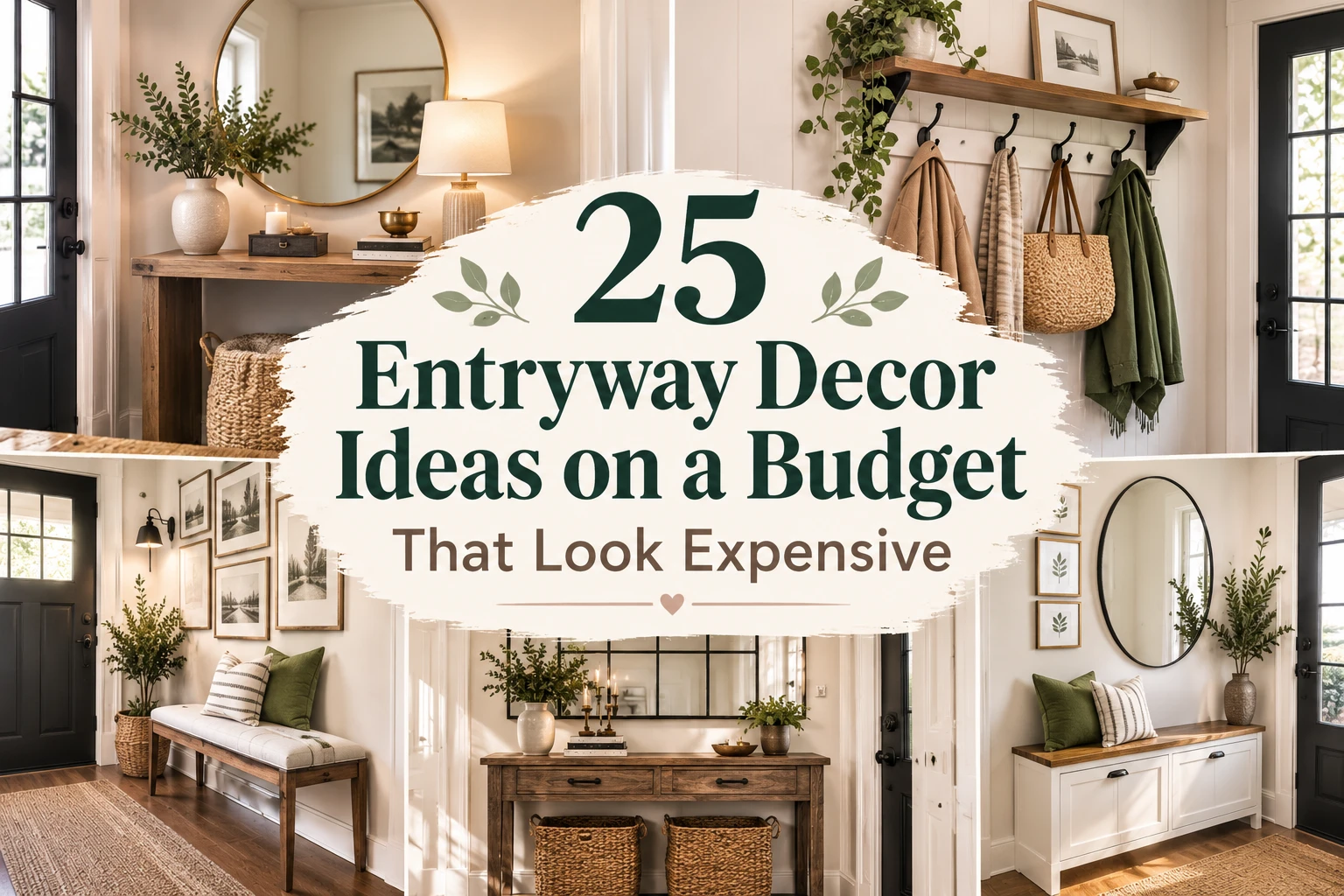
25 Entryway Decor Ideas on a Budget That Look Expensive
An entryway can look unfinished even when the rest of your home is beautifully decorated. Maybe shoes gather beside the front door, an empty wall feels too bare, or there is not enough room for a traditional console table. The solution is not necessarily to buy more furniture. It is to make a few thoughtful changes that improve both the appearance and function of the space.
These entryway decor ideas on a budget focus on affordable materials, secondhand finds, simple DIY projects, and layouts that work in real homes. Some ideas suit a spacious foyer, while others are designed for a small apartment entrance where every inch matters.
Before shopping, look at what your entrance actually needs. A place for keys, a practical shoe solution, and one attractive focal point can be more useful than a collection of decorative accessories. Start with the ideas that solve your biggest problem, then add details that make the entrance feel like your own.
Entryway Decor Ideas
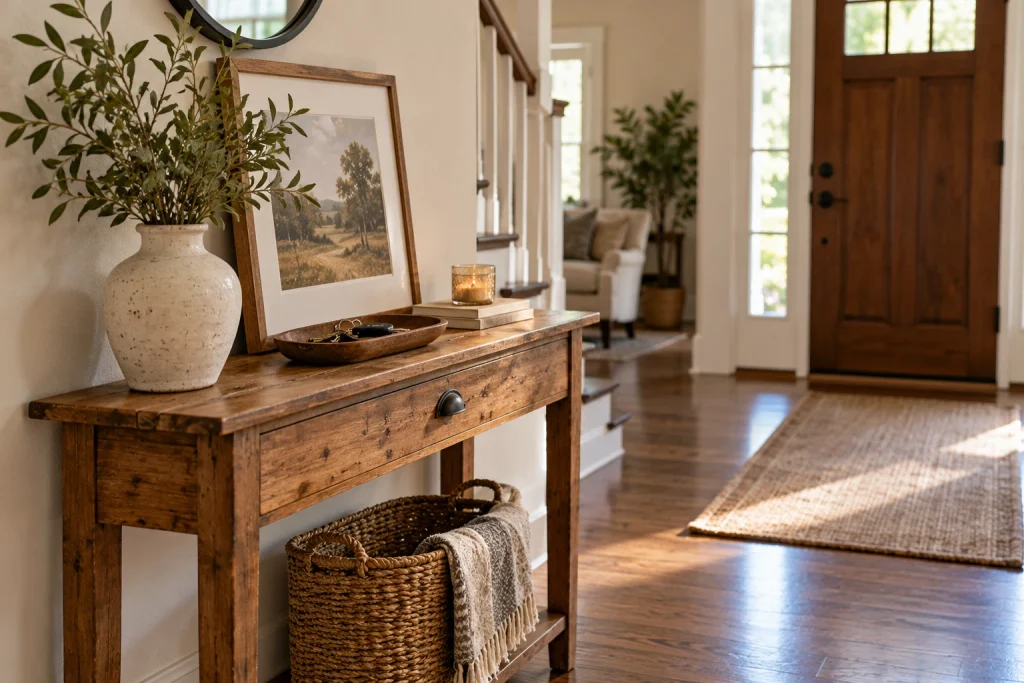
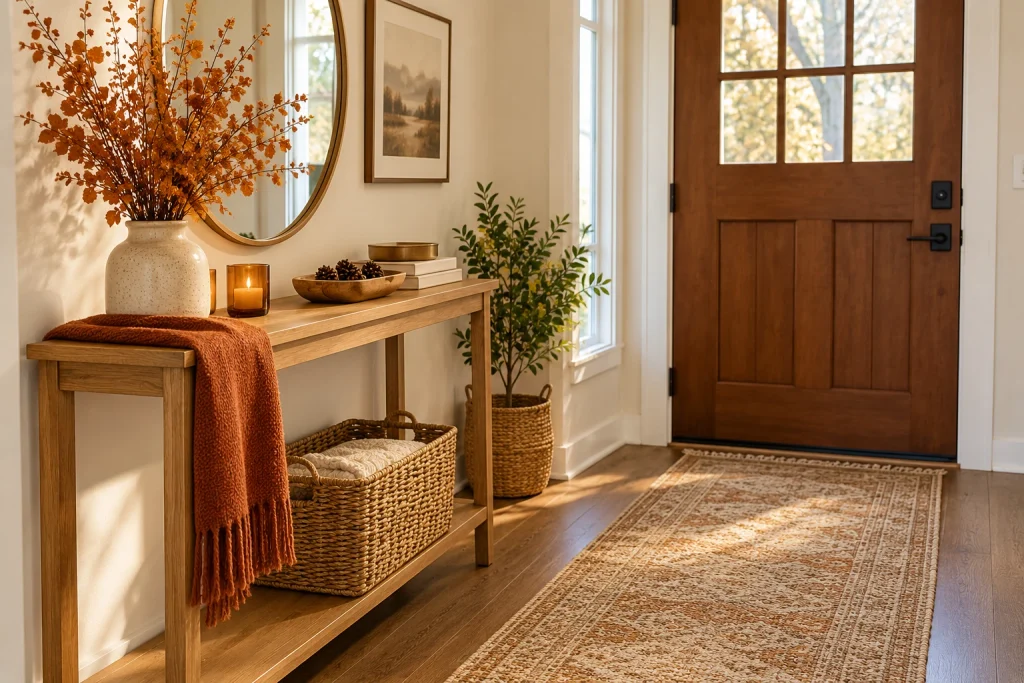
1. Turn an Unused Side Table Into an Entryway Console
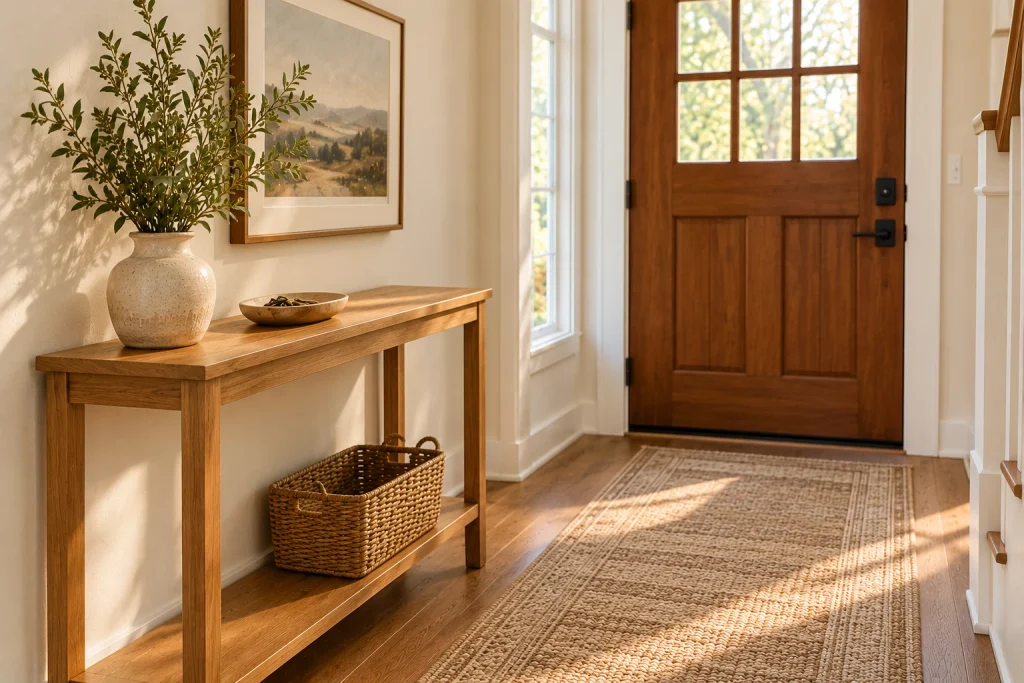
You do not need to purchase a new console table to create a polished entrance. Look around your home for a narrow side table, an old bedside table, or a small desk that could serve the same purpose. Moving an existing piece near the front door is one of the simplest ways to establish a dedicated entry zone without spending anything.
If the table looks dated, refresh it with suitable paint or new hardware. Style it with a shallow tray for keys, a small lamp, and one ceramic vase. Keep some of the surface empty so the table remains useful when you arrive home carrying bags or mail.
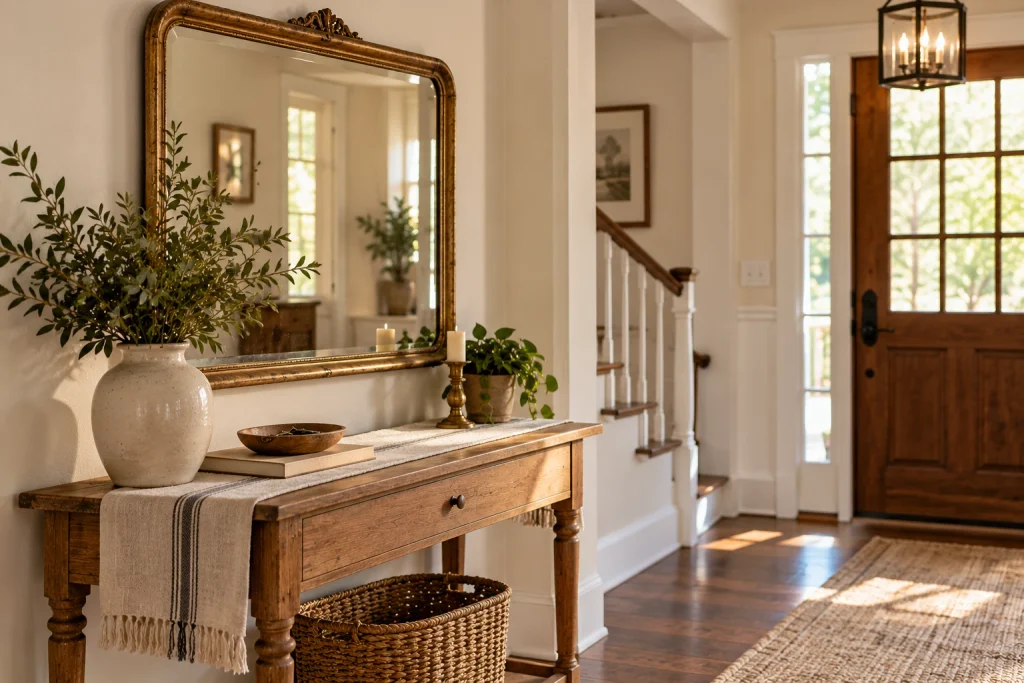
2. Find a Secondhand Mirror With Character
A mirror can give a plain entry wall a focal point while providing a convenient place to check your appearance before leaving. Instead of buying an expensive designer mirror, look for secondhand frames at thrift shops, estate sales, or local resale marketplaces. An older frame can add more personality than a generic new accessory.
Choose the shape according to your wall. A tall rectangular mirror suits a narrow vertical area, while a round mirror softens a wall above a small console. Check that the mirror is in good condition and use suitable hardware for its weight and wall type.
Position it to reflect natural light or an attractive part of the home. A mirror that reflects clutter may emphasize the very problem you are trying to solve.
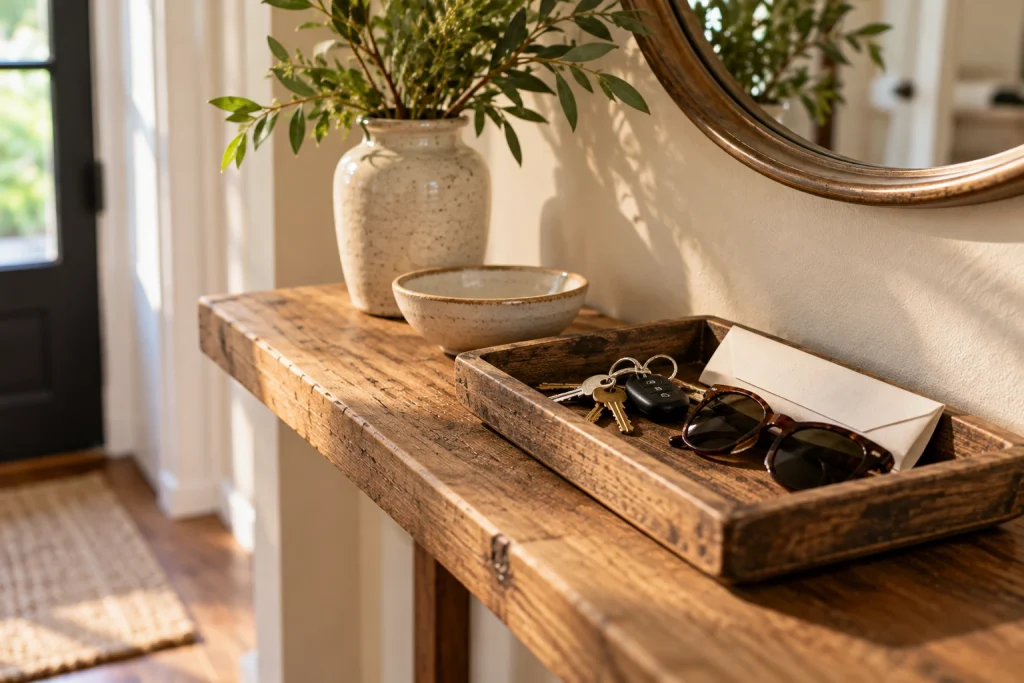
3. Create a Drop Zone With a Small Wooden Tray
Keys, sunglasses, receipts, and mail can make even a beautiful entrance look untidy. A dedicated drop zone gives these everyday items a consistent home. You can create one with a small wooden tray, a ceramic dish, or a shallow bowl you already own.
Place the container near the door, preferably on a shelf or table that does not interfere with your normal route through the house. If mail is a recurring problem, use a separate upright file or a small paper organizer instead of allowing envelopes to pile up beside your keys.
This is a particularly useful idea for renters and people with very small entrances because it does not require wall alterations or additional furniture. The improvement comes from establishing a habit, not from buying an expensive organizer.
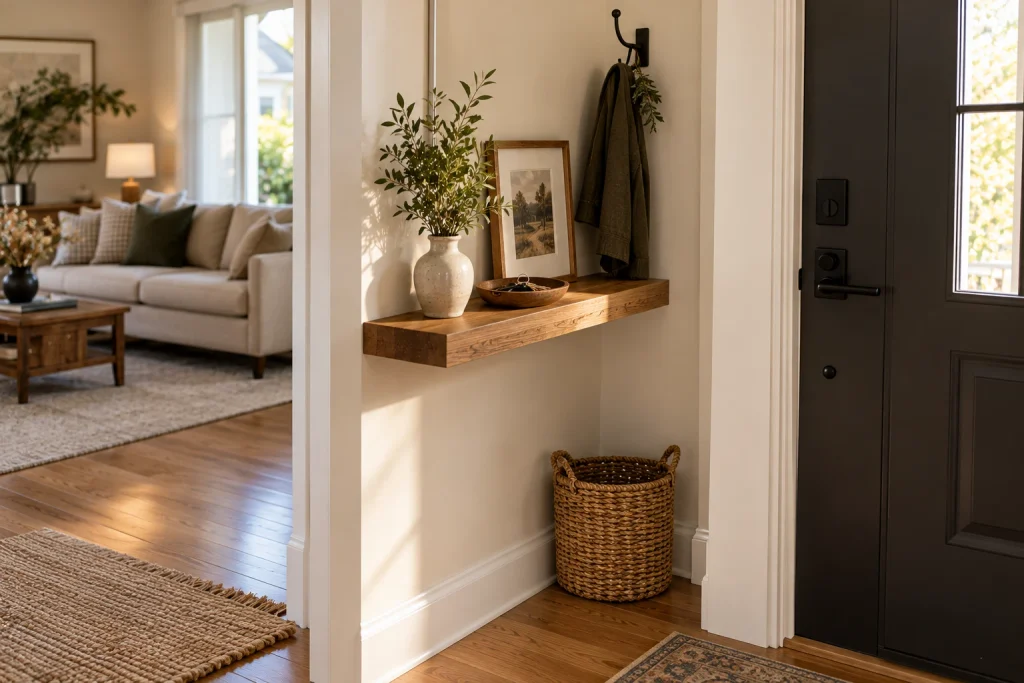
4. Use a Narrow Floating Shelf Instead of a Table
If a traditional console makes your hallway feel cramped, a floating shelf may provide the surface you need without occupying floor space. It works well beside an apartment door, along a short corridor, or in a small entrance that opens directly into the living room.
Choose a shelf depth that accommodates your essentials without sticking too far into the walkway. Style it with a key dish and one small decorative item rather than filling the entire surface. If you need more storage, consider a shelf with a small drawer or an integrated organizer.
Check the wall material and installation instructions before mounting it. Renters should verify their lease requirements and may prefer a freestanding alternative if drilling is not permitted.
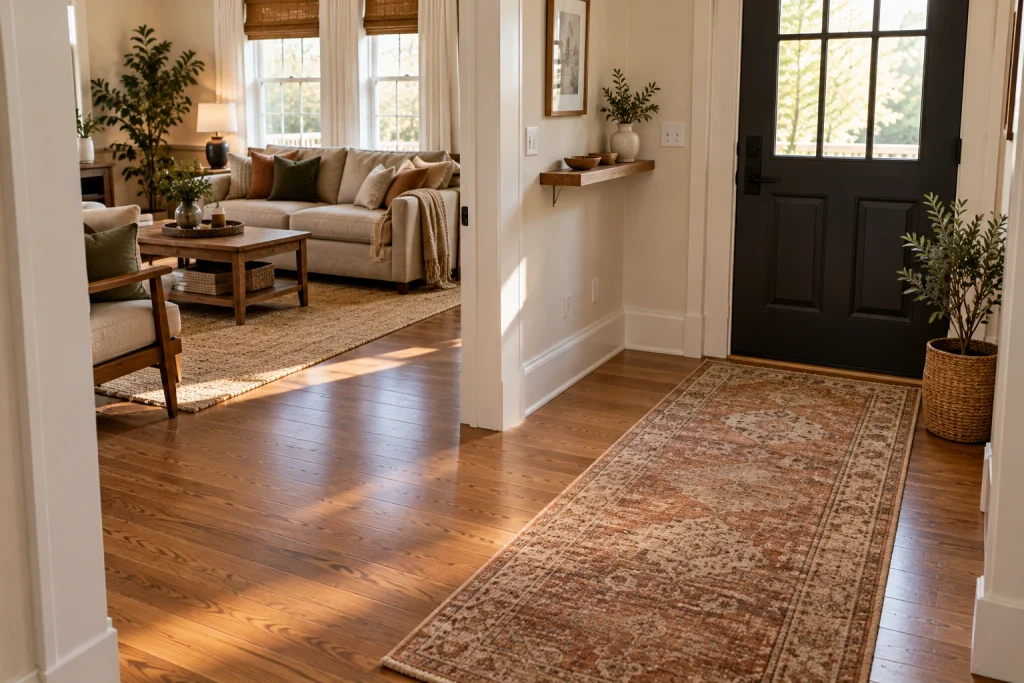
5. Make a Small Entryway Feel Defined With a Rug
When the front door opens directly into a living room, the entrance can feel like an afterthought. A small rug or runner helps distinguish the arrival area from the rest of the room without building a wall or adding furniture.
Choose a rug that suits the amount of foot traffic and is easy to clean. Subtle stripes, small geometric patterns, and textured neutral designs can be forgiving in a busy entrance. Measure the available floor area and check the door clearance before choosing the size.
A rug should help define the space, not create a tripping hazard. Use an appropriate nonslip pad when needed and avoid placing a thick edge where the door catches it.
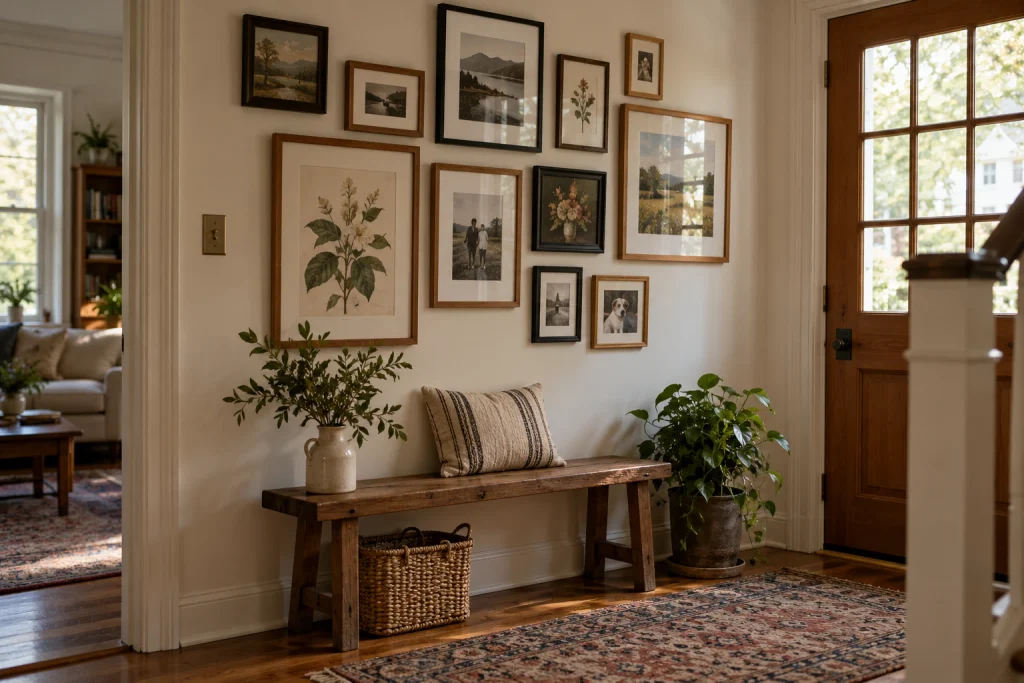
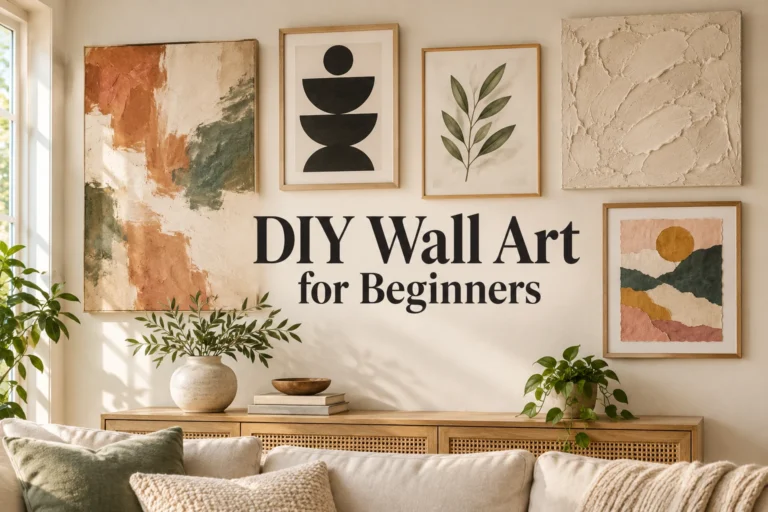
6. Make a DIY Wall Display From Thrifted Frames
Artwork can give an entryway personality without requiring new furniture. Collect inexpensive frames in different sizes, then create a coordinated display using family photographs, botanical prints, small illustrations, or artwork you already own.
For a polished result, choose a common thread among the frames. They might share a black finish, natural wood tones, or a limited color palette in the artwork. Lay the arrangement out on the floor first so you can adjust the spacing before hanging anything.
If your entrance is very narrow, one larger print or two vertically arranged frames may work better than a large gallery wall. Leave enough room around the display so it feels intentional instead of crowded.
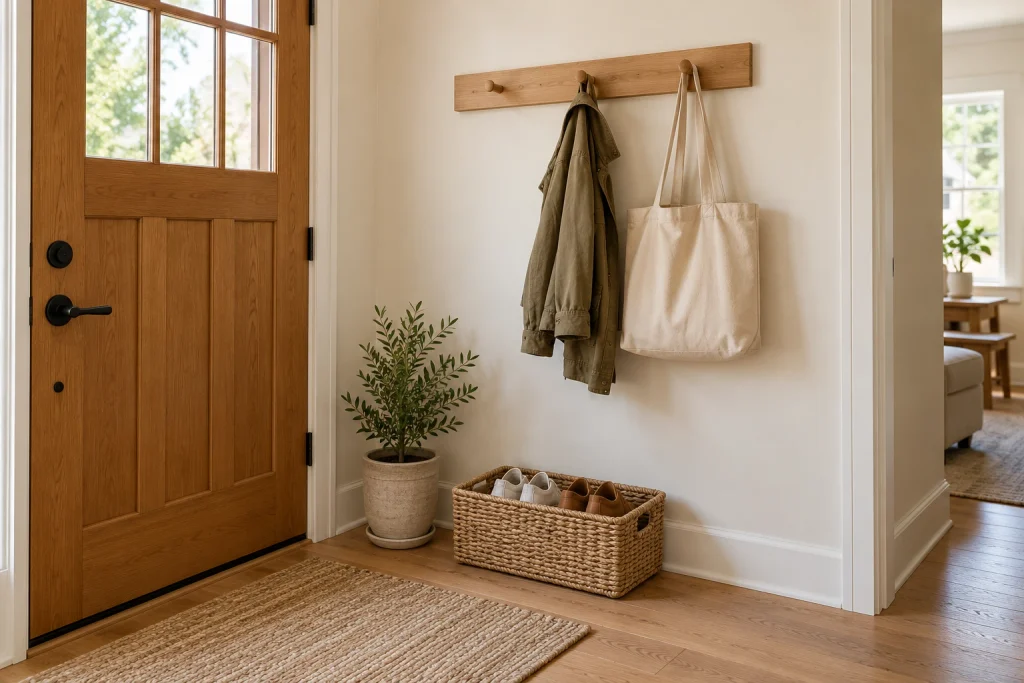
7. Replace a Bulky Coat Rack With a Simple Hook Rail
A large freestanding coat rack can quickly crowd a small entrance. A simple wall mounted hook rail uses the vertical space instead, leaving more room for walking and shoe storage.
Choose a rail with enough hooks for the items your household actually uses every day. Wood pegs create a softer, natural look, while black metal hooks suit a more contemporary entrance. Avoid hanging every coat and bag you own in one place; keep seasonal extras in a closet or another storage area.
Make sure the rail is installed securely for its intended load. In a rental where drilling is restricted, consider an over the door hook rack or another removable solution suitable for the door.
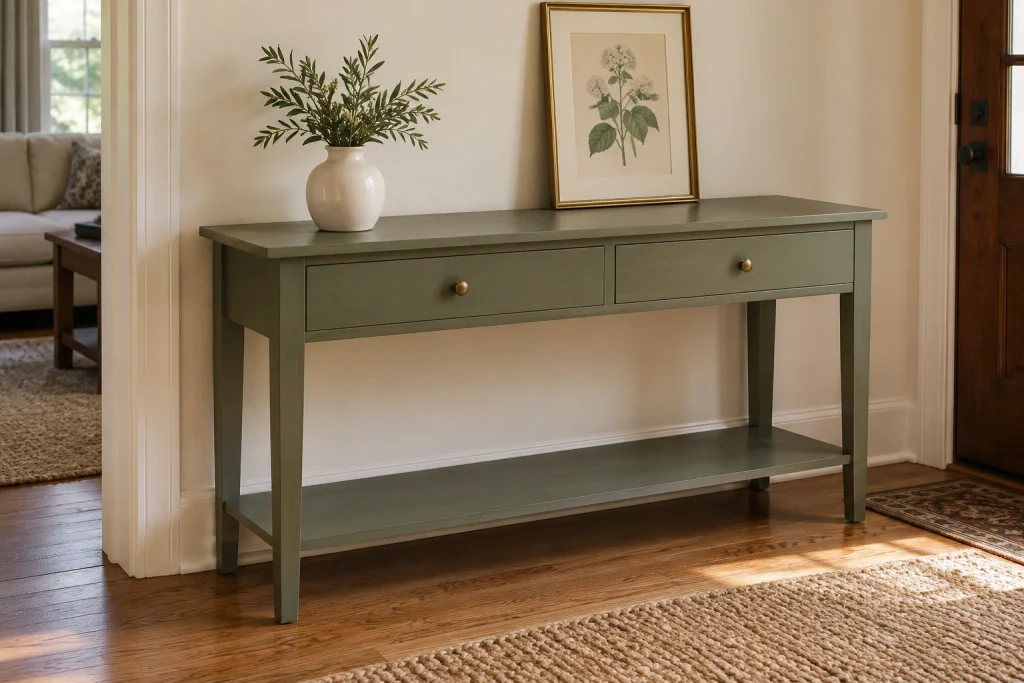
8. Give an Old Table a Fresh Finish
A secondhand table can become a distinctive entryway feature with careful preparation and a fresh finish. This is a good option if the furniture is structurally sound but looks tired or no longer matches your home.
Clean the piece, repair loose components, and prepare the surface according to the paint or finish manufacturer’s instructions. Muted olive, warm white, charcoal, and soft earthy shades can work well, but choose a color that connects with your existing flooring and walls.
You do not need to distress the finish or add elaborate decorative details. A clean, consistent finish and simple hardware can make the table feel intentional. Avoid painting valuable antique furniture before checking whether refinishing could reduce its value.
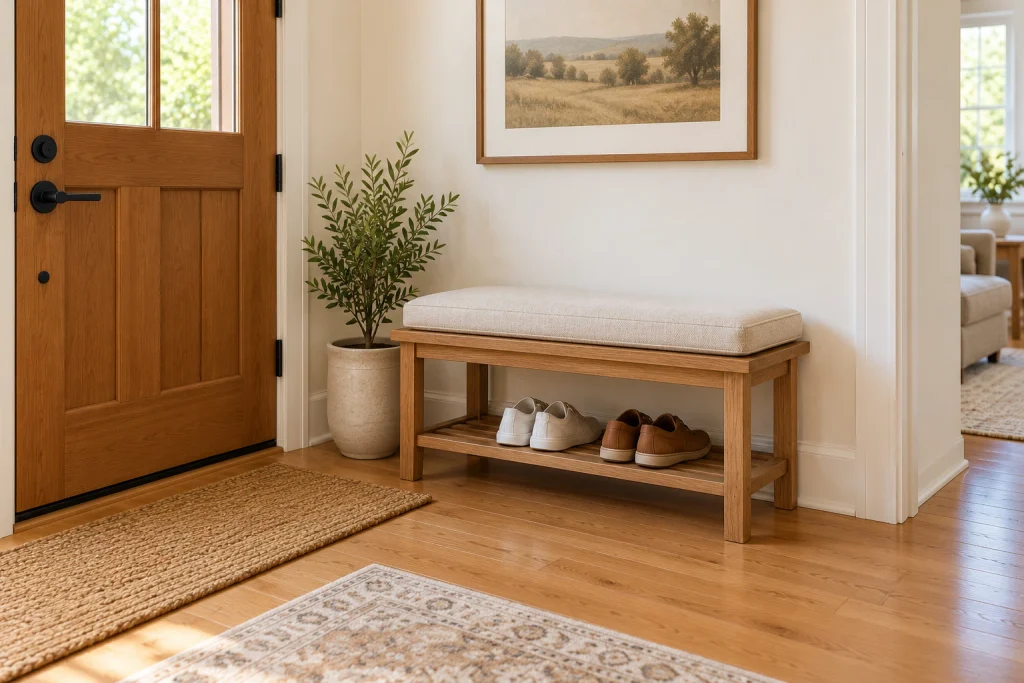
9. Add a Compact Bench for Everyday Shoes
If family members regularly change shoes near the door, a small bench can make the entrance more comfortable and organized. Choose a compact design that suits the wall and leaves a clear path for opening the door and walking through the space.
A simple wooden bench can be affordable secondhand, while a cushioned option adds comfort if you have room. Place only the shoes you currently use underneath it, or use one basket to keep them contained.
Do not buy a bench simply because it looks attractive in a large foyer photograph. Measure the actual available space first. In a very narrow hallway, a stool or a small wall mounted solution may be more practical.
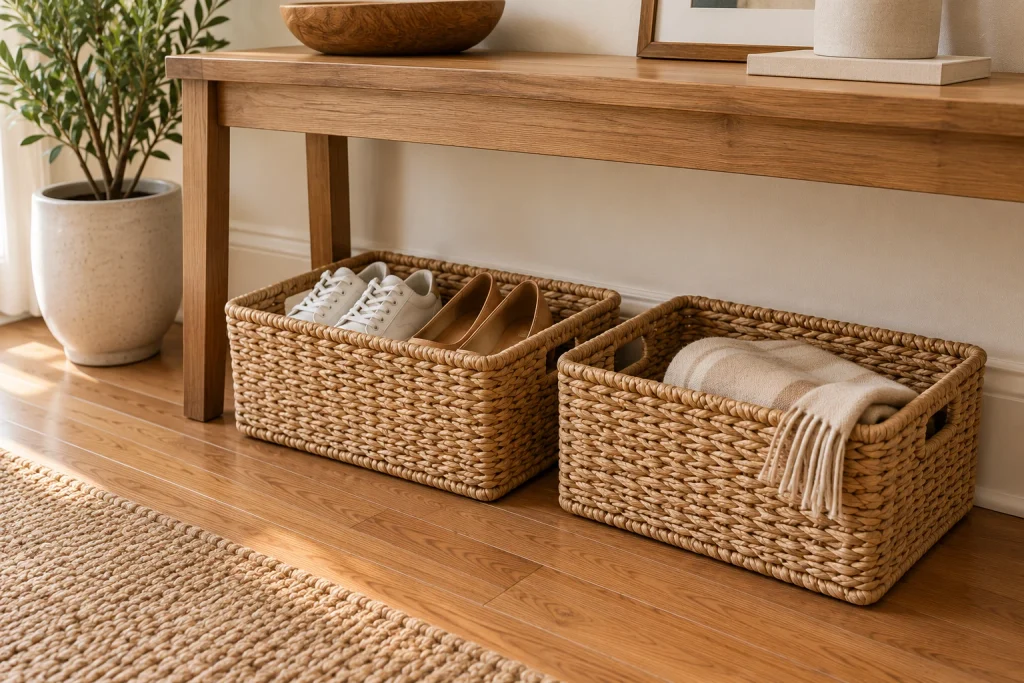
10. Use Baskets to Control Shoe Clutter
A basket can be a practical alternative to an expensive shoe cabinet when only a few pairs need to stay near the door. It gives shoes a defined place and makes the area look more organized without adding another large piece of furniture.
Choose a sturdy basket with enough room for the shoes you wear regularly. Woven baskets bring texture to a neutral entrance, while fabric bins can work well in a more contemporary space. If the basket will hold damp or muddy shoes, select a material that can be cleaned appropriately and allow footwear to dry before storing it.
For a family, two smaller containers may be easier to use than one oversized basket. Keep the contents limited so the system remains manageable.
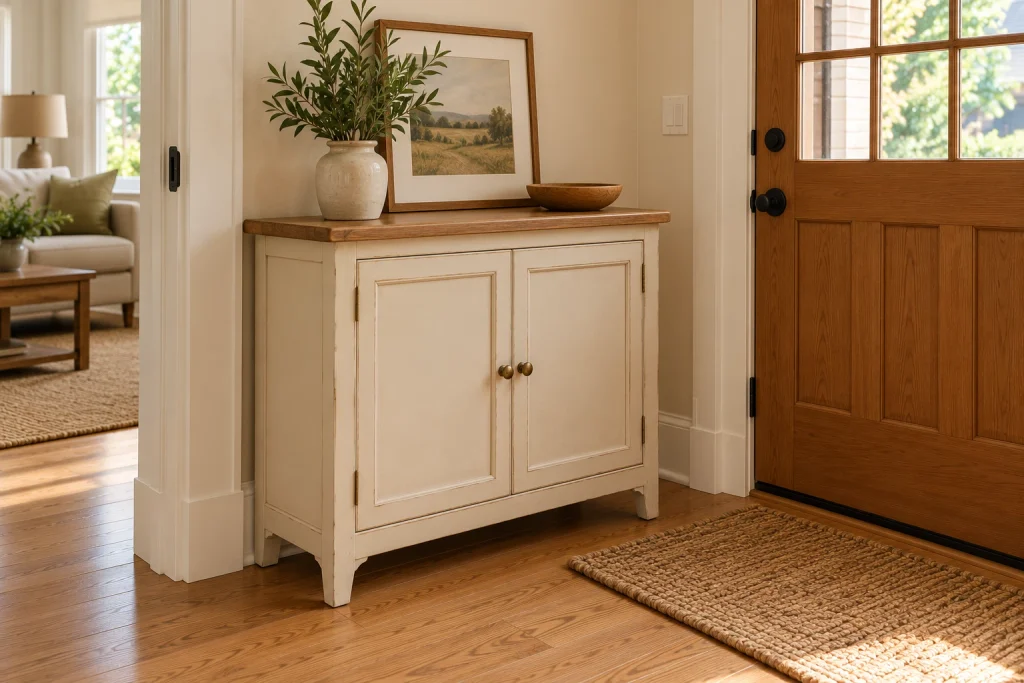
11. Use a Small Cabinet to Hide Everyday Clutter
Open shelves are convenient, but they can look messy when they hold shoes, bags, and miscellaneous items. A compact secondhand cabinet provides concealed storage and gives you a surface for one or two decorative accents.
Before buying, measure the depth, door swing, and available floor area. Check that the shelves are suitable for your belongings and that the cabinet does not obstruct the entrance. A fresh coat of paint or new hardware can help an older piece coordinate with your decor.
Keep the top simple. A small lamp, framed print, or shallow bowl is enough to soften the furniture without creating another cluttered surface.
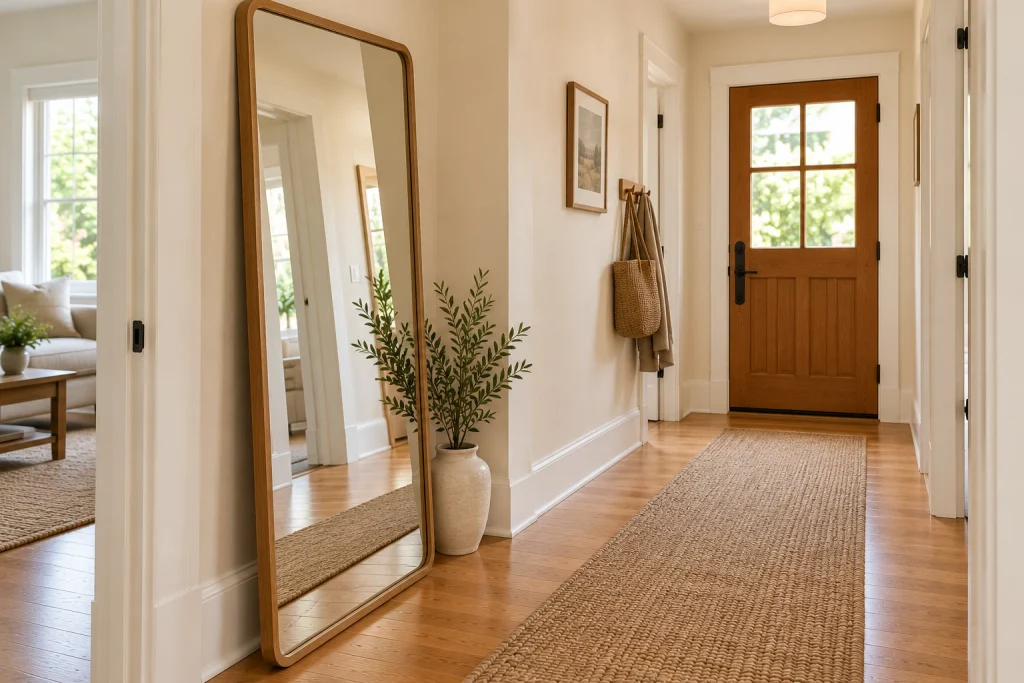
12. Use a Full Length Mirror in a Narrow Hall
A full length mirror can be more useful than a small decorative mirror if you want to check your outfit before leaving. In a narrow hall, a tall mirror also draws the eye vertically and can make the wall feel less bare.
If wall mounting is not possible, consider a stable leaning mirror with suitable support and placement. Keep it away from the door swing and secure it according to the manufacturer’s instructions, especially in homes with children or pets.
Choose a frame that relates to other finishes in the space rather than trying to make the mirror a perfect match for every accessory. A simple black, natural wood, or understated metal frame can work with a range of styles.
13. Make a Plain Wall More Interesting With a Painted Accent
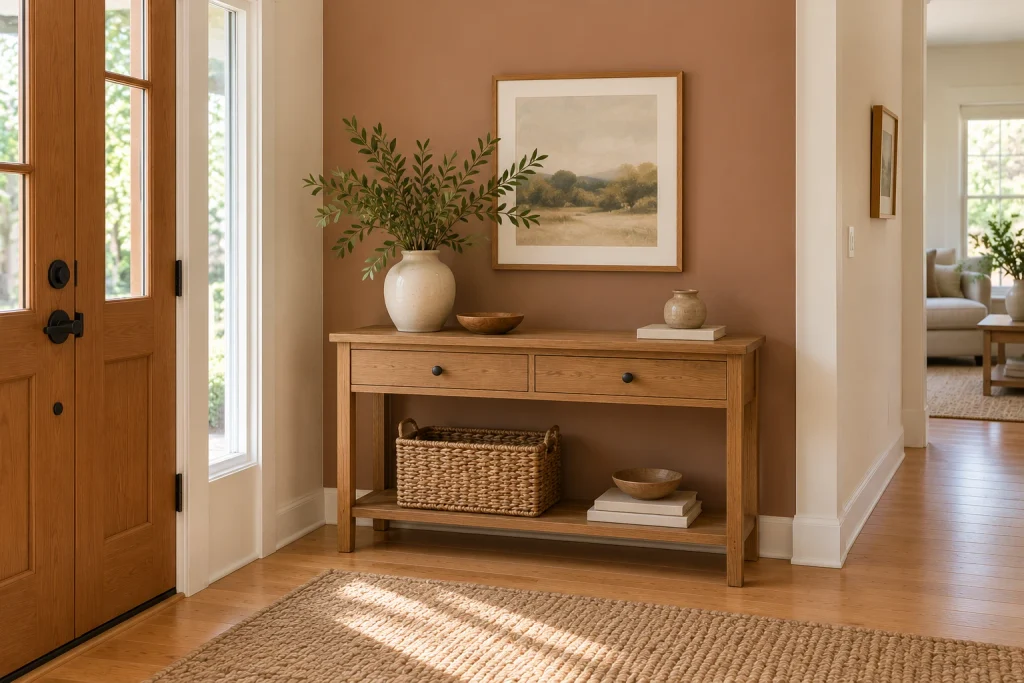
Paint can transform a plain entryway without the expense of replacing furniture. A muted earthy color behind a console or a carefully painted section of wall can define the entrance and connect it visually to the rest of the home.
You could use a soft olive, warm clay, muted blue, or a deeper neutral depending on your existing colors. Test a sample under the lighting conditions in the entrance before committing, since hallways often receive less natural light than other rooms.
If you rent, check the lease before painting. If painting is not an option, introduce color through framed art, textiles, or a movable piece of furniture instead.
14. Create a Welcoming Look With One Plant or Branch Arrangement
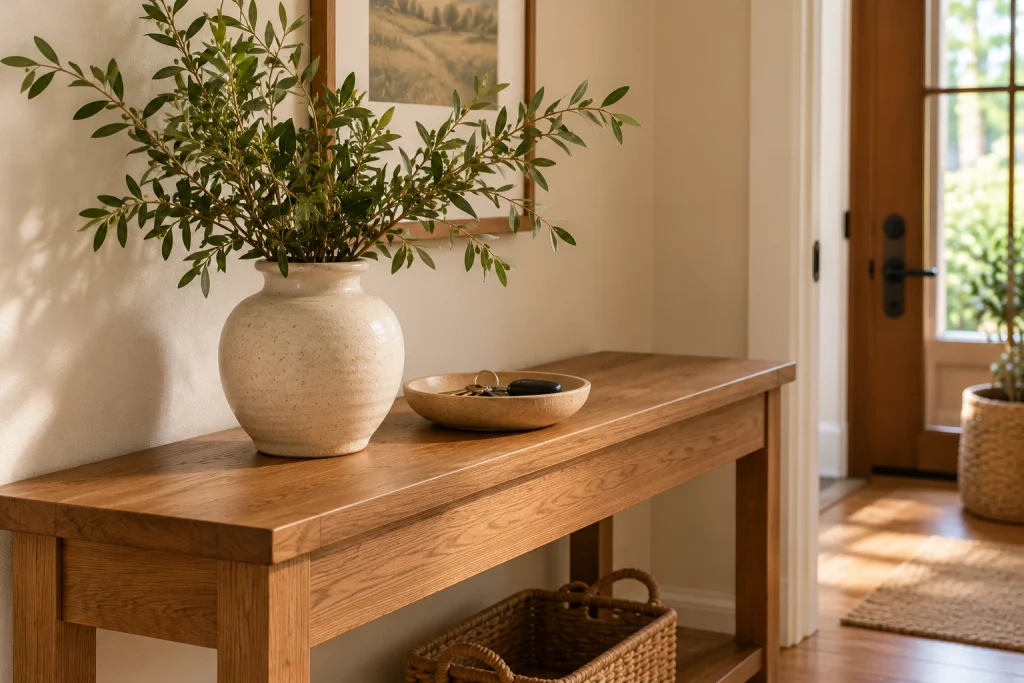
A plant or branch arrangement can soften an entrance that feels dominated by hard surfaces. You do not need several pots or a large floor plant. One small arrangement can provide enough natural texture to balance a mirror, table, or framed artwork.
Choose a living plant according to the available light and the care you can provide. If the entrance is dark, a suitable low light tolerant plant or a realistic artificial arrangement may be more practical. Branches in a stable vase can also work when there is little room for a pot.
Keep the arrangement proportionate to the furniture and away from the door’s path. In a small entrance, one natural element is often more effective than a collection of tiny decorative items.
15. Upgrade the Lighting Without a Major Renovation
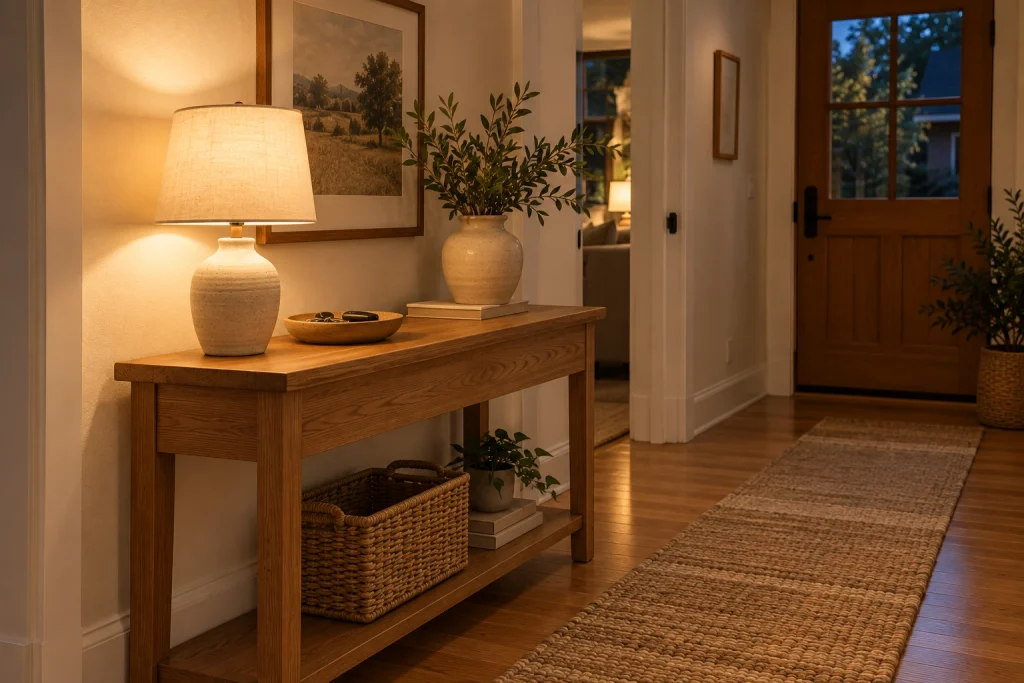
An entrance can feel cold or unfinished when the lighting is harsh or the area is too dim. If your existing fixture supports it, replacing the bulb with a suitable warm white option may be an inexpensive improvement. A small table lamp can also add a softer glow when a nearby outlet is available.
Choose the bulb according to the fixture’s specifications, including its maximum wattage and compatible bulb type. Keep lamp cords out of walking routes, and avoid placing lights where they can be knocked over by bags or coats.
If you rent, portable lighting is often simpler than replacing a ceiling fixture. Any electrical modification should follow the relevant safety requirements and be handled by a qualified professional when necessary.
16. Style the Entrance With Two or Three Coordinated Colors
An entryway often looks more expensive when the finishes and colors feel connected. Start with the wall and floor colors you already have, then repeat two or three complementary tones through your mirror frame, rug, artwork, baskets, or small furniture.
For a calm natural look, try warm white, oak, and muted green. For a more graphic style, use cream, black, and medium wood. You do not need to replace everything; sometimes moving a frame or lamp from another room is enough to make the space feel more cohesive.
Avoid matching every accessory too precisely. A little variation in texture and material makes the room feel collected rather than purchased as one set.
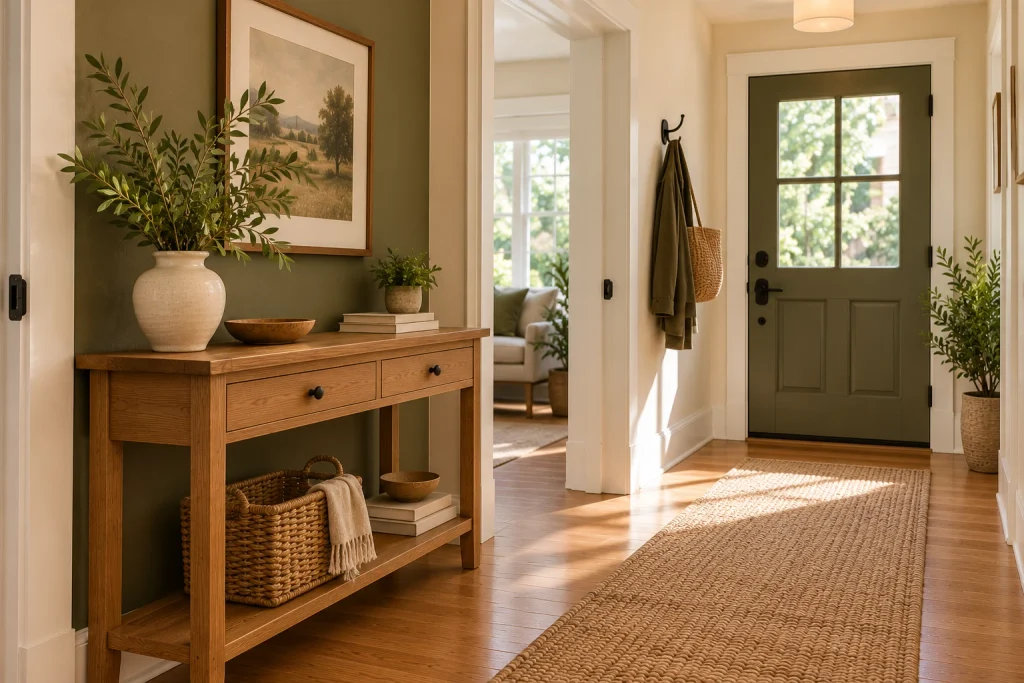
17. Make a DIY Key and Mail Station
If your entrance tends to collect keys, receipts, and letters, give those items a specific home. A small wall organizer, shallow shelf, or compact desktop file can keep the most frequently used essentials easy to find.
Choose an arrangement that fits your routine. Keys may need a small dish, while important mail benefits from a separate upright holder. Avoid creating a large command center if you only need a place for a few items.
If you want to build a simple wooden organizer, sand the material properly and use suitable mounting hardware. For renters who cannot drill, a small freestanding tray and file may be a better solution.
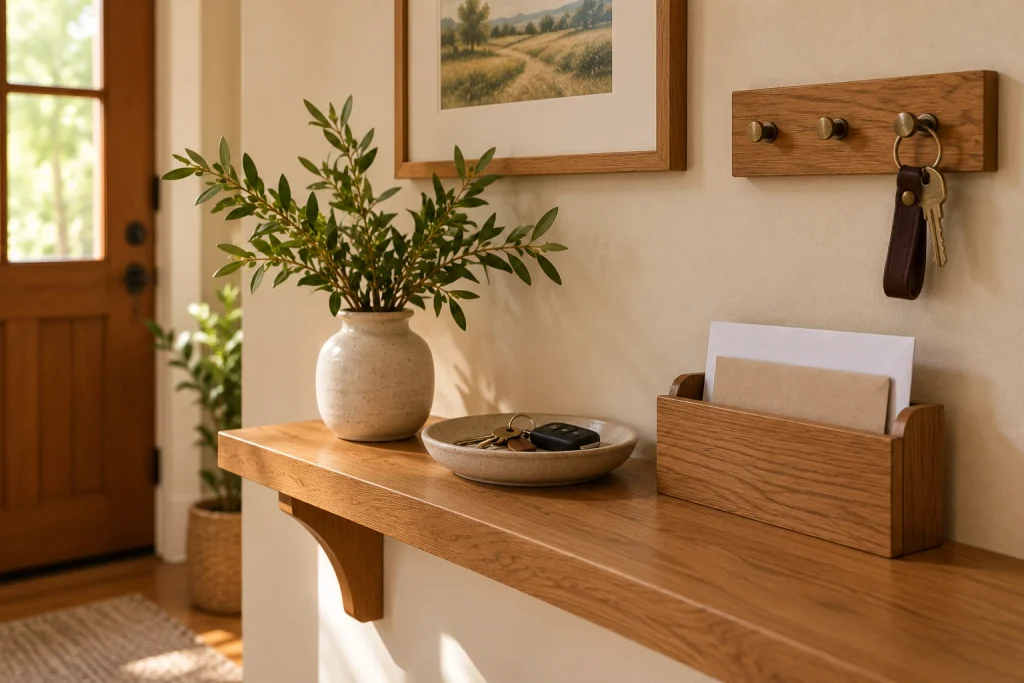
18. Add a Small Stool Instead of a Full Bench
A stool can provide a useful place to sit while putting on shoes when a bench would take up too much room. It can also be moved when you need to clear the entrance for guests or larger items.
Choose a sturdy stool with a footprint that suits the available space. A plain wood design works in a natural interior, while a small upholstered stool can add softness. If you need storage more than seating, a basket may be a better use of the same area.
Keep the stool out of the door swing and do not use a lightweight decorative stool as a step ladder. The best choice is one that safely suits its intended purpose.
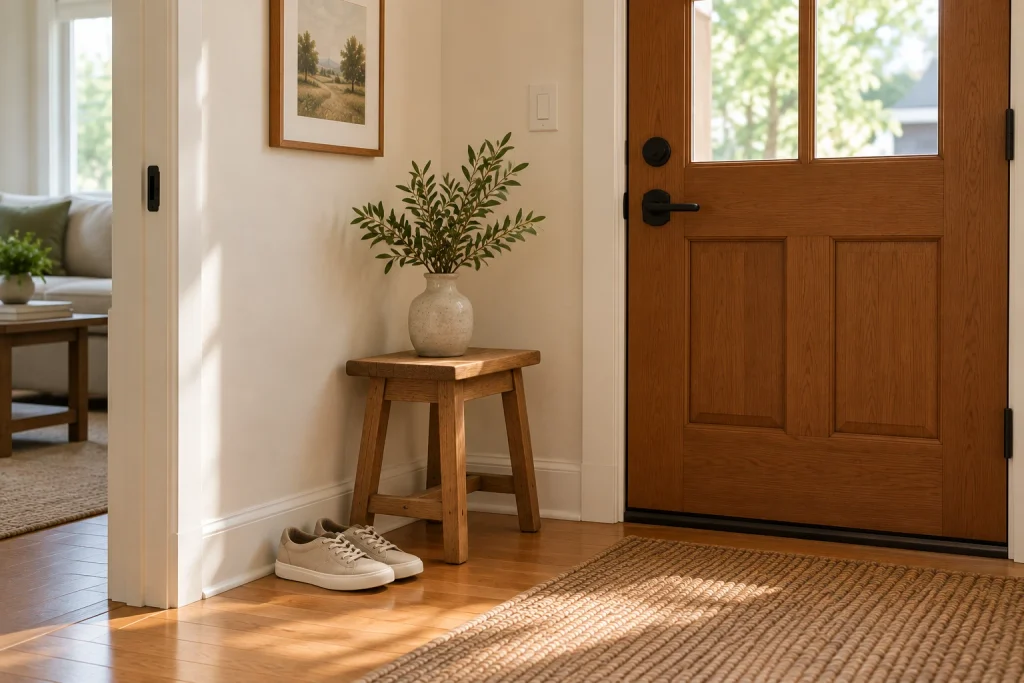
19. Refresh the Entrance With Removable Decor
Renters can still create a personal entryway without making permanent changes. Freestanding furniture, artwork resting on a shelf, suitable removable hooks, and decorative accessories can add character while keeping the setup flexible.
If you use adhesive products, check the manufacturer’s surface and weight guidance. Test suitability before relying on them for anything heavy, and follow removal instructions carefully because not every wall finish responds the same way.
A removable setup also makes it easy to rearrange the entrance when your needs change. Begin with a tray, a portable mirror, and a small storage basket rather than buying several pieces at once.
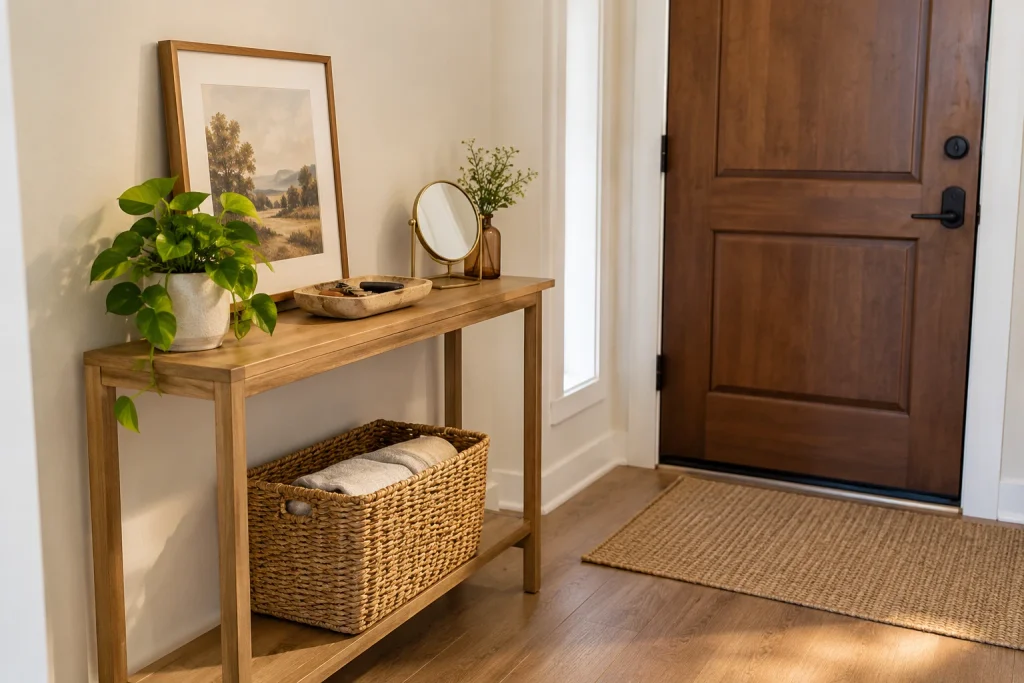
20. Give Seasonal Decor a Small, Defined Place
Seasonal accessories can refresh an entryway without requiring a completely new design. In fall, try a few natural branches, a textured runner, or a muted rust colored cushion. In winter, switch to evergreen stems or a simple wreath. For spring and summer, lighter textiles and fresh greenery can make the entrance feel different without replacing the furniture.
Keep the main storage pieces and larger accessories useful throughout the year. Changing one or two smaller details is often more affordable and easier to maintain than creating an entirely new display every season.
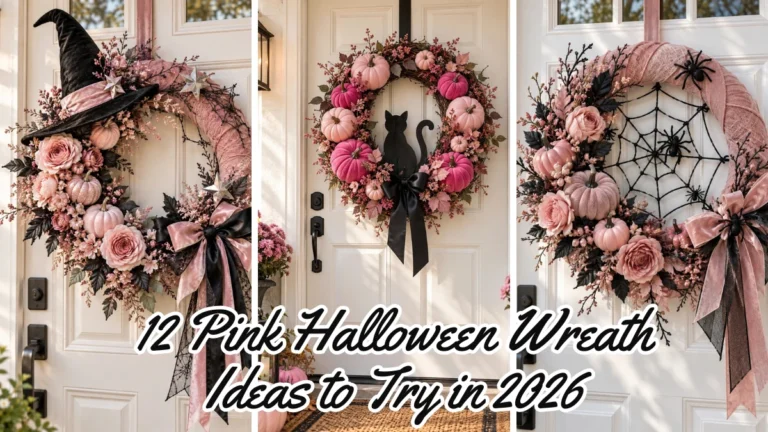
If you want to extend a Halloween theme to the outside of your home, see these DIY Halloween decorations for outside. For a more focused seasonal doorway project, explore this Halloween wreath for the front door. Both complement the seasonal side of decorating without changing the focus of this evergreen interior guide.
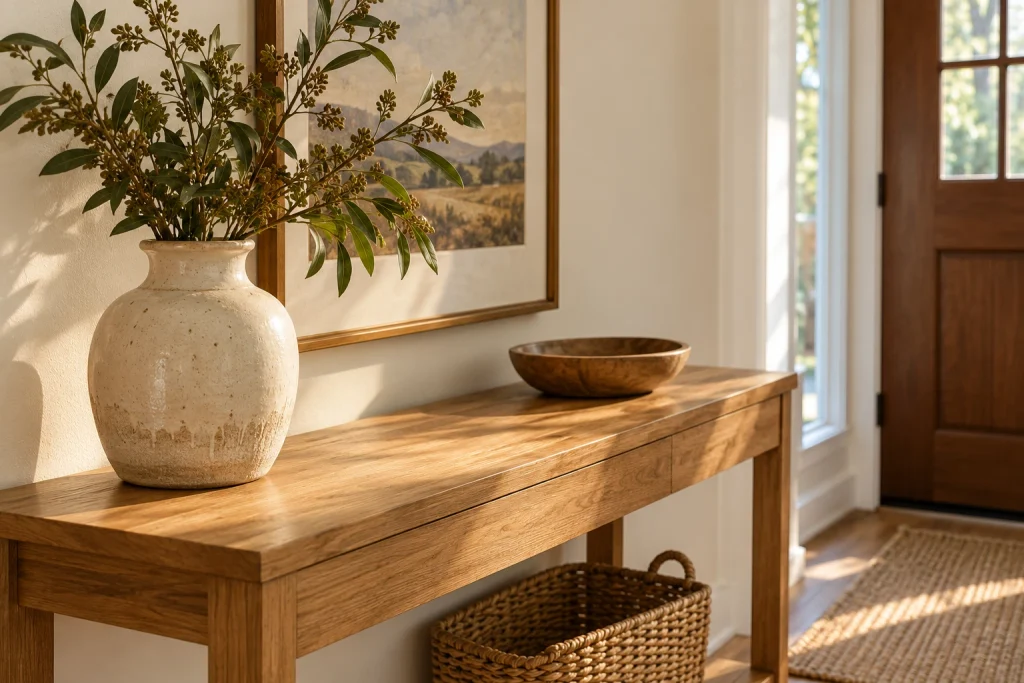
21. Use a Thrifted Ceramic Piece as the Main Accent
A single interesting decorative object can give an entrance more personality than several inexpensive accessories placed together. Look for a sculptural ceramic vase, a vintage bowl, or a handmade looking piece at a secondhand shop.
Choose an object that suits the scale of your furniture. A low console can support a slightly taller vase, while a narrow floating shelf needs something compact and stable. If you already have an interesting piece in another room, try moving it before purchasing something new.
The aim is not to fill the table. Leave breathing room around the object so its shape and texture can stand out.
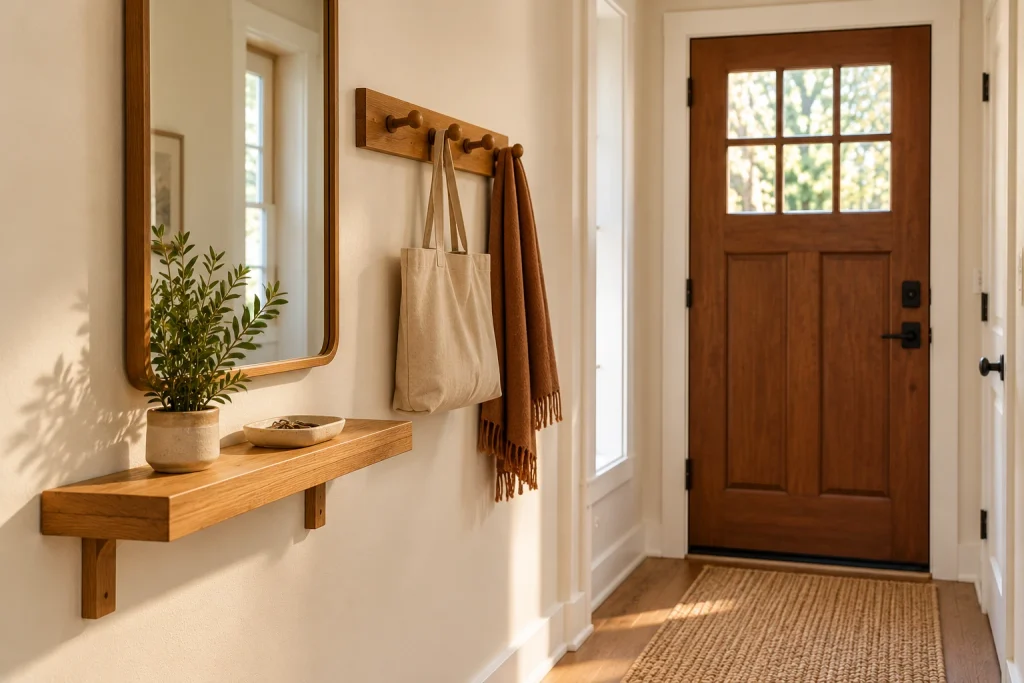
22. Make a Narrow Wall Useful With Vertical Storage
When floor space is limited, use a small section of wall for the things you need most often. A vertical arrangement of hooks, a compact mirror, and a shallow shelf can make a narrow entrance more functional without adding a cabinet or bench.
Plan the layout before installing anything. Keep frequently used items within comfortable reach and leave enough room around switches, door trim, and the front door. Use suitable mounting hardware for the wall type and intended load.
For renters, consider an over the door organizer or a freestanding alternative if permanent mounting is not permitted. The point is to use available space more efficiently, not to cover every inch of the wall.
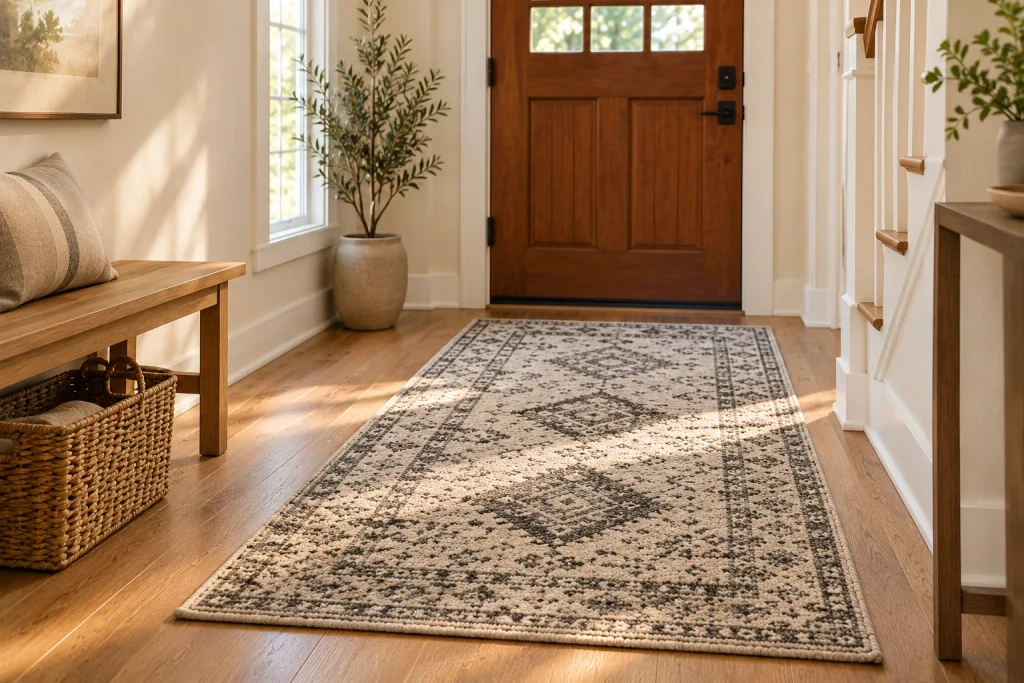
23. Choose a Small Washable Rug With Pattern
A patterned rug can add interest to an entryway without requiring additional furniture or wall decor. A subtle stripe, small geometric design, or understated vintage inspired pattern can help the entrance feel more finished while being practical for everyday traffic.
Choose a rug made for the conditions in your home. Consider whether it will encounter rain, mud, pets, or frequent foot traffic. Look for a design that can be cleaned according to its care instructions, and use a suitable nonslip pad if needed.
Do not choose a rug that is too large for the entrance or that catches under the door. The right size makes the space feel defined without blocking movement.
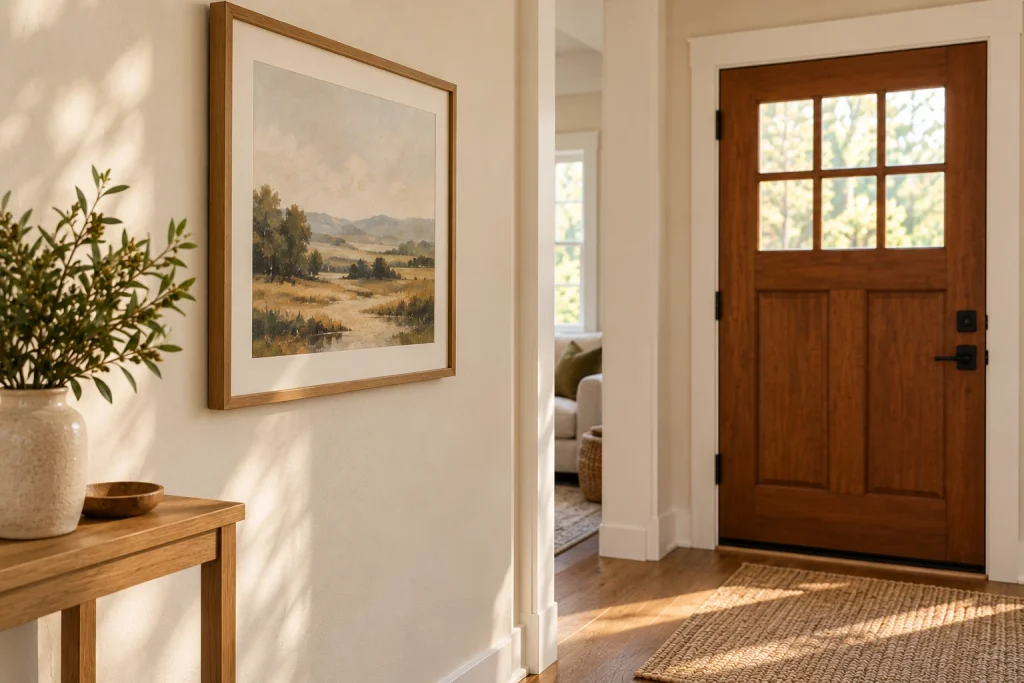
24. Create a Small Focal Point With One Piece of Artwork
If the entryway feels empty but has little room for furniture, artwork can do most of the decorative work. Choose a print, painting, or photograph that relates to the colors in the adjoining room and hang it where it can be seen naturally when entering the home.
A larger piece can be more effective than several tiny frames on a narrow wall. If you prefer a collection, keep the frames aligned and use consistent spacing so the arrangement looks deliberate.
Use appropriate hanging hardware for the artwork’s weight and wall type. In a rental, a lightweight frame on a shelf or a suitable removable hanging system may be a better option.
25. Edit the Space Before Buying Anything Else
The final idea is to stop decorating when the entrance already works. Remove items that do not belong there, relocate seasonal shoes, clear unused bags, and leave enough empty space for the furniture and focal point to be noticed.
Stand at the front door and look at the entrance as a whole. Is there a clear place for keys? Can people walk through comfortably? Is one feature drawing the eye, or are too many accessories competing for attention? Answering these questions can reveal what the room needs more clearly than another shopping trip.
Sometimes the best budget makeover is simply moving a lamp from another room, removing two unnecessary objects, and giving the remaining pieces a little breathing room.
How to Choose the Best Budget Entryway Ideas for Your Home
You do not need to recreate every idea in this article. Choose the changes that solve your biggest problem first.
If your budget is very small: Start by decluttering, rearranging existing furniture, repurposing a tray, or moving artwork from another room.
If you need better organization: Prioritize hooks, a shoe basket, a key station, or a small cabinet that fits your entrance.
If your entryway looks bare: Choose one focal point, such as a mirror, framed artwork, or a painted accent area.
If you live in a small apartment: Look for shallow furniture, floating storage where permitted, compact stools, and vertical wall solutions.
If you rent: Focus on movable pieces and reversible decor. Check your lease and the installation instructions before using adhesives or mounting anything.
Common Mistakes to Avoid
Buying furniture before measuring. A cheap console can become an expensive mistake if it blocks the front door or leaves too little room to walk.
Decorating before organizing. Extra baskets and trays will not fix clutter unless the things you use every day have a consistent place.
Choosing accessories that are too large. A substantial mirror may suit a wide foyer, while a compact entrance needs pieces that respect its scale.
Ignoring maintenance. Rugs, baskets, and furniture near the front door need to suit real foot traffic, dirt, and moisture.
Adding too many finishing touches. A simple entrance with a clear focal point often looks more polished than one filled with small decorations.
Frequently Asked Questions
How can I decorate my entryway on a tight budget?
Start with items you already own. Rearrange a small table, reuse a mirror, create a key tray, or move framed artwork near the entrance. Spend only after identifying the main problem you want to solve, whether that is clutter, a bare wall, or a lack of practical storage.
How do I make a small entryway look bigger?
Keep the walking path clear, use appropriately sized furniture, and consider a mirror to reflect available light. Wall mounted storage can free up floor space where installation is suitable. Avoid filling every surface with decorations.
What should I put in an entryway?
Most homes benefit from a designated place for keys and daily essentials, a practical shoe solution, and a way to store frequently used coats or bags. A mirror, rug, or piece of artwork can make the area more welcoming if space allows.
How can I decorate an entryway in a rental?
Use freestanding furniture, portable lighting, artwork on shelves, and removable accessories. Before mounting shelves or using adhesive hooks, check the lease, wall surface, product instructions, and intended load.
How can I make an entryway look expensive without spending much?
Focus on proportion, a limited color palette, suitable lighting, and uncluttered surfaces. A thrifted mirror, refreshed table, and one thoughtful decorative accent can create a coordinated appearance without buying a matching furniture set.
Make Your Entryway Work Harder for Less
A beautiful entryway does not depend on expensive furniture or a large foyer. It comes from choosing pieces that fit the space, organizing the things you use every day, and adding a few details that reflect your style.
Start with one change that will make your daily routine easier. Then add a mirror, artwork, greenery, or a refreshed secondhand piece if the entrance needs more character. Thoughtful decorating can make even a small entrance feel welcoming without turning a simple home refresh into an expensive project.




One Comment