12 Small Bedroom Setup Ideas That Make a Small Room Feel More Organized
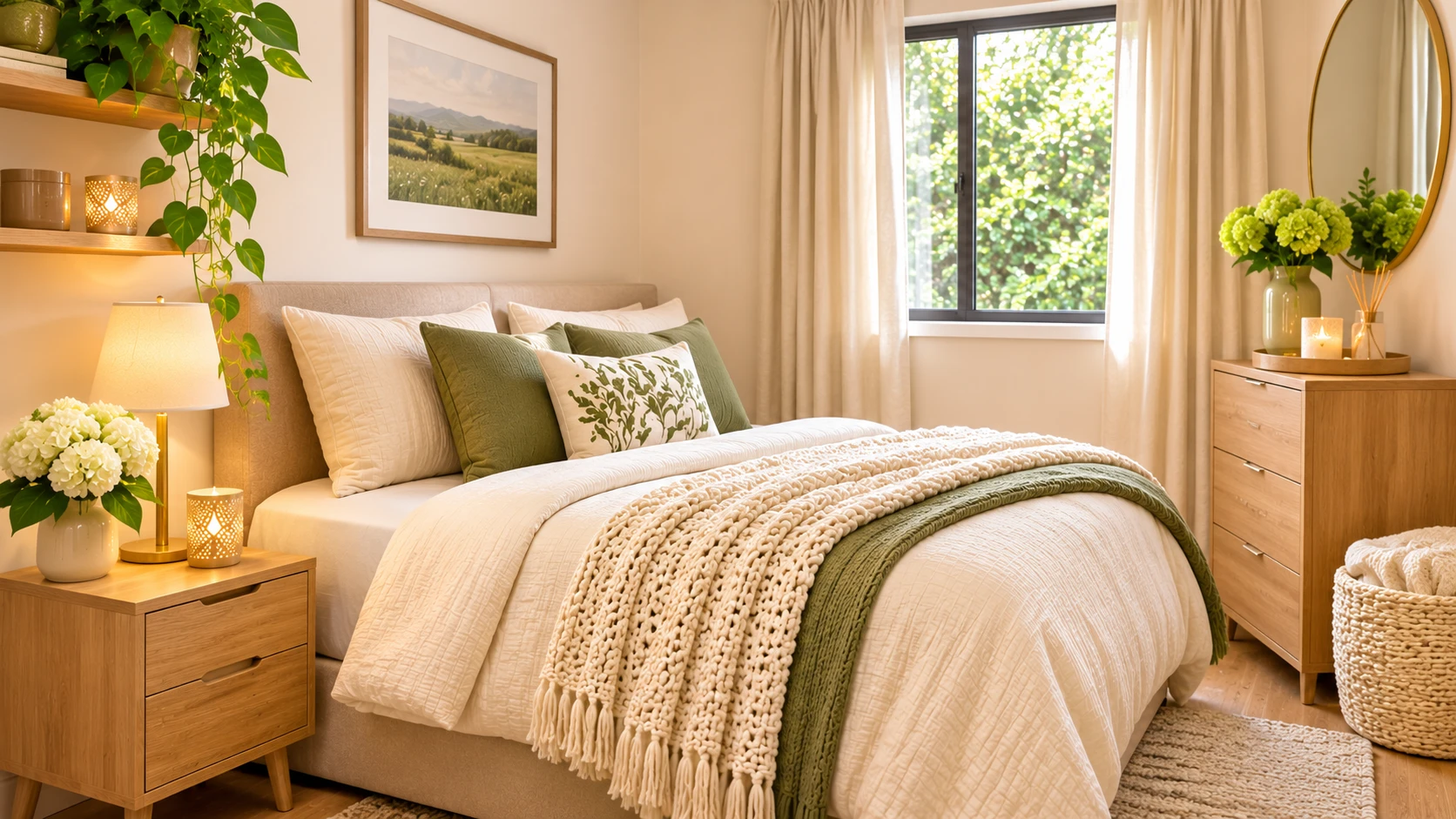
A small bedroom can be comfortable, stylish, and practical when every part of the room has a purpose. The challenge is finding enough space for your bed, clothes, everyday essentials, and decorative pieces without making the room feel crowded.
The best small bedroom setup ideas focus on smart furniture placement, useful storage, clear walking paths, and simple decorating choices. You do not necessarily need to buy new furniture or completely redesign your room. Sometimes, moving one piece, clearing a surface, or using an overlooked corner can make a noticeable difference.
Whether you live in a tiny apartment, share a bedroom, or simply want to organize a compact space, these 12 small bedroom setup ideas can help you create a room that feels calmer and works better for your daily routine.
1. Plan Your Bedroom Layout Before Moving Furniture
Before buying storage boxes or moving heavy furniture, look at how your bedroom is currently arranged. A practical layout should make it easy to enter the room, reach your bed, open drawers, and access your closet.
Measure the room and the larger furniture pieces first. Pay attention to the door swing, window position, wardrobe doors, and the space needed to walk around the bed.
Try these simple layout improvements:
- Place the bed where it does not block the main walking route.
- Keep frequently used furniture within easy reach.
- Avoid placing large pieces where they prevent doors or drawers from opening.
- Use corners for furniture that does not need to sit in the center of the room.
- Remove furniture that serves no useful purpose.
Sketching a basic floor plan on paper can help you compare arrangements before doing the work. Leave enough clearance for comfortable movement rather than trying to fit every possible piece into the room.
2. Choose the Best Position for Your Bed
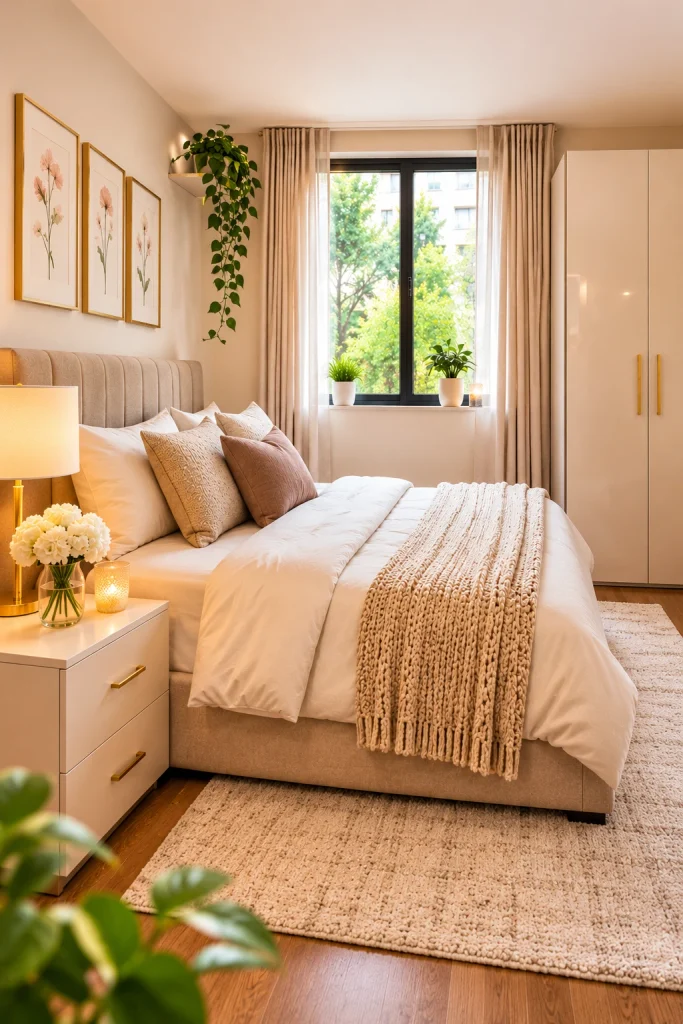
The bed usually occupies the largest area in a bedroom, so its position has a major effect on how the rest of the space functions.
In many small bedrooms, placing the bed against a wall or positioning the headboard on the most suitable solid wall creates a straightforward layout. However, the best arrangement depends on the location of windows, doors, radiators, and closets.
Consider these options:
- Bed against a wall: Useful when you need to preserve a wider walking path.
- Bed centered on a suitable wall: Can create a balanced appearance if the room allows enough clearance.
- Bed in a corner: May work in a very compact room, especially when one person uses the bed.
- A smaller bed frame: Can free up space if your current frame has a bulky headboard or oversized sides.
Measure the mattress and frame together before changing your layout. A smaller frame can sometimes be more practical than squeezing an oversized bed into the room.
If you are exploring broader space-saving design ideas, you can also read small living room ideas on a budget for inspiration on arranging furniture in compact spaces.
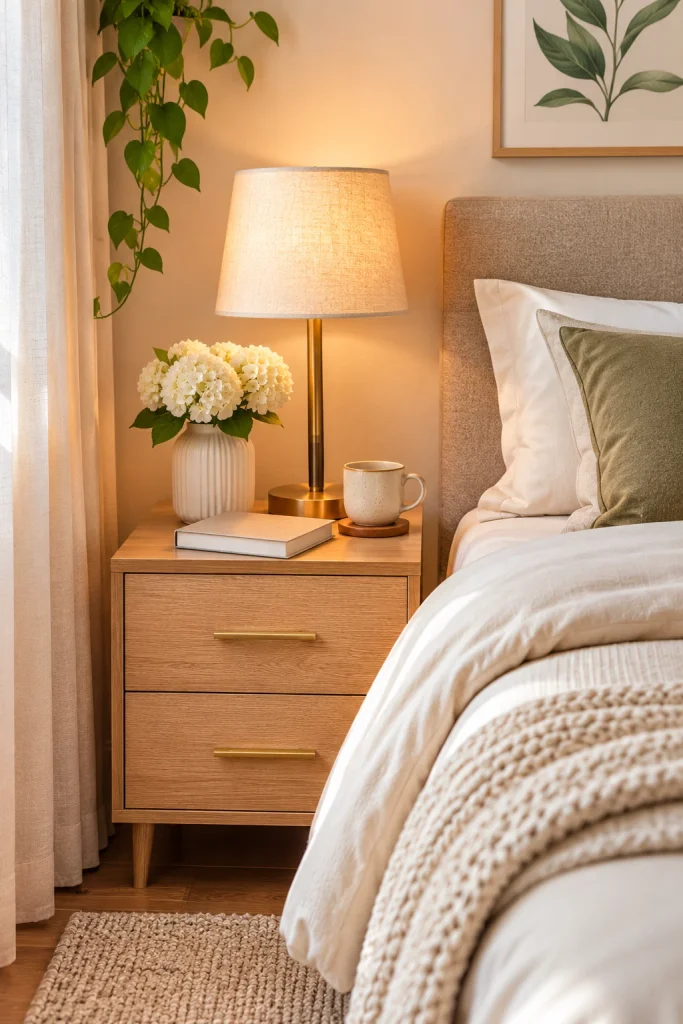
3. Replace Bulky Nightstands With Slim Alternatives
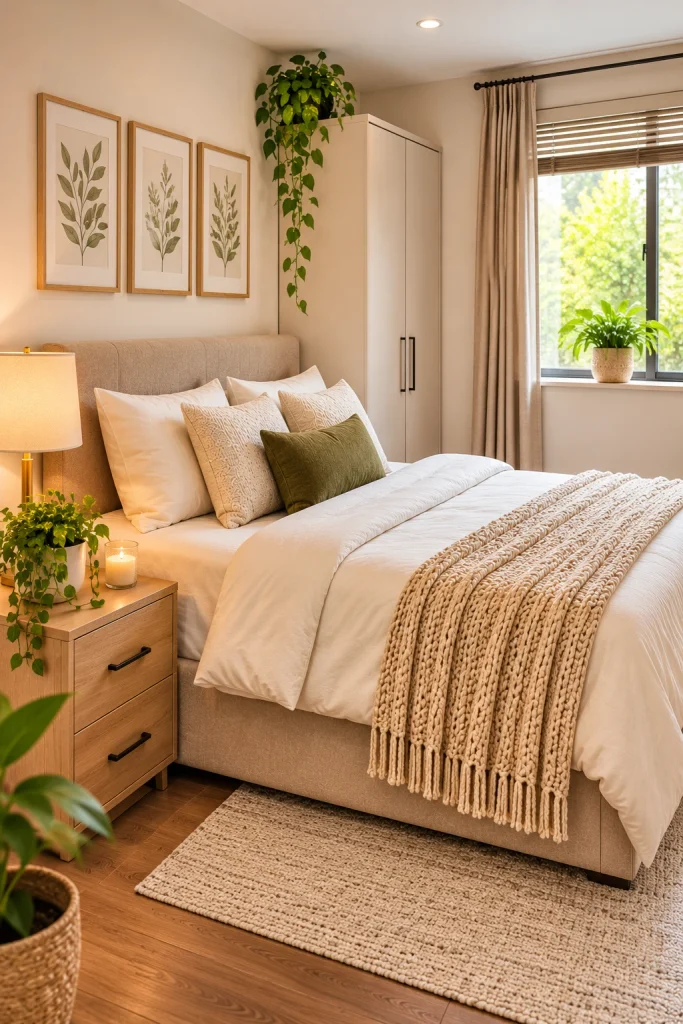
Large bedside tables can take up valuable floor space, especially when the bed sits close to a wall or wardrobe.
A narrow nightstand can provide enough room for a phone, book, glasses, and a small lamp without dominating the layout. You can also consider a small wall-mounted shelf if it can be securely installed in a suitable location.
Useful alternatives include:
- A narrow bedside table with one drawer.
- A floating shelf for lightweight everyday items.
- A small table with an open lower shelf.
- A compact wall-mounted reading light instead of a table lamp.
- A slim rolling cart that can be moved when needed.
Keep only frequently used items beside the bed. Extra decorations, unused chargers, and stacks of books can quickly turn a small surface into a cluttered one.
Renters should check their lease before installing wall-mounted shelves or lights. A freestanding alternative may be easier to use without making permanent changes.
4. Use Under-Bed Storage for Items You Do Not Need Every Day
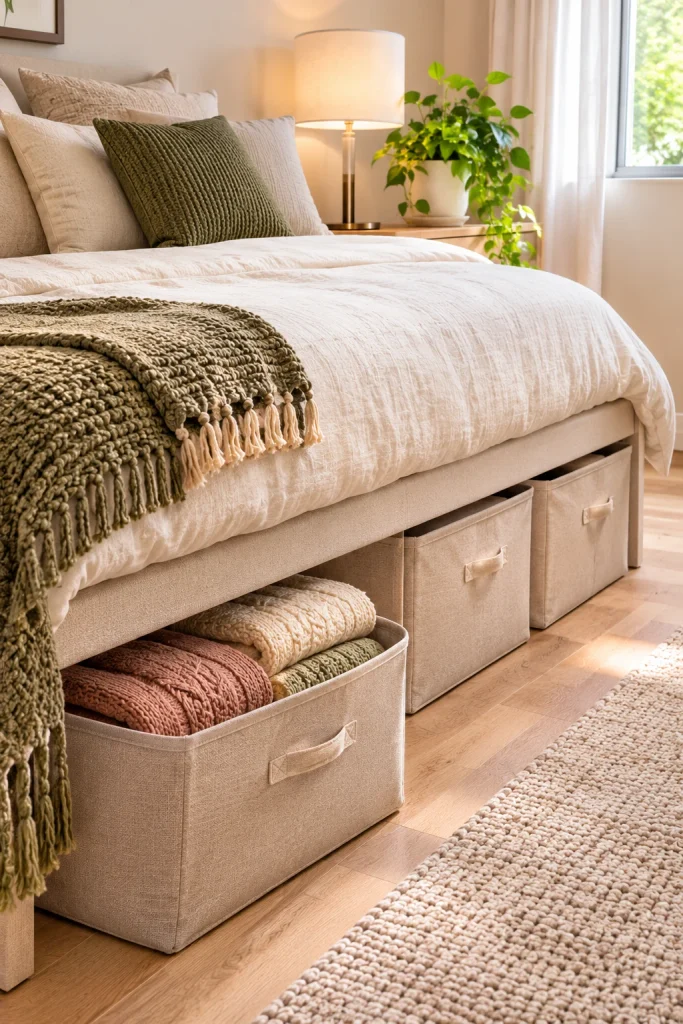
The area beneath the bed is often overlooked, even though it can be useful for storing seasonal clothing, spare bedding, or other belongings.
Before buying containers, check the height between the floor and the bed frame. Choose storage that slides easily and does not interfere with the bed’s stability or ventilation.
Practical under-bed storage options include:
- Flat containers for spare sheets and pillowcases.
- Fabric bags for seasonal clothing.
- Divided boxes for accessories.
- A bed frame with built-in drawers.
- Lidded containers for items that need protection from dust.
Label each container so you can find things without pulling everything out. Keep everyday items in easier-to-reach places and reserve under-bed storage for things you use less frequently.
If your bed sits directly on the floor, do not force containers underneath it. A few well-organized shelves or closet adjustments may be more useful.
5. Make Use of Vertical Wall Space
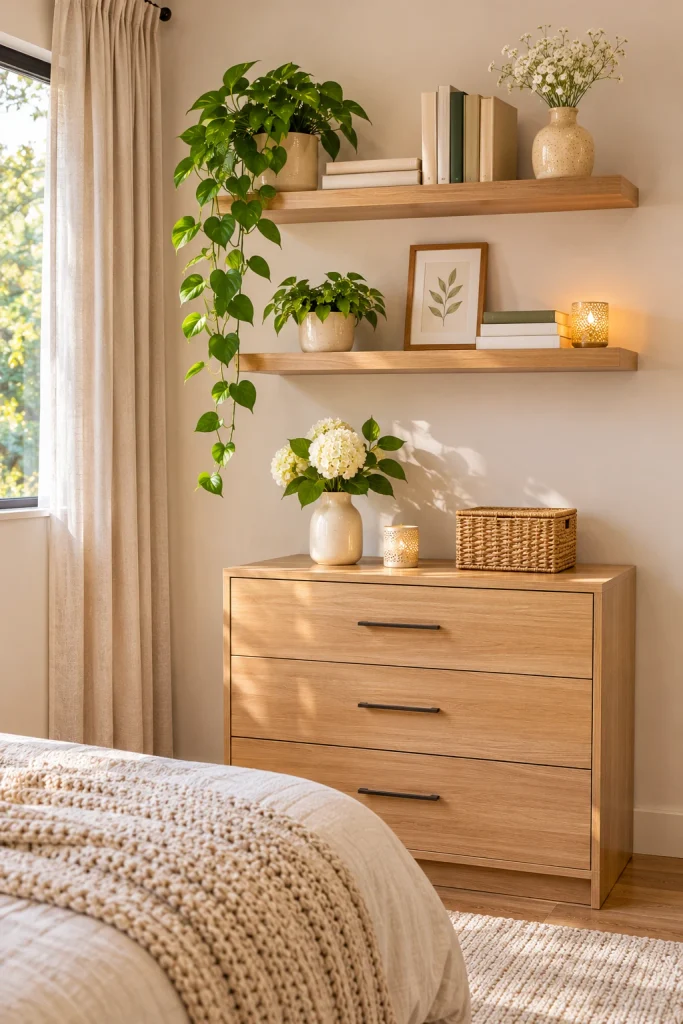
When floor space is limited, look at the walls. Vertical storage can hold books, decorative objects, baskets, and small everyday essentials without adding another large piece of furniture.
Depending on your room and rental restrictions, you could use:
- A shelf above a desk or dresser.
- Wall hooks for bags, hats, or lightweight accessories.
- A tall, narrow bookcase.
- Hanging organizers inside a closet.
- A pegboard for lightweight accessories or craft supplies.
Keep shelves organized rather than filling every available space. Heavy objects should be stored only on shelves and fixings rated for their weight, and shelves above a bed should be installed securely.
A few carefully arranged pieces often look more intentional than a wall covered with unrelated storage.
For more ideas on affordable wall styling, explore DIY wall art for beginners. You can use simple artwork to add personality without covering every wall with decorations.
6. Choose Furniture That Serves More Than One Purpose
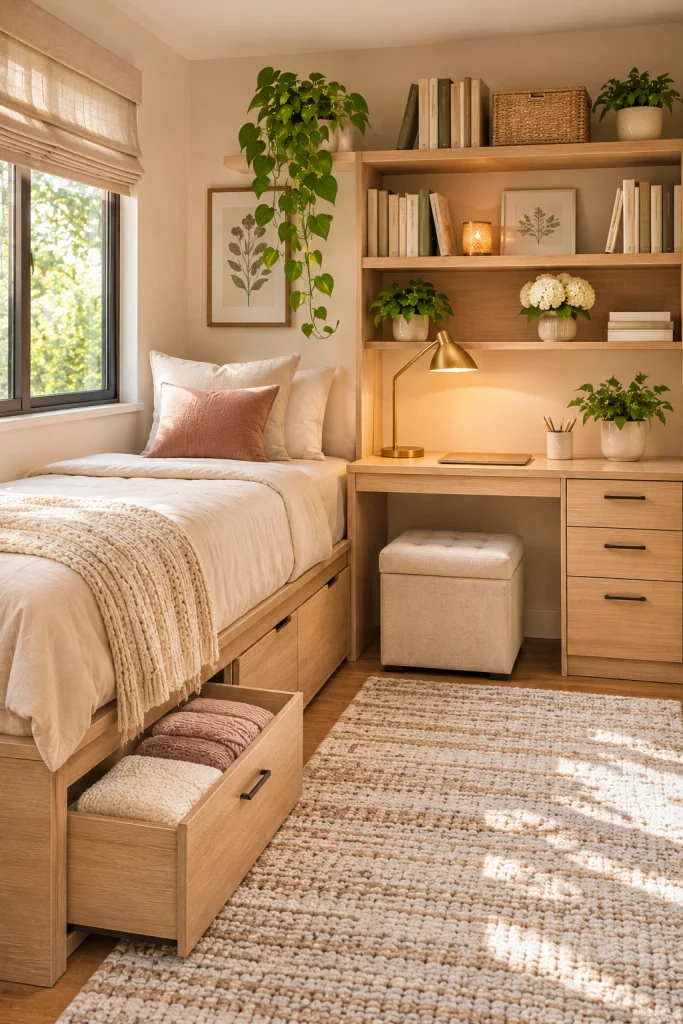
Multifunctional furniture can be especially helpful when one room needs to support several activities, such as sleeping, studying, getting dressed, and relaxing.
Instead of adding separate pieces for every task, consider furniture that combines useful functions.
| Furniture | How it helps |
|---|---|
| Bed with drawers | Stores clothing or extra bedding |
| Storage ottoman | Provides seating and concealed storage |
| Desk with shelves | Combines a work surface with storage |
| Narrow dresser | Stores folded clothing without taking up excessive floor space |
| Folding desk | Can free up room when the work surface is not needed |
| Mirror with storage | Combines a practical mirror with space for small essentials |
Choose furniture according to what you actually need. A storage ottoman is not helpful if you rarely use it, and a folding desk is unnecessary if you work comfortably elsewhere.
Measure each piece before buying it, including its fully opened or extended dimensions. A multifunctional item should make your room easier to use, not harder to move around.
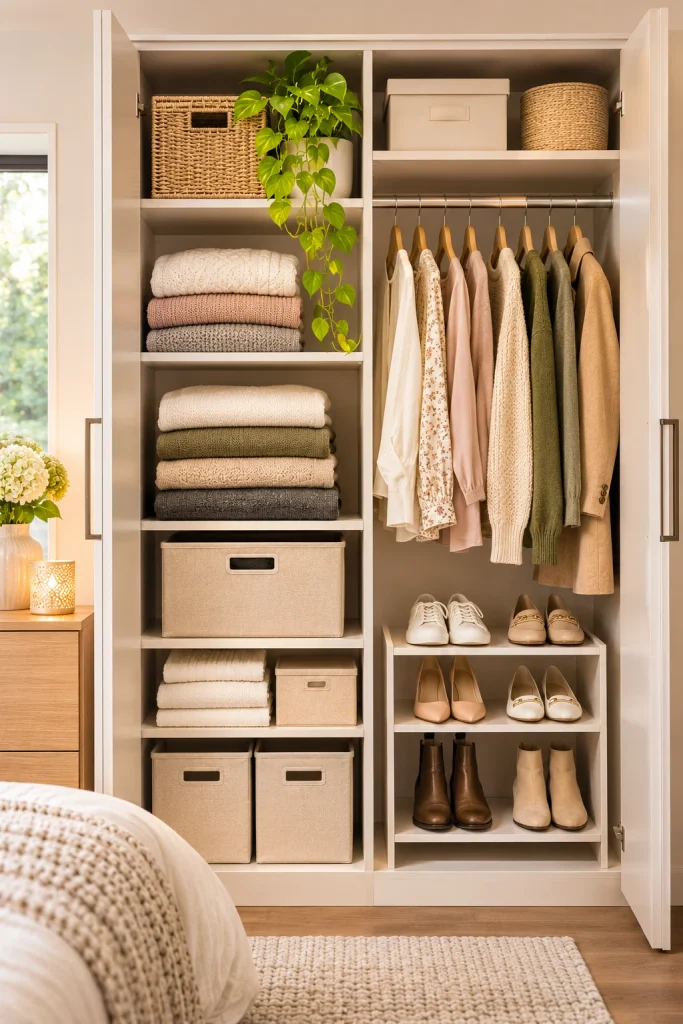
7. Organize Your Closet to Create More Usable Space
A crowded closet can make even a well-arranged bedroom feel disorganized. Before purchasing additional storage furniture, review what is inside your existing wardrobe.
Start by removing items you no longer use and grouping the remaining belongings by type. Store everyday clothing where it is easy to reach and place seasonal pieces in less accessible areas.
Try these closet organization ideas:
- Use matching slim hangers where suitable.
- Add shelf dividers for folded clothes.
- Store small accessories in labeled boxes.
- Use hanging organizers for lightweight items.
- Keep shoes together on a rack or in suitable containers.
- Store seasonal clothing separately from daily essentials.
Avoid overfilling shelves or stacking clothes so high that they fall whenever you take something out. A closet is easier to maintain when each category has a designated place.
You may find that reorganizing your existing wardrobe removes the need for an additional dresser, leaving more usable space in the bedroom.
8. Use Layered Lighting Instead of Relying on One Bright Light
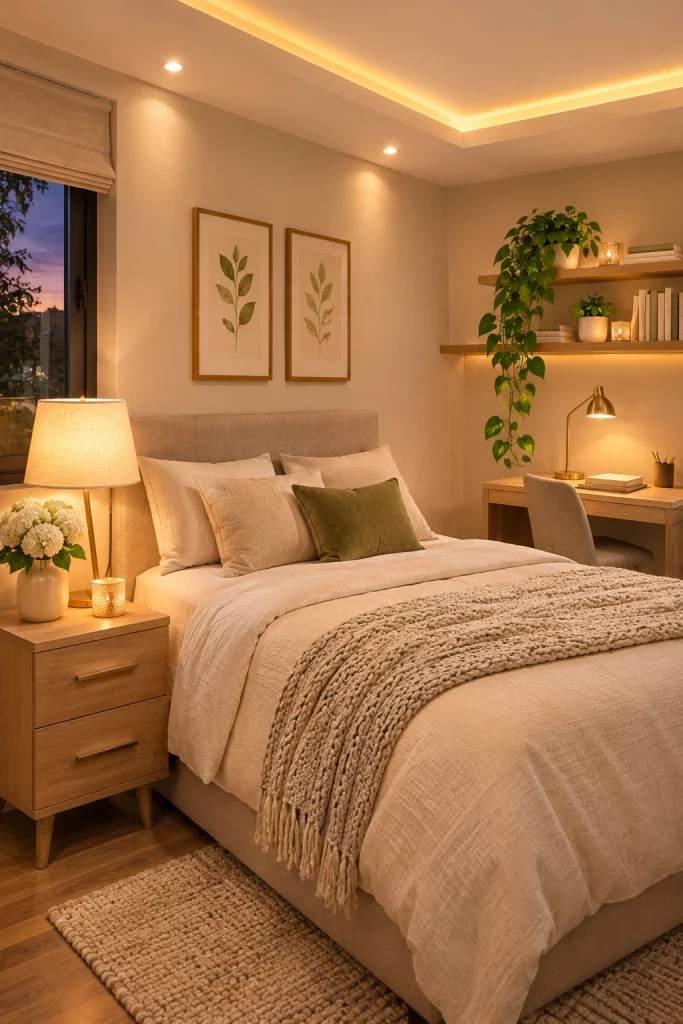
Lighting affects how a small bedroom feels and how comfortably you can use it. A single overhead light may illuminate the room, but it does not always provide the best atmosphere for reading, relaxing, or getting dressed.
Combine different light sources where practical:
- General lighting: Provides overall illumination.
- Task lighting: Helps with reading, studying, or getting ready.
- Ambient lighting: Creates a softer atmosphere in the evening.
A bedside lamp, a suitable wall light, or a desk lamp can help provide light exactly where it is needed. If you use LED bulbs, choose a color temperature that suits the room and the activity.
Keep cords tidy and away from walking routes. If you rent your home, plug-in lights may be easier than changing permanent electrical fixtures.
Good lighting does not physically increase the room’s dimensions, but it can make the space feel more welcoming and help different areas work better.
9. Use Mirrors and Curtains Thoughtfully
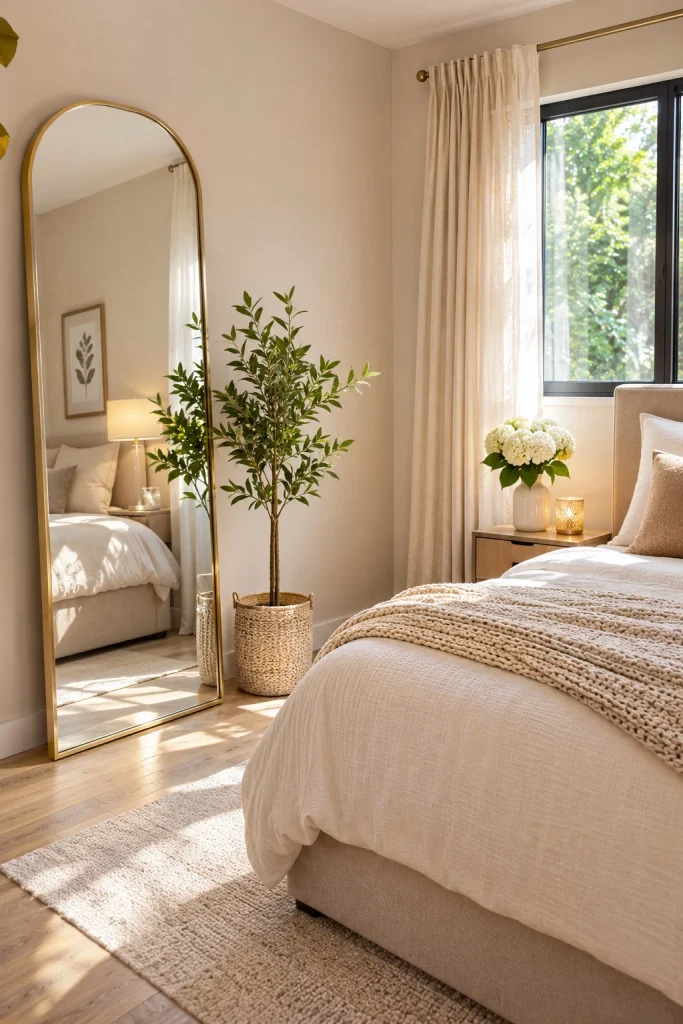
Mirrors can reflect light and create a greater sense of visual openness, while curtains can make a bedroom feel softer and more finished.
A full-length mirror placed where it reflects daylight or a pleasant part of the room may help the space feel brighter. Make sure it is stable and securely mounted or positioned so it cannot easily tip over.
For window treatments, consider:
- Curtains that do not block important furniture access.
- A simple design that works with the bedding and wall color.
- A suitable curtain length for the window and room.
- Light-filtering fabric when you want privacy without making the room feel too dark.
- Blackout curtains if you need stronger light control for sleeping.
Avoid placing a mirror where it creates uncomfortable glare or reflects a cluttered corner. The goal is to improve the room’s appearance and function rather than add another decorative object without a purpose.
10. Keep the Color Palette Simple and Cohesive
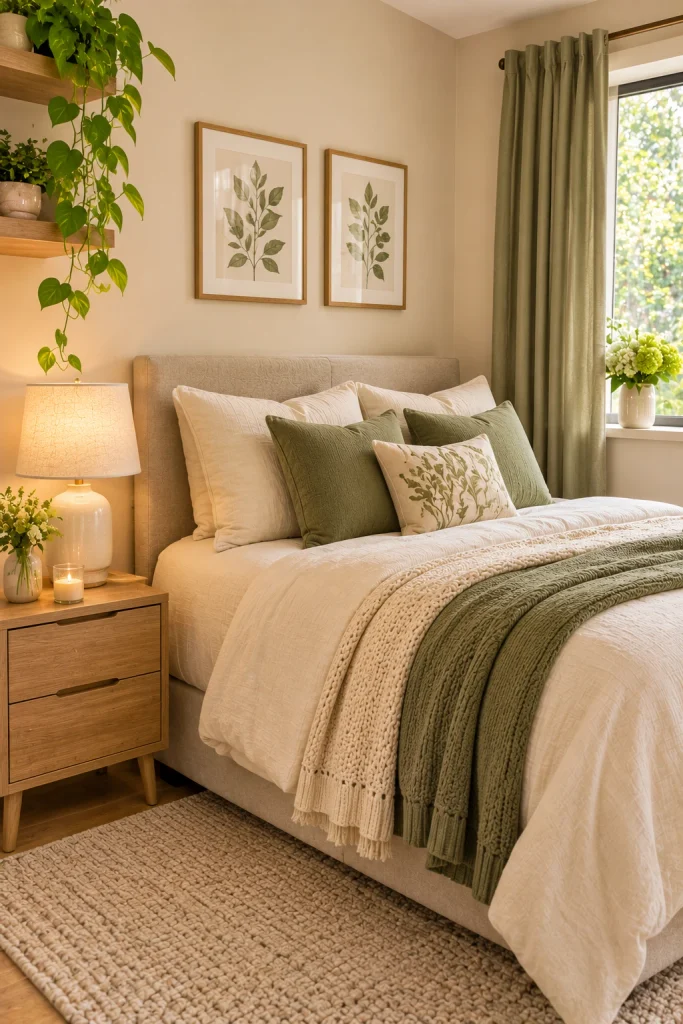
A coordinated color palette can make a small bedroom feel visually calmer. You do not have to use only white, and you do not need to avoid every dark color. The key is choosing colors and patterns that work together.
Consider starting with two or three main colors:
- Warm neutrals: Cream, beige, and soft taupe create a relaxed atmosphere.
- Cool neutrals: Light gray, muted blue, and soft white can feel fresh and simple.
- Natural colors: Sage green, warm brown, and ivory bring a subtle organic look.
- A restrained accent: Burgundy, forest green, or navy can add depth through cushions, artwork, or a throw.
Use bedding, curtains, rugs, and decorative accessories to repeat the same tones. If you love patterned bedding, keep nearby accessories relatively simple so the room does not feel visually busy.
Color is a personal choice, so focus on a palette that suits your taste and the light available in your bedroom.
11. Keep the Floor and Main Surfaces Clear
One of the simplest small bedroom setup ideas is to reduce the number of items left on the floor, bedside table, dresser, and desk.
You do not need to remove everything you enjoy. Instead, decide which items deserve a visible place and which should be stored away.
Use this quick reset routine:
- Put dirty clothes in a laundry basket.
- Return shoes and bags to their designated places.
- Clear unnecessary items from the bedside table.
- Put books, chargers, and accessories into their storage spots.
- Leave the main walking path free of loose objects.
- Return items to their places at the end of the day.
A small tray can group daily essentials on a dresser, while a basket can collect items that otherwise end up scattered around the room.
If you are refreshing several areas of your home, DIY home decor on a budget offers additional inspiration for making a space feel more personal without relying on a complete makeover.
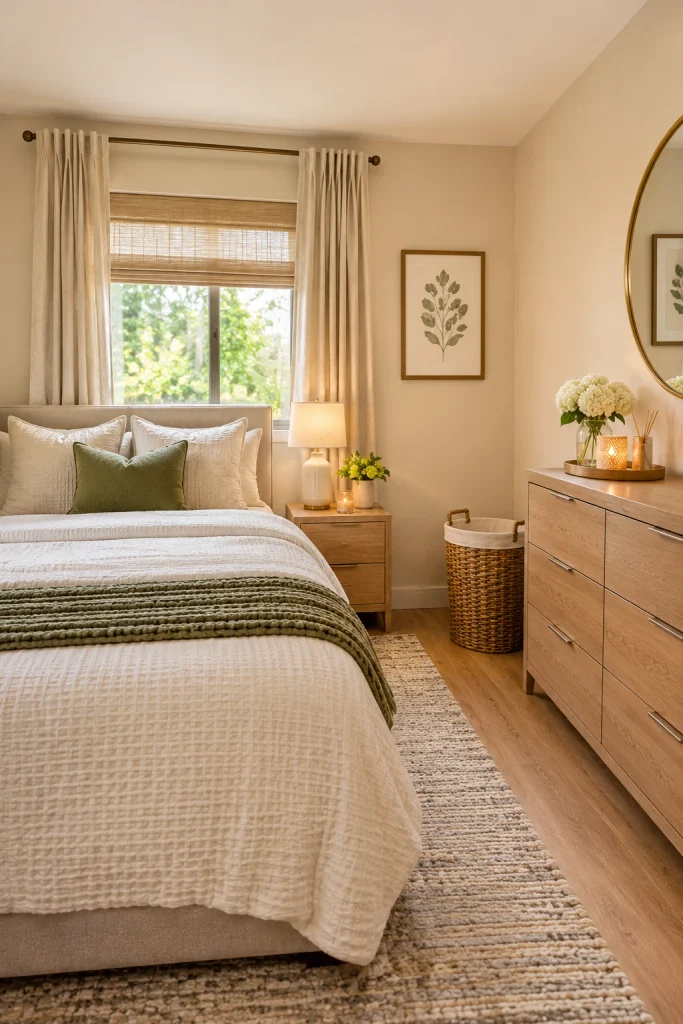
12. Add Personality Without Overcrowding the Room
A practical bedroom should still feel like your own space. Personal touches can make it welcoming, even when the room is small.
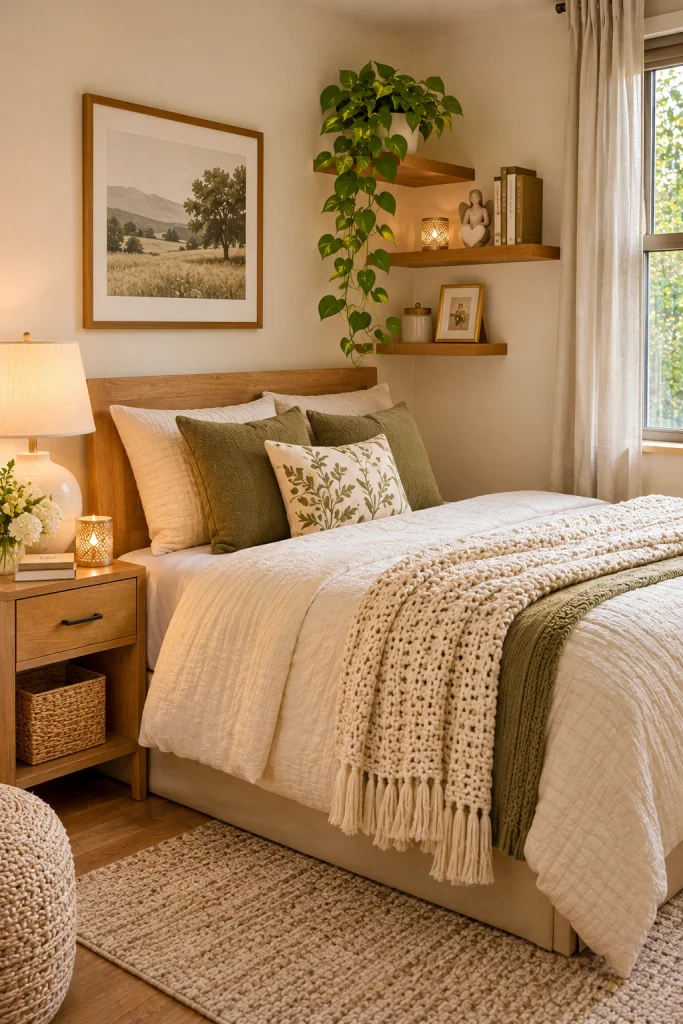
Choose a few meaningful decorations instead of trying to display everything at once. You could use framed prints, a favorite cushion, a small plant suitable for your lighting conditions, a textured throw, or a decorative lamp.
Try these simple styling tips:
- Display one or two favorite pieces of artwork.
- Use bedding to introduce texture or a subtle accent color.
- Choose a small rug that fits the available floor area.
- Add a compact plant if you can care for it properly.
- Rotate seasonal decorations instead of keeping them all out at once.
- Leave some empty space around decorative objects.
The aim is to balance practical storage with personal style. A room does not need lots of accessories to feel complete.
For more ideas on styling a home with a limited budget, visit entryway decor ideas on a budget. Some principles, such as repeating colors and keeping decorative groupings simple, can also work in a bedroom.
Common Small Bedroom Setup Mistakes to Avoid
Even attractive furniture can make a small bedroom harder to use if the layout is not practical. Avoid these common mistakes when arranging your room.
Buying furniture before measuring
A dresser may look compact in a showroom but occupy too much space in your bedroom. Measure the width, depth, and height of furniture before purchasing it. Also check whether doors and drawers can open fully.
Blocking the closet or bedroom door
Furniture should not prevent you from opening doors or accessing everyday belongings. Check the complete movement of doors and drawers, not just the space they occupy when closed.
Adding too many storage products
Storage can become clutter when you buy more boxes, baskets, and organizers than you need. Organize existing belongings first and purchase only what solves a specific problem.
Choosing style over everyday function
A decorative table is not useful if it blocks your walking path. Select furniture and accessories that fit your routine as well as your preferred look.
Using every wall and corner
Empty space is not wasted space. Keeping some walls, surfaces, and floor areas clear helps the room feel more balanced and easier to maintain.
Budget-Friendly Ways to Improve a Small Bedroom
You can make useful changes without committing to a full bedroom makeover. Start with the improvements that solve your biggest everyday problem.
| Budget-friendly change | Main benefit |
|---|---|
| Rearrange existing furniture | Improves layout without buying new pieces |
| Declutter the wardrobe | Makes current storage more useful |
| Use labeled containers you already own | Keeps small belongings organized |
| Replace bulky bedside accessories | Frees up surface space |
| Add a simple lamp | Provides more practical lighting |
| Coordinate existing bedding and curtains | Creates a more cohesive appearance |
| Display a few favorite prints | Adds personality without excessive decoration |
Start with one or two changes, then see how the room functions. You may discover that a different furniture arrangement or better closet organization is enough to meet your needs.
Frequently Asked Questions
How do I set up a very small bedroom?
Start by measuring the room, choosing a practical bed position, and keeping the main walking path clear. Use existing closet space efficiently, consider under-bed storage if suitable, and avoid furniture that does not serve a clear purpose.
What furniture is best for a small bedroom?
Furniture with built-in storage, narrow bedside tables, compact dressers, and appropriately sized desks can work well. The best choice depends on your room measurements, storage needs, and daily routine.
How can I make my small bedroom look less cluttered?
Keep frequently used items accessible, store occasional-use belongings out of sight, and limit the number of objects on visible surfaces. A consistent color palette and simple decor can also help create a calmer appearance.
Should I put my bed against the wall in a small bedroom?
Placing a bed against a wall can preserve floor space in some layouts. However, consider access to the bed, window placement, doors, and the amount of clearance available before deciding.
How can I decorate a small bedroom on a budget?
Begin by rearranging existing furniture, decluttering, and coordinating the items you already own. Add only a few affordable improvements, such as a lamp, simple artwork, or storage containers, when they address a specific need.
Are mirrors useful in small bedrooms?
Yes. A well-positioned mirror can reflect daylight and create a sense of visual openness. Place it safely and avoid positioning it where it causes glare or reflects an area you would rather keep out of view.
What is the easiest small bedroom setup idea to try first?
Start by clearing the main walking path and removing unnecessary items from bedside tables and the floor. Then check whether moving one piece of furniture would improve access to the bed or closet.
Final Thoughts
The most effective small bedroom setup ideas are the ones that make your room easier to live in. A well-planned layout, practical storage, suitable lighting, and a few carefully chosen decorations can help you make better use of the space you already have.
You do not need to change everything at once. Begin with measurements and furniture placement, organize the storage you already own, and make small improvements as your needs become clear. With a little planning, even a compact bedroom can feel comfortable, personal, and organized.