Acrylic Nails: Everything to Know Before Your First Set
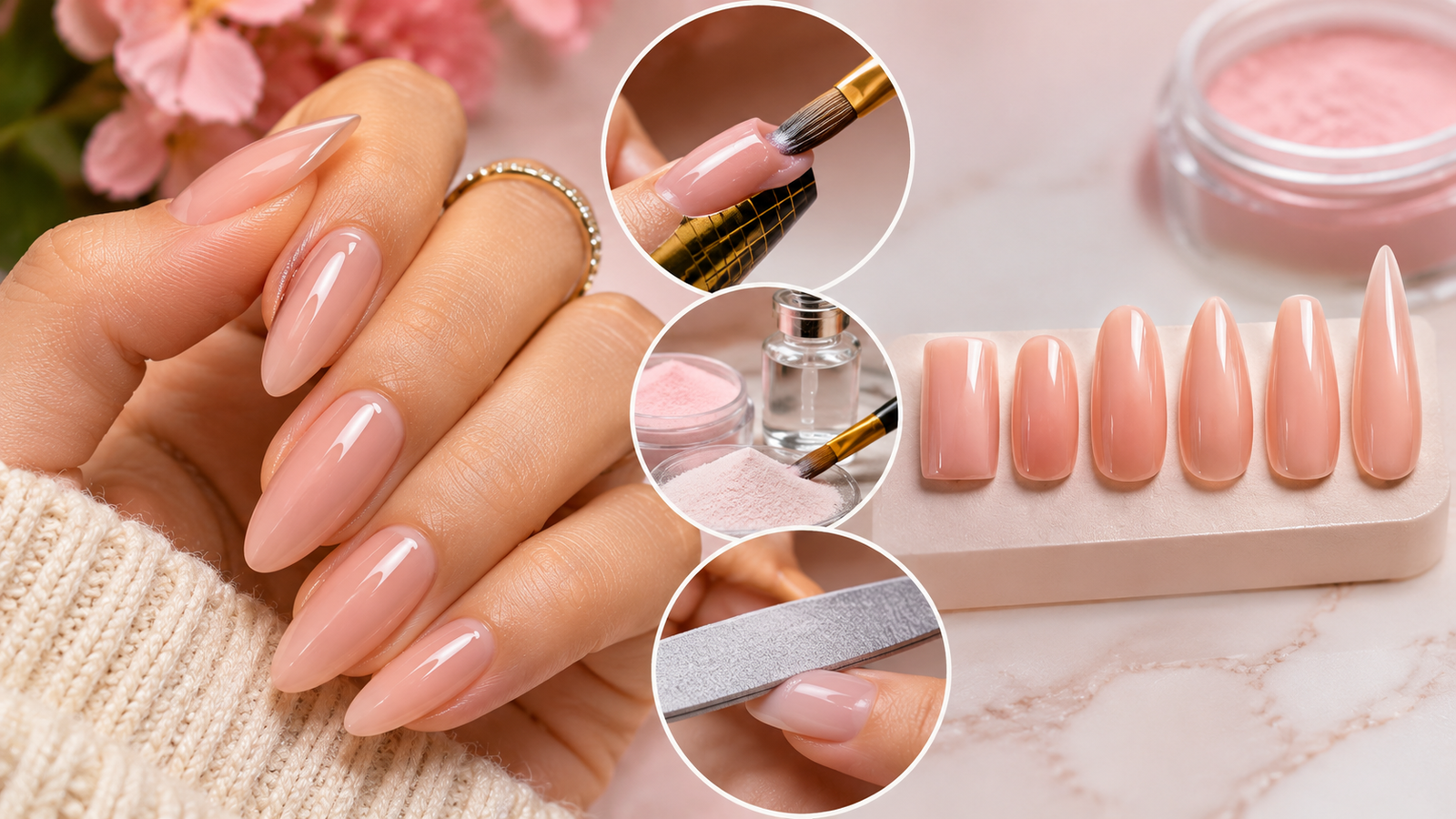
Acrylic nails can add length, create a more structured nail shape and give you a base for everything from a simple nude manicure to detailed nail art. But if you have never had them before, the process can seem confusing. What exactly are acrylic nails? Are they different from gel nails? How long do they last, and what happens when your natural nails start growing?
Acrylic nails are created by combining a liquid monomer with a powder polymer. The mixture forms a workable product that a nail technician shapes over your natural nails or extensions. It hardens in the air and can then be filed and finished with polish or nail art.
This guide explains how acrylic nails work, the different types available, what happens during an appointment, how to look after them and what to consider before choosing your first set.
What Are Acrylic Nails?
Acrylic nails are artificial nail enhancements made from a combination of liquid monomer and powder polymer. When these two components are combined, they form a product that can be shaped over the natural nail or used to create additional length.
Unlike ordinary nail polish, acrylic is a structured enhancement. It creates a harder surface that can be filed into different shapes and finished with regular polish, gel polish or nail art.
Acrylic nails can be used in two main ways:
- To add length: A technician creates an extension beyond the natural nail using a nail tip or sculpting form.
- To add structure: Acrylic is applied over the natural nail as an overlay without creating significant extra length.
Acrylic products harden through a chemical reaction and do not need a UV or LED lamp to cure. This is one of the main differences between traditional acrylic systems and many gel nail products.
How Do Acrylic Nails Work?
Acrylic nails are made by combining two components: a liquid called monomer and a powder called polymer. When mixed, they form a material that can be shaped before it hardens.
A professional nail technician controls the product’s placement and shape during application. Once it has hardened, the nail can be refined with filing and finished with the chosen color or design.
The finished enhancement is attached to the natural nail, so it grows outward as your natural nail grows. This is why you eventually see a gap near the cuticle area and need maintenance.
What Is the Difference Between Acrylic Powder and Liquid?
The two components have different roles:
- Acrylic powder: Contains polymer material that becomes part of the hardened enhancement.
- Acrylic liquid: Contains monomer that reacts with the powder to form the workable acrylic product.
Neither component is the finished nail on its own. They work together to create the material used for the enhancement.
What Are the Different Types of Acrylic Nails?
Not every acrylic manicure adds the same amount of length. The right type depends on whether you want to keep your natural nail length, extend it or create a more sculpted shape.
1. Acrylic Overlay
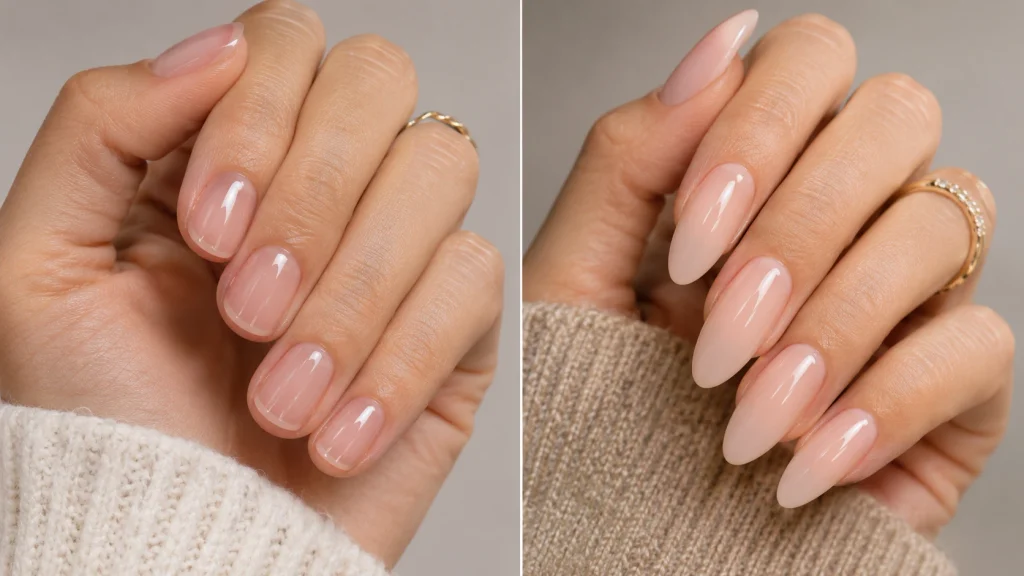
An acrylic overlay is applied over the natural nail without adding a long extension. It creates a structured surface while keeping the natural nail length.
This option may appeal to someone who likes a neat, shorter manicure but wants a more reinforced appearance. The finished look can be simple and natural or decorated with polish and nail art.
2. Acrylic Nails With Tips
A nail tip is an artificial extension attached to the natural nail to create extra length. Acrylic is then applied over the enhancement and shaped into the desired finish.
This option gives the technician a starting point for creating different lengths and shapes. The final result depends on the chosen tip, application and shaping.
3. Sculpted Acrylic Nails
Sculpted acrylic nails are created by building the extension with acrylic over a temporary form placed at the edge of the natural nail.
Rather than starting with a pre-shaped plastic tip, the technician creates the extension to suit the desired length and shape.
Acrylic Overlay vs Acrylic Extensions
| Feature | Acrylic overlay | Acrylic extensions |
|---|---|---|
| Main purpose | Adds structure over natural nails | Adds length and structure |
| Natural nail length | Mostly maintained | Extended |
| Appearance | Usually shorter and more natural | Can be short, medium or long |
| Design options | Polish and nail art | Polish, nail art and sculpted shapes |
What Happens During an Acrylic Nail Appointment?
If you are getting acrylic nails for the first time, knowing what to expect can make the appointment feel more straightforward.
A professional appointment generally includes these stages:
1. Nail Assessment and Preparation
The technician checks the natural nails and discusses the length, shape and finish you want. The nail surface is prepared so the enhancement can adhere properly.
Healthy surrounding skin and clean tools are important. If you already have nail discoloration, swelling, soreness or another nail problem, it is better to get that checked rather than simply covering it with an artificial enhancement.
2. Choosing the Extension or Overlay
You and the technician decide whether you want an overlay, tips or sculpted extensions. This is also when you agree on the final length and shape.
3. Acrylic Application
The technician applies and shapes the acrylic product according to the chosen nail style. The product hardens in the air rather than requiring a curing lamp.
4. Shaping and Finishing
Once the acrylic has hardened, the technician refines the shape and surface. The manicure can then be finished with a chosen color, French tips, chrome details or another nail design.
The exact appointment time varies with the length, design, salon and technician.
What Acrylic Nail Shapes Can You Choose?
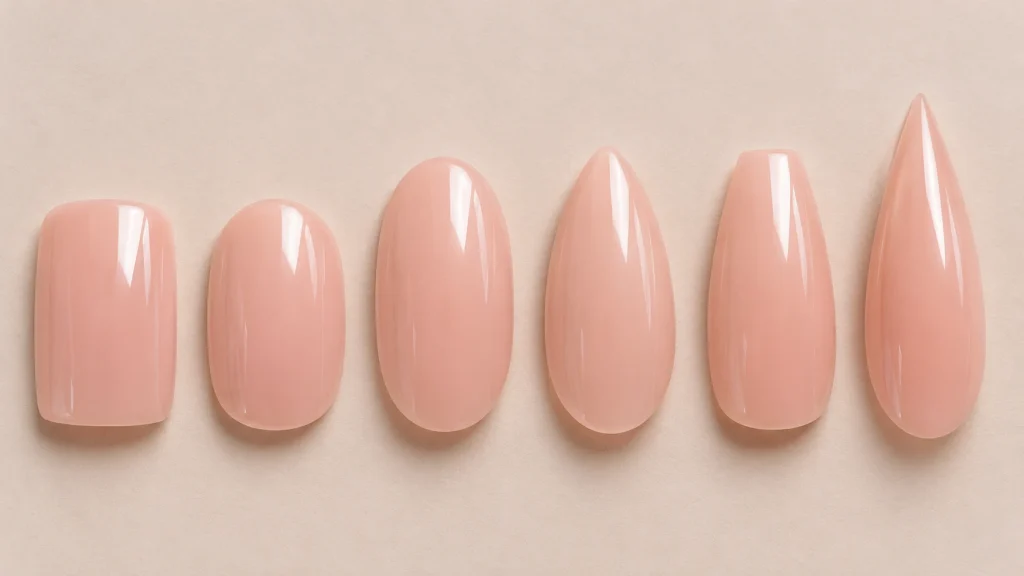
One reason acrylic nails are popular is that they can be shaped in several different ways. Your preferred length and the appearance you want should guide the choice.
Square
Square acrylic nails have a straight free edge and defined corners. They work well with classic French tips, solid colors and clean geometric designs.
Round
Round acrylic nails follow the natural curve of the fingertip. They create a simple, understated appearance and are often chosen for shorter manicures.
Oval
Oval nails have softly tapered sides and a rounded tip. This shape gives a classic appearance without the sharper point of a stiletto.
Almond
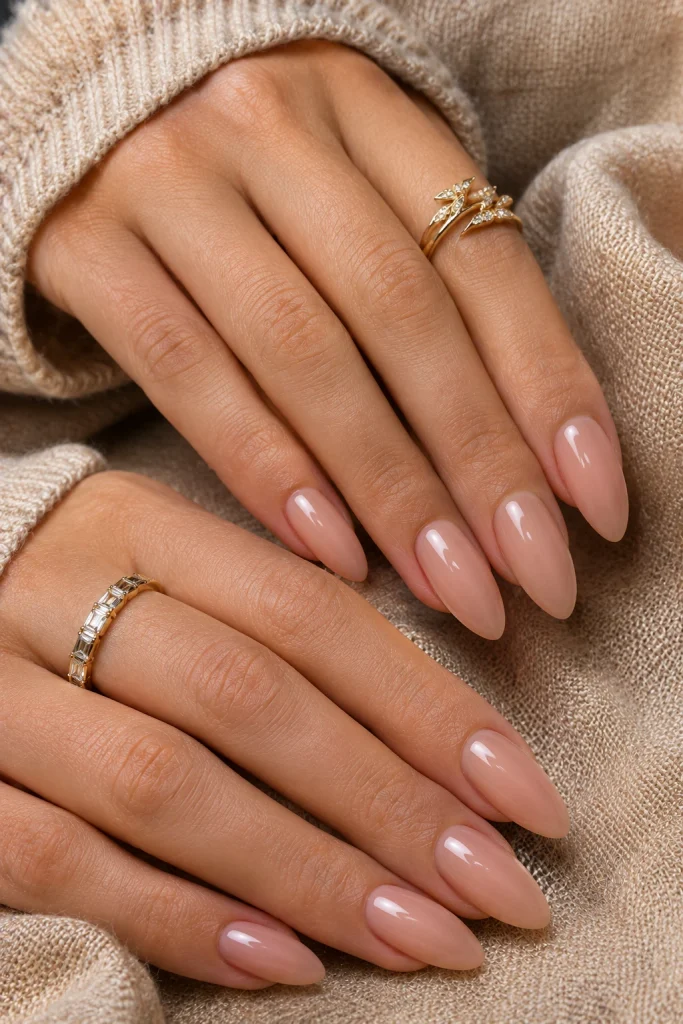
Almond acrylic nails taper toward a softly rounded point. They are a popular choice for people who like an elegant, elongated nail shape.
Coffin
Coffin nails taper along the sides and finish with a flat edge. They provide a larger surface for detailed nail art and are commonly worn at medium or longer lengths.
Stiletto
Stiletto nails taper into a noticeably pointed tip. They create a dramatic appearance and require more care because of their pointed structure.
If you prefer a shorter manicure, you can also explore these short square acrylic nail ideas with French tips for inspiration.
Acrylic Nails vs Gel Nails: What Is the Difference?
Acrylic and gel nails can both create polished manicures, but they are not the same system.
Traditional acrylic uses a liquid-and-powder combination that hardens in the air. Gel products are different formulations that generally harden under a UV or LED lamp, depending on the product.
| Feature | Acrylic nails | Gel nails |
|---|---|---|
| Main material | Liquid monomer and powder polymer | Gel-based product |
| Hardening | Air-hardens through a chemical reaction | Usually cured under a lamp |
| Structure | Generally harder and more rigid | Depends on the gel system |
| Length | Can create extensions | Some systems create extensions; others are overlays |
| Maintenance | Requires attention as natural nails grow | Depends on the type of gel service |
| Removal | Depends on the acrylic product and system | Depends on whether it is soft gel or hard gel |
Which One Should You Choose?
Acrylic may be worth discussing with a qualified nail technician if you want a sculpted extension or a more rigid enhancement.
Gel may be worth considering if you prefer a different product feel or a soak-off gel service. However, not all gel products are the same, and some require professional filing rather than soaking.
Neither option should be treated as completely risk-free. The condition of your natural nails, the product used, application quality and removal method all matter.
How Long Do Acrylic Nails Last?
Acrylic nails do not simply disappear as the manicure gets older. Your natural nails continue growing underneath the enhancement, so the acrylic gradually moves away from the cuticle area.
The visible gap is one reason regular maintenance is needed.
The American Academy of Dermatology notes that people who wear artificial nails for more than a few weeks may need touch-ups every two to three weeks. The exact timing depends on nail growth, the condition of the enhancement and the technician’s assessment.
It is important not to confuse the time between fills with the total time someone might maintain a set. A fill addresses new growth; it does not mean the original enhancement is brand new again.
What Is an Acrylic Nail Fill?
An acrylic fill is a maintenance appointment that addresses the area where your natural nail has grown.
As the nail grows, a gap appears between the cuticle and the acrylic. During a fill appointment, a technician assesses the existing enhancement and refreshes the grown-out area when appropriate.
A fill is not automatically suitable for every set. If the acrylic is damaged, lifting significantly or no longer in good condition, the technician may recommend a different service.
Fill vs Full Set
- Fill: Maintains an existing acrylic enhancement as the natural nail grows.
- Full set: Creates a new acrylic enhancement rather than simply refreshing the growth area.
Your technician should assess the condition of the existing product before deciding which service is appropriate.
How to Care for Acrylic Nails
Acrylic nails need regular attention. Good habits can help keep the manicure looking neat and reduce avoidable problems.
Keep Your Hands and Cuticles Moisturized
Artificial nail products and frequent hand washing can leave the surrounding skin feeling dry. Use a suitable hand moisturizer and cuticle oil to help keep the skin comfortable.
Wear Gloves for Household Cleaning
Cleaning products and prolonged water exposure can be harsh on the skin and nails. Wearing household gloves during cleaning and dishwashing can help protect your hands.
Avoid Using Nails as Tools
Do not use the ends of your nails to open packages, scrape surfaces or force objects apart. Artificial extensions can catch or break when used this way.
Pay Attention to Lifting or Changes
If an enhancement begins lifting, do not ignore it or try to force it back into place. Ask a qualified technician to assess it. Moisture can collect beneath a lifted enhancement, which may create conditions for nail problems.
Keep Up With Professional Maintenance
Regular appointments help a technician check the condition of the enhancement and the natural nail underneath. Avoid waiting until an extension is badly damaged before seeking advice.
Are Acrylic Nails Bad for Your Natural Nails?
Acrylic nails are not automatically harmful for everyone, but the application, maintenance and removal process can affect natural nail health.
The American Academy of Dermatology explains that filing the natural nail to help artificial products adhere can thin the nail plate. Repeated touch-ups and removal can also contribute to dryness, brittleness and weakness.
Possible concerns include:
- Thinning and brittleness: Excessive filing or rough removal can weaken the natural nail.
- Skin irritation: Ingredients in artificial nail products can irritate the surrounding skin.
- Allergic reactions: Some people become sensitive to methacrylate ingredients and may develop redness, swelling, itching or pain.
- Infection concerns: Poor salon hygiene or moisture trapped under lifted product can contribute to problems.
The FDA also explains that some artificial nail ingredients can cause adverse reactions in people who have become sensitive to them. Avoiding skin contact with nail products is important.
If you notice a rash, swelling, pain, unusual nail changes or persistent irritation, stop covering the affected area and seek advice from a healthcare professional. Artificial nails should not be used to hide an existing nail problem.
How Are Acrylic Nails Removed?
Acrylic removal should be handled carefully because forcing or peeling an enhancement away can remove layers of the natural nail.
The appropriate removal method depends on the product and the condition of the enhancement. A qualified nail technician can identify the system being used and choose a suitable professional removal approach.
Avoid pulling, biting or prying acrylic nails off. If you are unsure what product is on your nails, ask the salon before arranging removal.
After removal, keep the natural nails clean and moisturized. If they appear unusually thin, painful or damaged, give them a break from enhancements and seek professional advice when needed.
Are Acrylic Nails Right for Everyone?
Acrylic nails are a personal beauty choice, but they are not suitable for every situation.
Before booking an appointment, consider:
- Whether your natural nails and surrounding skin are currently healthy.
- Whether you are comfortable with regular maintenance appointments.
- Whether the length and shape will work with your everyday activities.
- Whether you have previously experienced irritation from nail products.
- Whether you are happy to have the enhancement professionally maintained and removed.
If your nails are already brittle, damaged, discolored or painful, it is better to address the underlying issue before considering an artificial enhancement.
Frequently Asked Questions About Acrylic Nails
Do acrylic nails need a UV lamp?
Traditional acrylic products harden through a chemical reaction and do not need a UV lamp. Some finishing products, such as gel polish applied over acrylic, may require a curing lamp.
Can acrylic nails be short?
Yes. Acrylic overlays and short extensions can create a neat manicure without a dramatic amount of length. The final shape can be adjusted to suit the natural nail and personal preference.
Are acrylic nails the same as fake nails?
Acrylic nails are one type of artificial nail enhancement. The wider category also includes other systems, such as gel extensions and press-on nails.
Do acrylic nails grow with natural nails?
The acrylic itself does not grow. Your natural nail grows underneath it, gradually moving the enhancement away from the cuticle.
How often do acrylic nails need maintenance?
The American Academy of Dermatology describes touch-ups every two to three weeks for people who wear artificial nails for more than a few weeks. Your technician can advise based on the condition of your nails and enhancement.
Can acrylic nails cause an allergic reaction?
Yes. Some artificial nail ingredients can cause allergic reactions in people who become sensitive to them. Redness, swelling, itching or pain around the nail area should not be ignored.
Are acrylic overlays and acrylic extensions different?
Yes. An overlay adds acrylic over the natural nail without creating significant extra length. An extension adds length using a tip or sculpted form.
Final Thoughts
Acrylic nails offer a flexible way to create added length, structured overlays and a wide range of nail shapes. Understanding the difference between overlays and extensions, knowing what happens during an appointment and planning for regular maintenance can help you make a more informed choice.
The most important part is not just the finished manicure. The condition of your natural nails, the products being used, salon hygiene and professional removal all deserve attention. If you decide to try acrylic nails, choose a qualified technician and do not ignore signs of irritation or nail damage.
Editorial note for readers: This guide is general beauty information, not a substitute for advice from a qualified nail professional or healthcare professional.