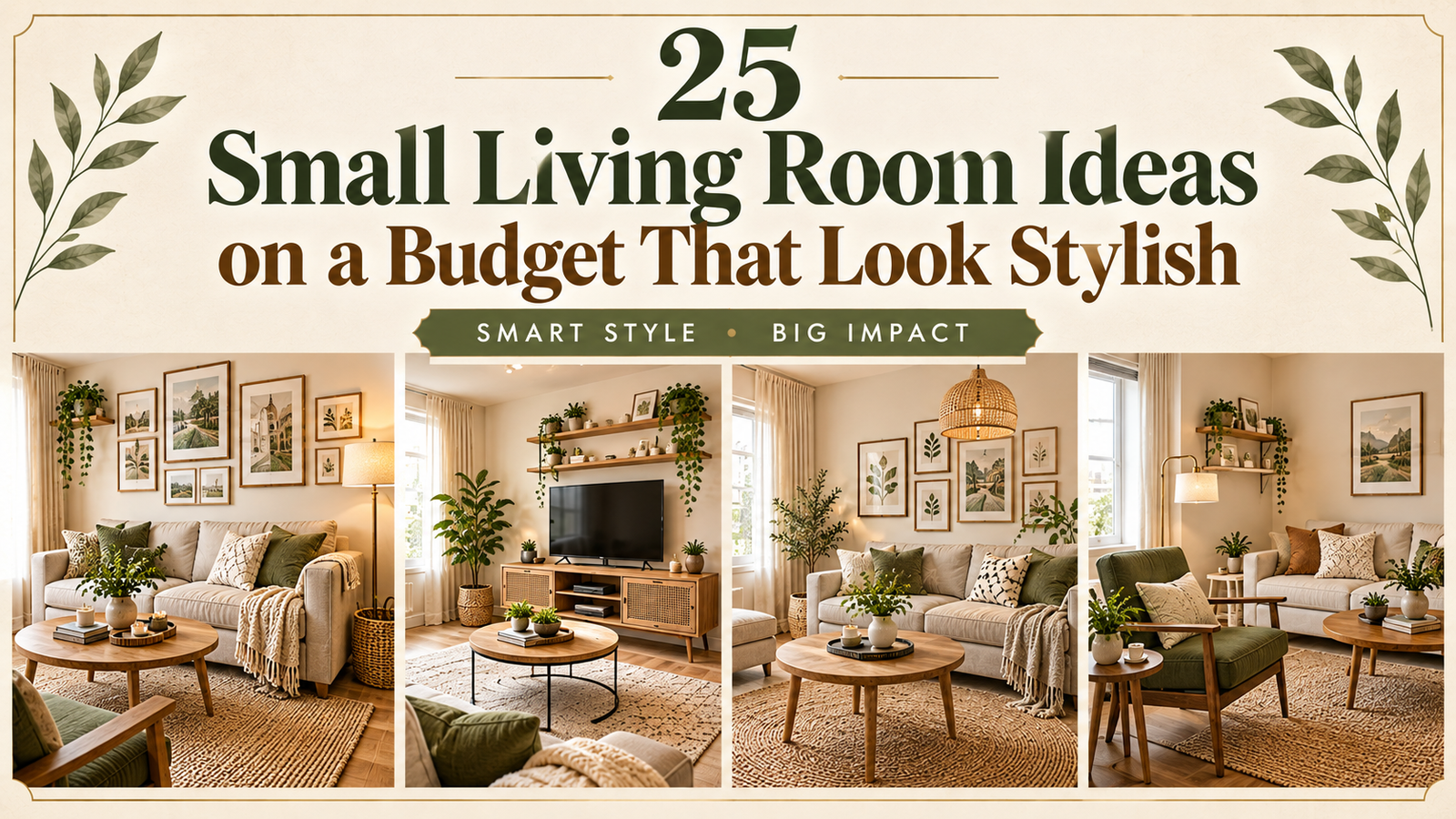
25 Small Living Room Ideas on a Budget That Look Stylish
A small living room can feel stylish, comfortable, and welcoming without an expensive makeover. You do not need a new sofa, custom built in shelves, or designer accessories to make the space look better. Often, the biggest improvements come from rearranging furniture, choosing the right lighting, adding a few affordable textiles, and making better use of the space you already have.
These small living room ideas on a budget include free decorating changes, inexpensive updates, simple DIY projects, and renter friendly options. Whether you live in a compact apartment or have a small living room in your family home, you can choose the ideas that suit your space and spending limit.
Small Living Room Ideas
1. Rearrange Your Furniture Before Buying Anything
Before spending money on new decor, experiment with the furniture you already own. A sofa that blocks a walkway or a coffee table that sits too close to the seating can make a room feel more crowded than it really is. Try moving the sofa to a different wall, angling a chair toward the main seating area, or replacing a large central table with a smaller piece you already have.
Pay attention to how people move through the room. Keep the main route to the door clear and leave enough space to sit down comfortably. Take a photo of the original arrangement and compare it with two or three alternatives. You may discover that a simple furniture swap makes the room feel more open without costing anything.
2. Choose a Light and Warm Color Palette
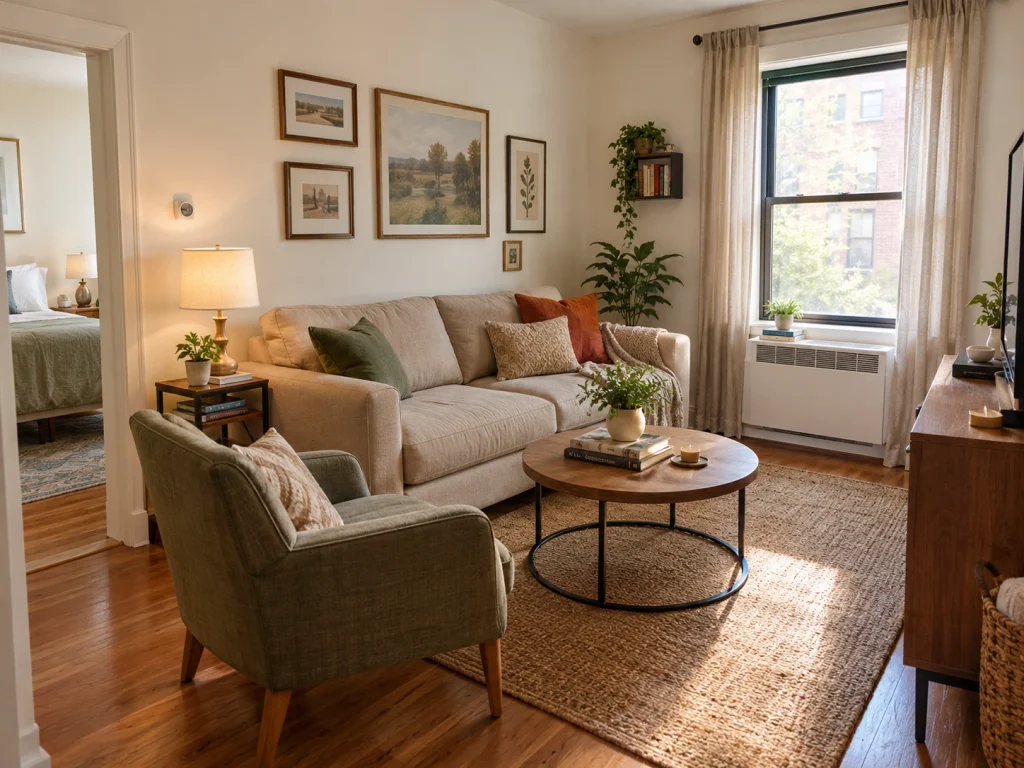
A coordinated color palette can help a small living room feel calmer and more connected. Warm white, soft beige, pale greige, muted sage, and light taupe are useful starting points because they work with many affordable furniture finishes. You do not have to repaint every wall. Start with the colors of your curtains, cushions, throws, and existing furniture.
To avoid a room that feels plain, mix different textures within the same palette. A cream sofa can look inviting with a knitted throw, linen cushions, a natural wood table, and a textured rug. If you enjoy stronger colors, introduce one accent shade through a cushion, artwork, or small decorative object rather than using several competing colors throughout the room.
3. Refresh the Sofa With Affordable Cushion Covers
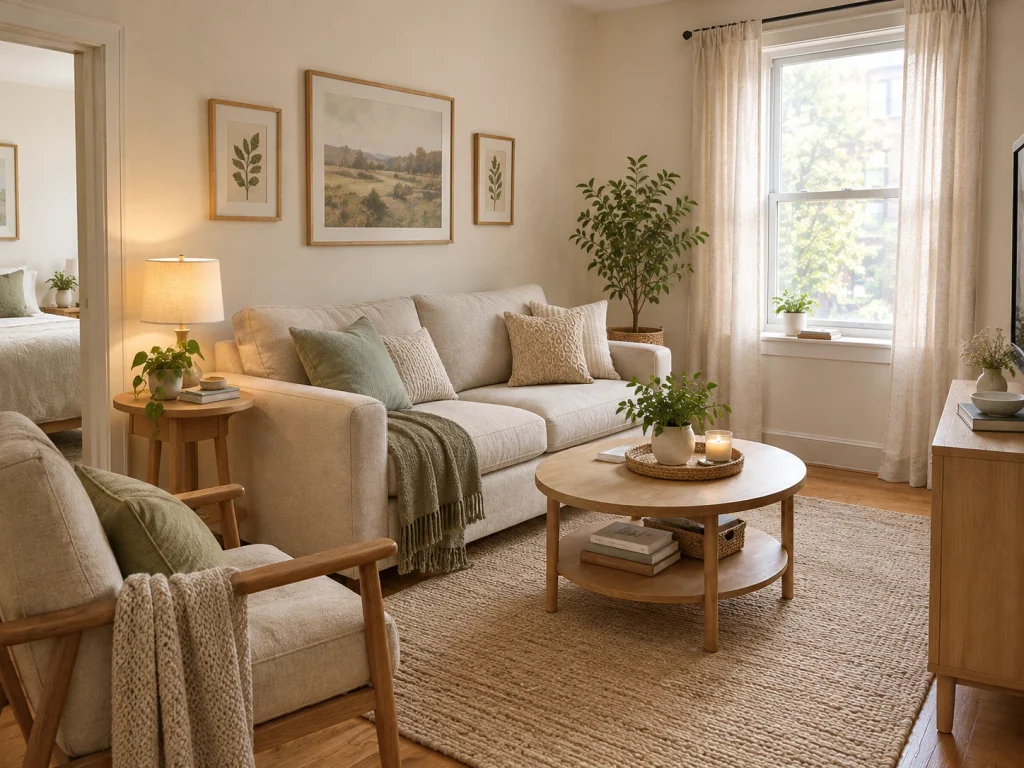
Replacing a sofa can take up a large part of a decorating budget, so refresh the one you already have. New cushion covers can change its appearance without the cost of buying several new cushions. Look for washable covers in cotton, linen blends, velvet, or textured woven fabrics that suit the room’s existing colors.
Use a simple combination rather than filling every seat with pillows. Two larger cushions at the ends and one smaller patterned cushion can create a balanced arrangement. If you already own suitable inserts, purchase covers only. You can also reuse cushions from another room and rotate them seasonally for a fresh look.
4. Use a Mirror to Reflect Natural Light
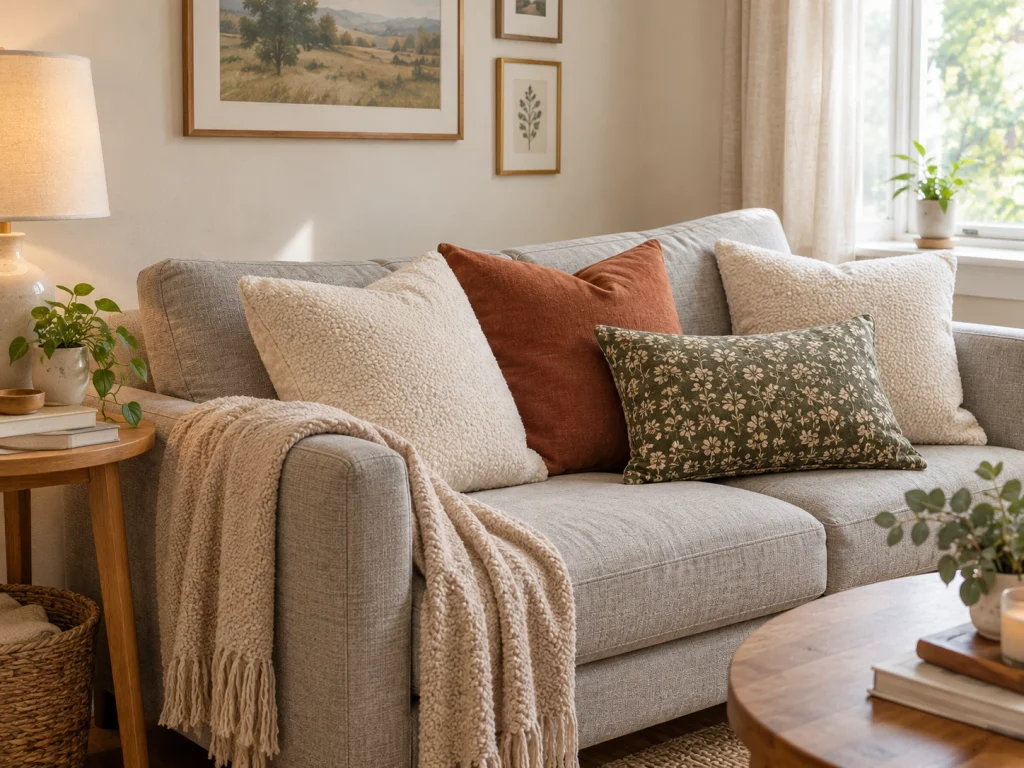
A mirror can create a greater sense of depth and reflect light into a dim corner. You do not need an expensive custom mirror. Check secondhand shops for a simple framed piece, or reuse a mirror you already own. A medium or large mirror often has more visual impact than a collection of tiny reflective decorations.
Position the mirror where it reflects a window, a bright wall, or an attractive part of the room. Avoid placing it where it simply reflects a cluttered corner. If you rent, use an appropriate secure hanging method for the mirror’s weight or choose a stable leaning mirror where the room layout allows it.
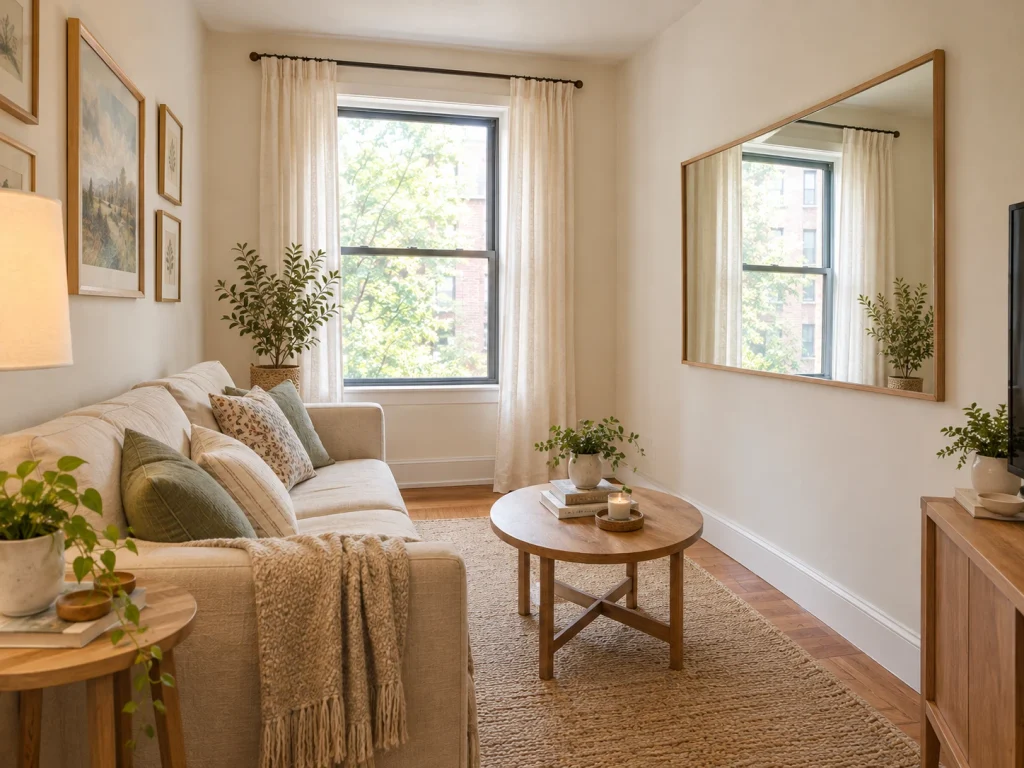
5. Add Warm Lighting in More Than One Spot
Relying on a single overhead light can make a living room feel flat, especially in the evening. Add a second source of light using an affordable table lamp, floor lamp, or rechargeable lamp. The goal is to spread light around the room so that one corner does not feel dramatically darker than the rest.
Choose warm white bulbs for a comfortable evening atmosphere and make sure the bulb brightness suits the lamp and activity. A table lamp beside the sofa can support reading, while a floor lamp in a dark corner can make the room feel more balanced. You can begin with one additional lamp instead of buying several at once.
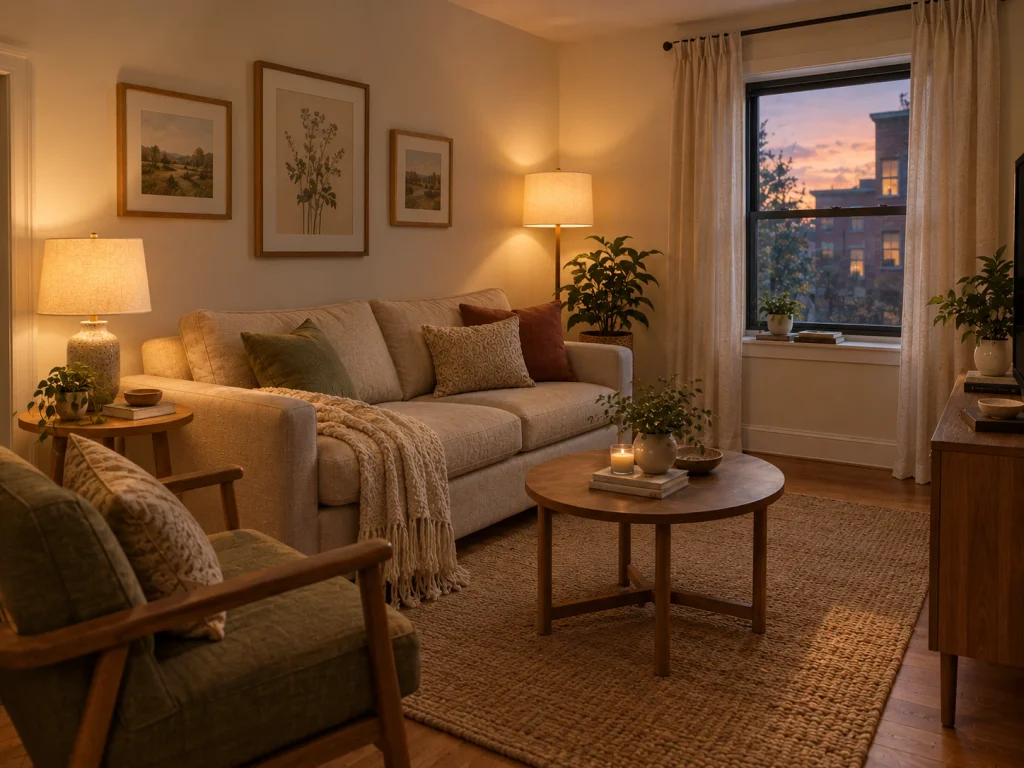
6. Hang Curtains Higher to Emphasize Ceiling Height
Curtains can change how tall a room appears. If the window arrangement allows it, place the curtain rod a little above the window frame and choose panels that reach close to the floor. This draws the eye upward and creates a longer vertical line without changing the structure of the room.
Lightweight curtains can also allow daylight to enter while providing privacy. You do not necessarily need custom panels. Check ready made curtains for suitable lengths, or hem longer panels if you have the skills. Make sure the rod is properly supported, especially if the curtains are heavy.
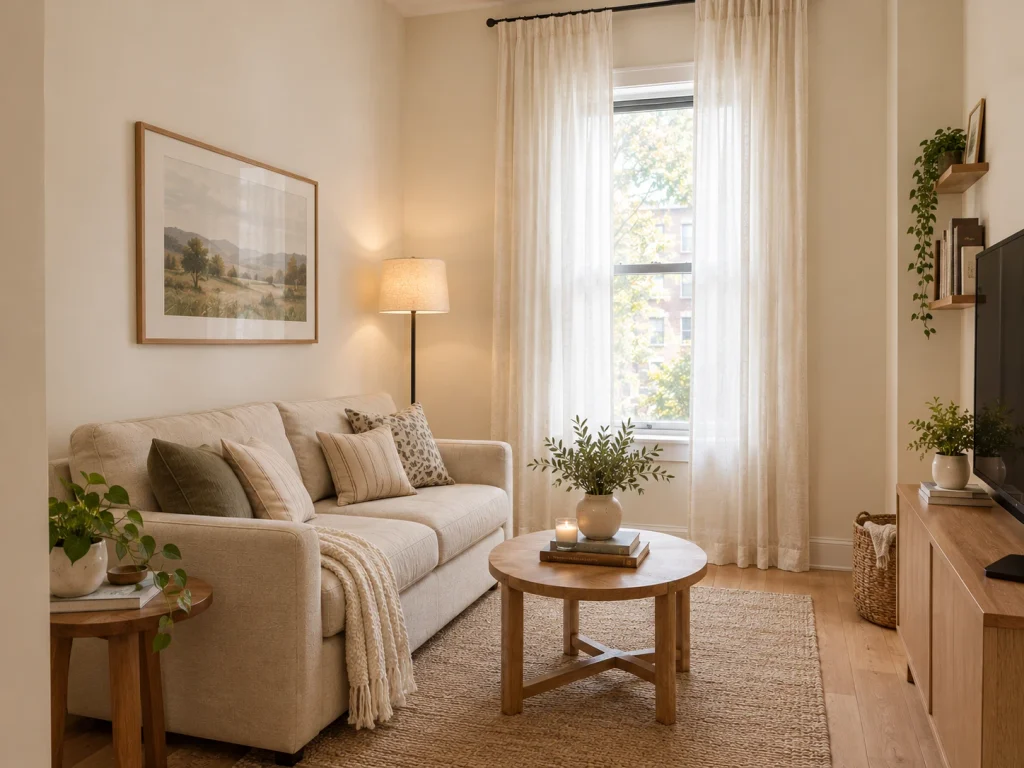
7. Choose a Rug That Connects the Seating Area
A rug helps define the living room, especially in an open plan apartment where the sitting area shares space with a dining table or kitchen. A rug that is too small can make the furniture look disconnected. When your budget allows, choose a size that lets at least the front legs of the sofa and chairs rest on it.
Affordable flatweave rugs and simple textured designs can work well in small spaces. Choose a pattern and color that complement the rest of the room instead of competing with several other strong patterns. If a suitable new rug is too expensive, check secondhand listings and compare the actual dimensions before buying.
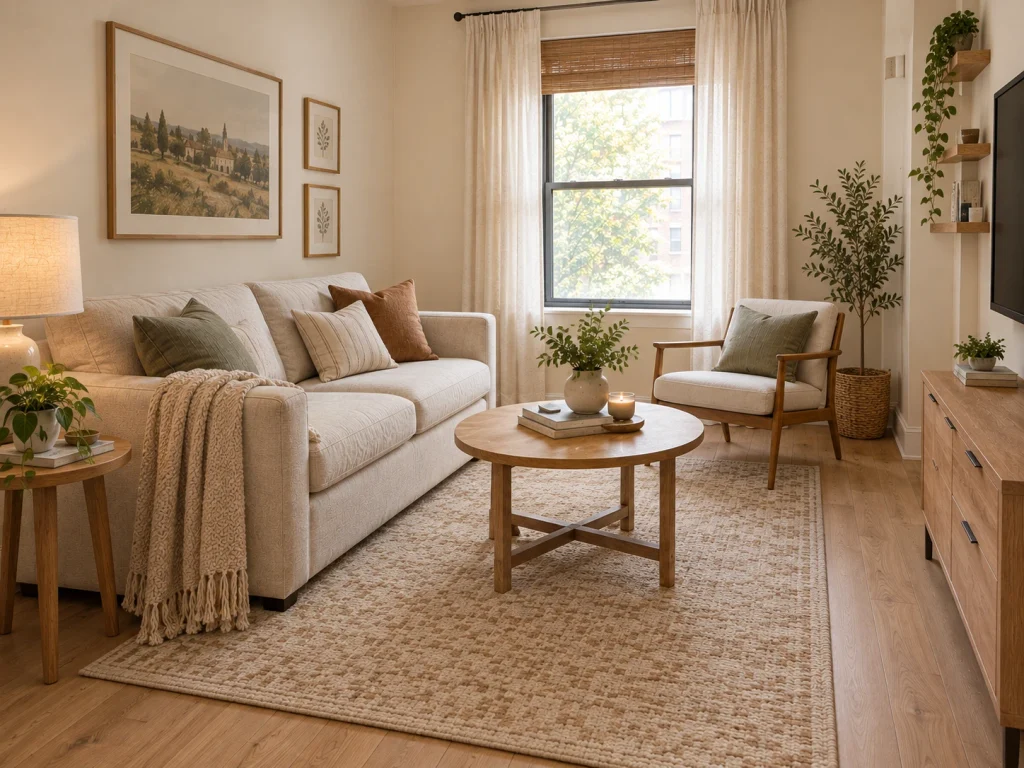
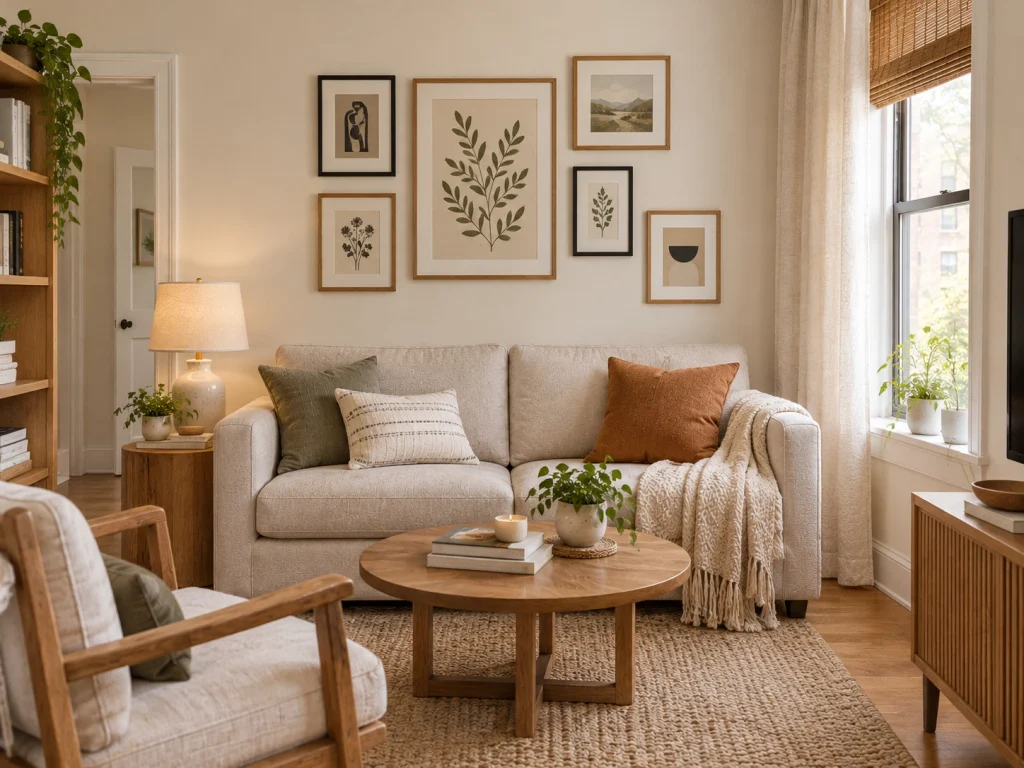
8. Create a Gallery Wall With Affordable Artwork
A gallery wall can give a plain living room personality without requiring expensive original art. Use printable artwork, personal photographs, simple illustrations, or inexpensive secondhand frames. Keeping a consistent frame color or repeating two or three tones can help the collection feel intentional.
Lay the frames on the floor first and test the arrangement before hanging anything. In a small room, one compact gallery above the sofa may look more balanced than several separate groups scattered across the walls. If you rent, use removable hanging products that are appropriate for the frame’s weight and your wall surface.
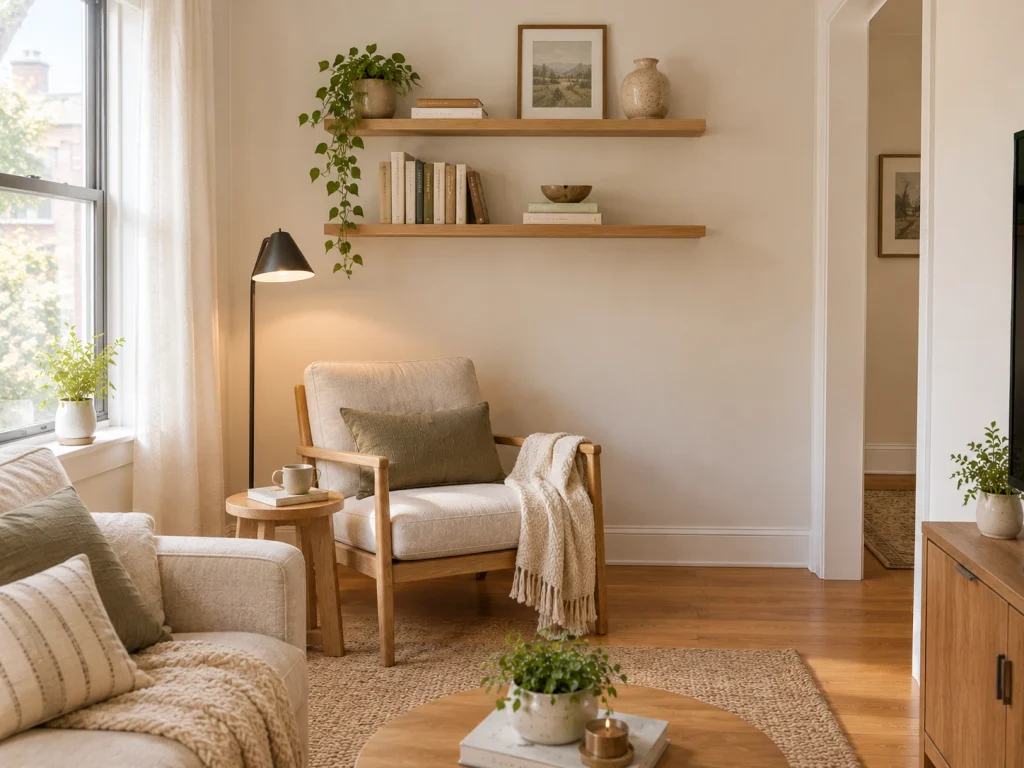
9. Add Floating Shelves Instead of Another Bookcase
Floor space is valuable in a small living room, so consider using an empty wall for a few floating shelves instead of adding another bulky bookcase. Shelves can hold a small selection of books, framed photos, a trailing plant, and a few useful objects. Leaving some empty space between items keeps the arrangement from looking crowded.
Before installing shelves, check the wall type and choose suitable fixings. Do not overload them, and keep heavy objects securely supported. If drilling is not allowed in your rental, look for a freestanding narrow shelf or another storage solution that fits without blocking the walkway.
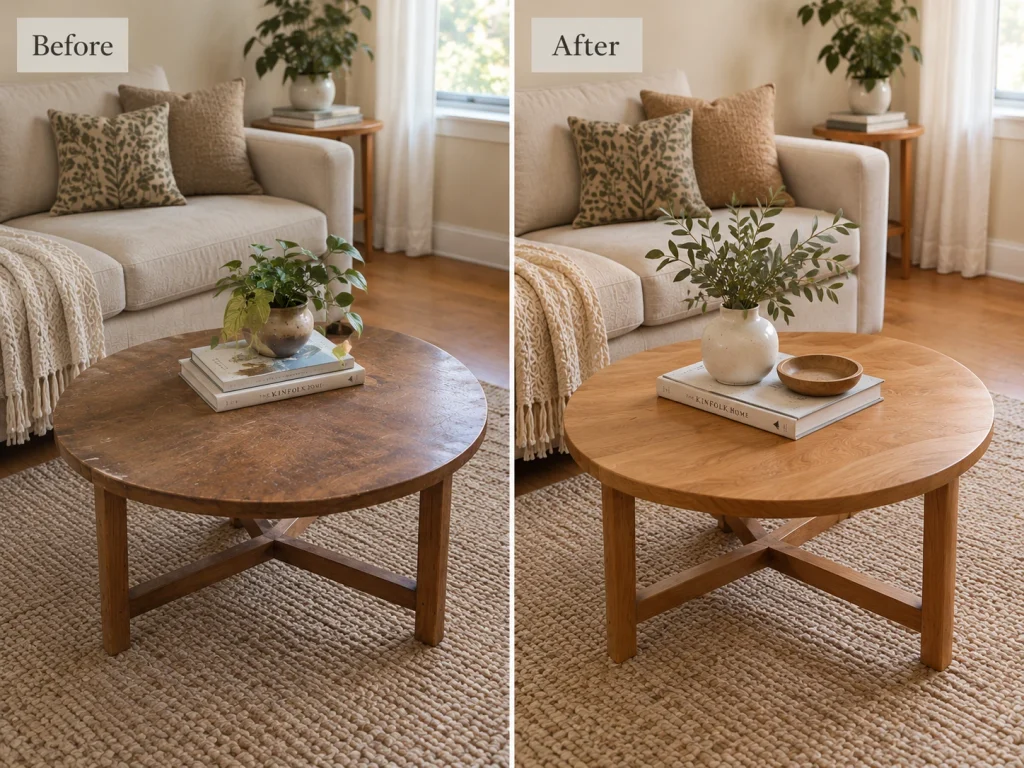
10. Give an Old Coffee Table a Simple Makeover
A coffee table does not need to be new to look good. If the structure is sturdy, clean it thoroughly and consider a fresh coat of suitable paint, a light sanding and stain refresh, or updated hardware if it has drawers. Choose a finish that works with your existing furniture rather than trying to make every wood tone match exactly.
Keep the styling simple after the makeover. A small tray, one book, and a low vase can be enough. Leave open space for drinks, remotes, and everyday use. If the table is already large for the room, a makeover will not solve the layout problem, so consider swapping it for a smaller secondhand piece instead.
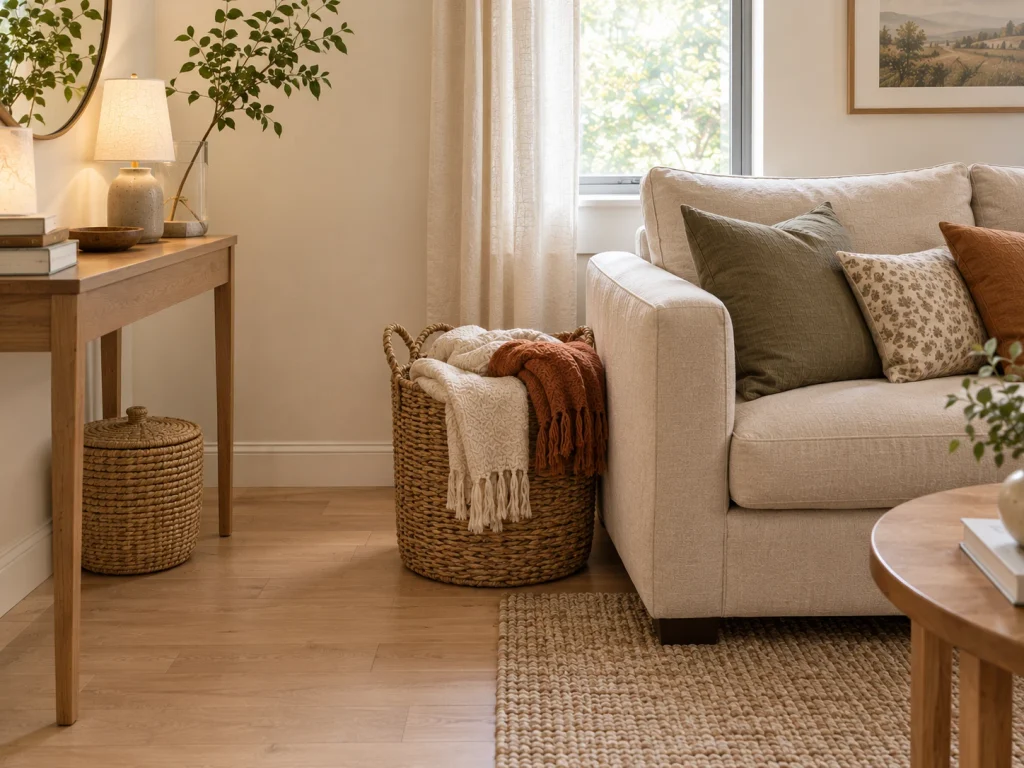
11. Use Baskets to Hide Everyday Clutter
Loose blankets, toys, magazines, and small accessories can make a compact room feel untidy quickly. Woven baskets offer a simple way to gather these items without adding another cabinet. Place one beside the sofa for throws or under a console table for objects you use regularly.
Choose baskets that fit the space available rather than buying several matching containers before measuring. A basket should be easy to reach and easy to put away. If you need to store small items that look messy when visible, choose a basket with a lid or a fabric storage box that fits neatly on an existing shelf.
12. Decorate With Plants for a Fresh, Natural Look
Plants bring color and texture into a living room without requiring expensive artwork or accessories. Start with one or two plants that suit your light conditions and care routine. A small plant on a side table or a taller plant in an unused corner can make the room feel more alive without filling every surface.
You can save money by using simple nursery pots inside decorative planters you already own. Choose pots that coordinate with the room’s palette, and avoid crowding the window or walkway. If natural light is limited, research low light tolerant varieties before purchasing a plant.
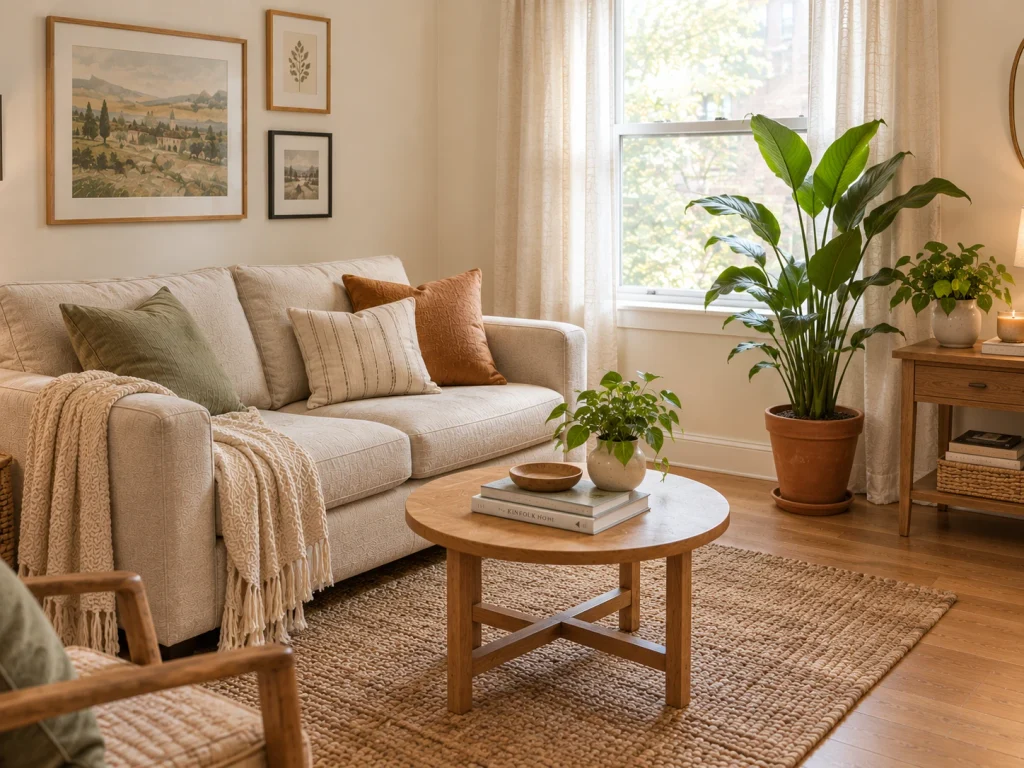
13. Make a Small Living Room Feel Cozy With Layers
A room can feel unfinished when every surface is smooth and every color is identical. Introduce a few different textures through a knitted throw, woven rug, linen cushions, wood, and a matte ceramic accessory. These layers add visual interest without requiring lots of decorative objects.
Keep the palette coordinated so the room still feels calm. For example, combine cream, warm brown, and muted olive, then use texture rather than multiple bold patterns to create depth. Add one layer at a time and remove anything that makes the seating area feel crowded or difficult to use.
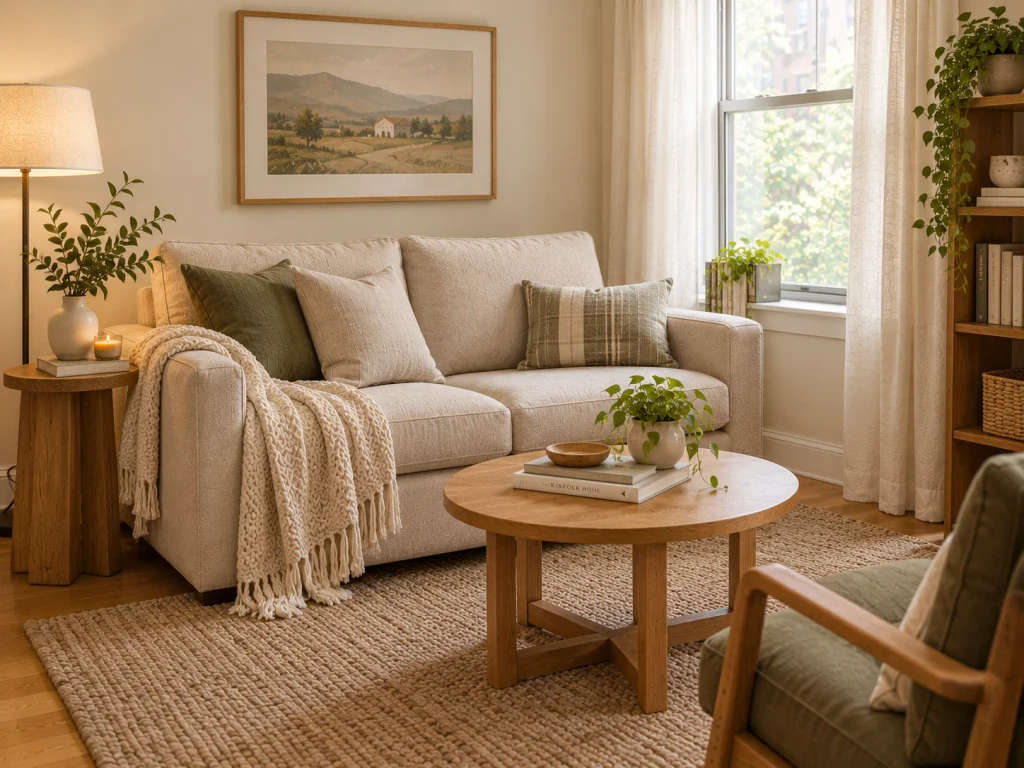
14. Use a Narrow Console Table Behind the Sofa
If your sofa sits away from a wall and leaves a narrow strip of unused space behind it, a slim console table may make that area more useful. It can hold a small lamp, a tray for everyday items, or a few books without needing a deep cabinet. Measure the available clearance first so the table does not interrupt the main walkway.
A secondhand table can be an affordable option, and a simple design is usually easier to fit into a small room. If the sofa must sit against the wall, consider placing a narrow console elsewhere only if it adds function without reducing the room’s usable floor space.
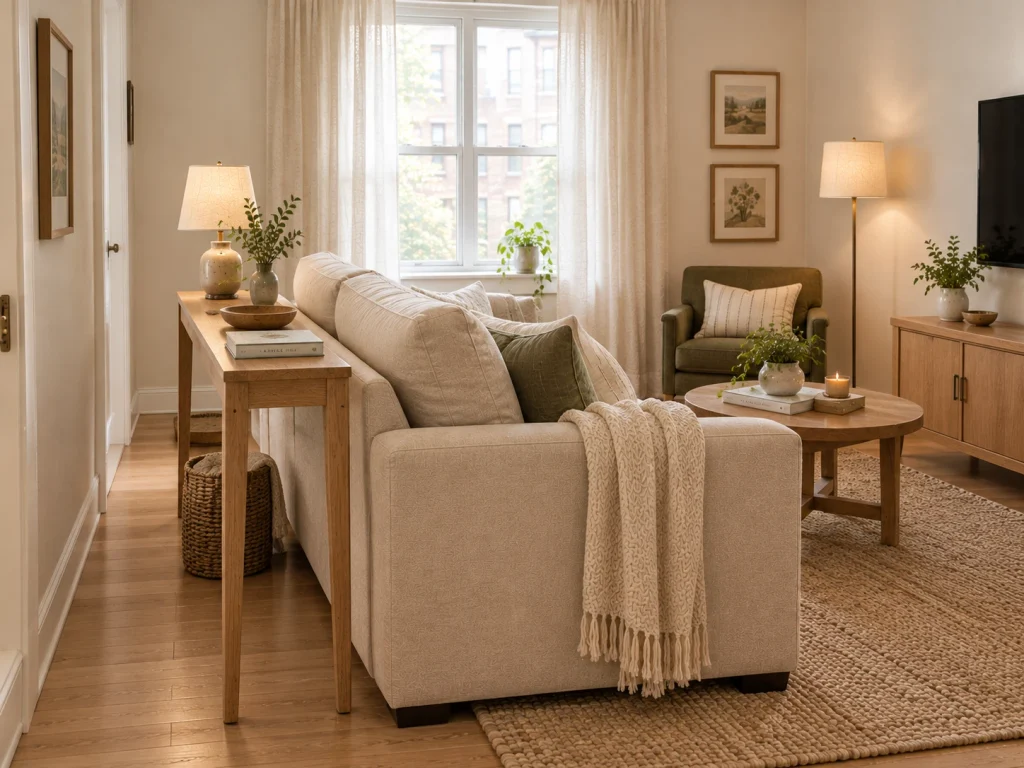
15. Try a Small Storage Ottoman Instead of a Bulky Coffee Table
A storage ottoman can serve more than one purpose in a compact living room. It can provide a footrest, extra seating, and hidden storage for blankets or remotes. A compact model may be easier to move around than a large coffee table, especially when you need to create more floor space.
Choose an ottoman with a durable fabric and a size that leaves enough room to walk past it. If you use it as a surface for drinks, add a stable tray. Compare secondhand options with new budget models, and make sure the lid and hinges feel safe and sturdy.
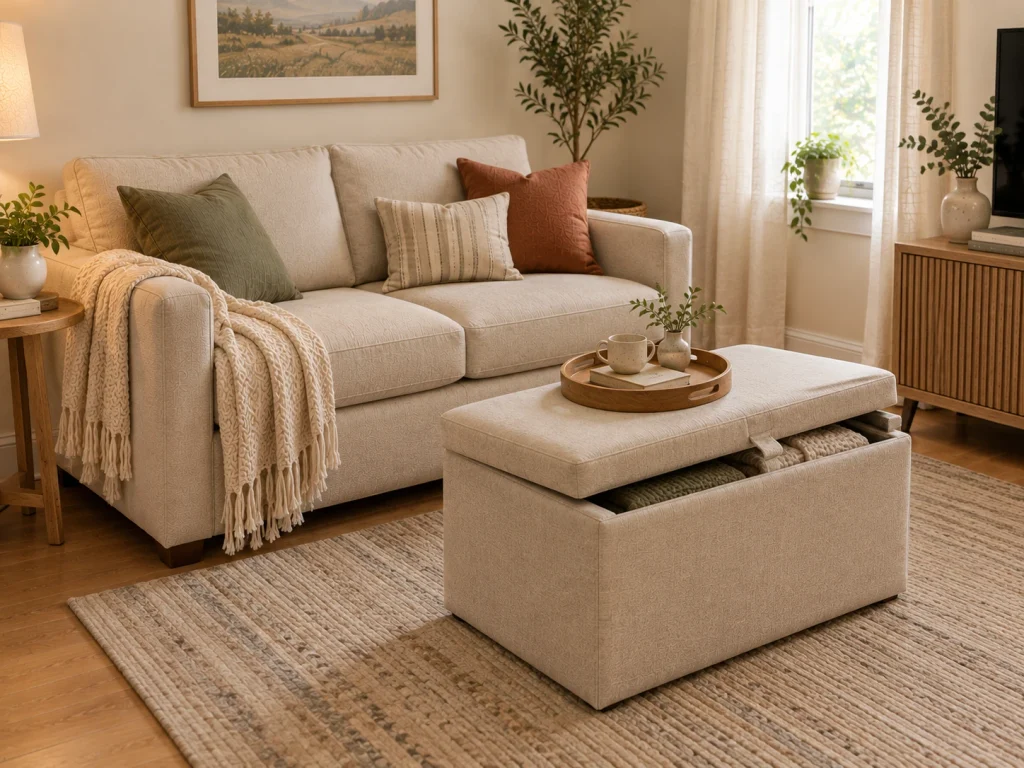
16. Make a Small Room Feel Taller With Vertical Decor
When floor space is limited, use the wall height to create visual interest. A tall framed print, a narrow bookcase, a floor lamp, or a vertical arrangement of artwork draws attention upward without adding much furniture to the room. This can be especially helpful in apartments with compact floor plans.
Choose one or two vertical elements rather than filling every wall. Leave enough open space around the artwork and shelves so the room does not feel busy. If you use a tall bookcase, secure it according to the manufacturer’s instructions, especially in a home with children or pets.
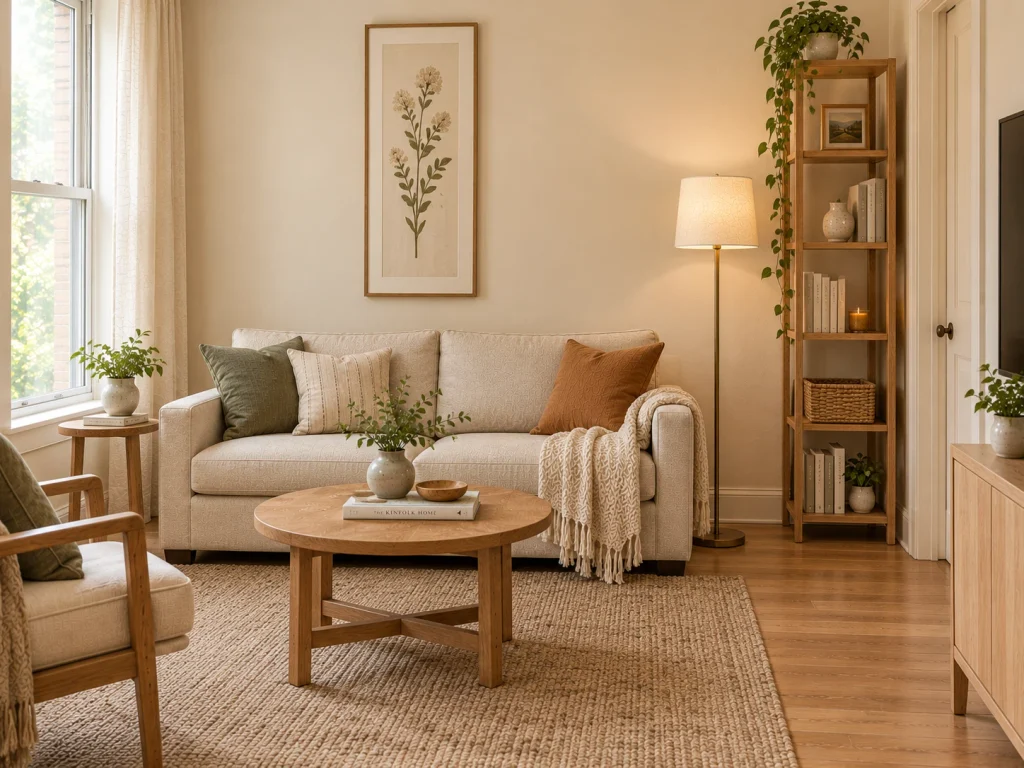
17. Create a Reading Corner With One Comfortable Chair
Even a small living room can have a dedicated reading spot if you use an underused corner. A comfortable chair, a small side table, and a lamp are often enough. You do not need a matching furniture set; a thrifted chair can look intentional when its color or texture connects with the rest of the room.
Keep the corner compact and functional. Choose a chair that fits the space, check its dimensions before buying, and avoid adding a large footstool if it blocks the route through the room. A small stack of books or one plant can finish the arrangement without creating clutter.
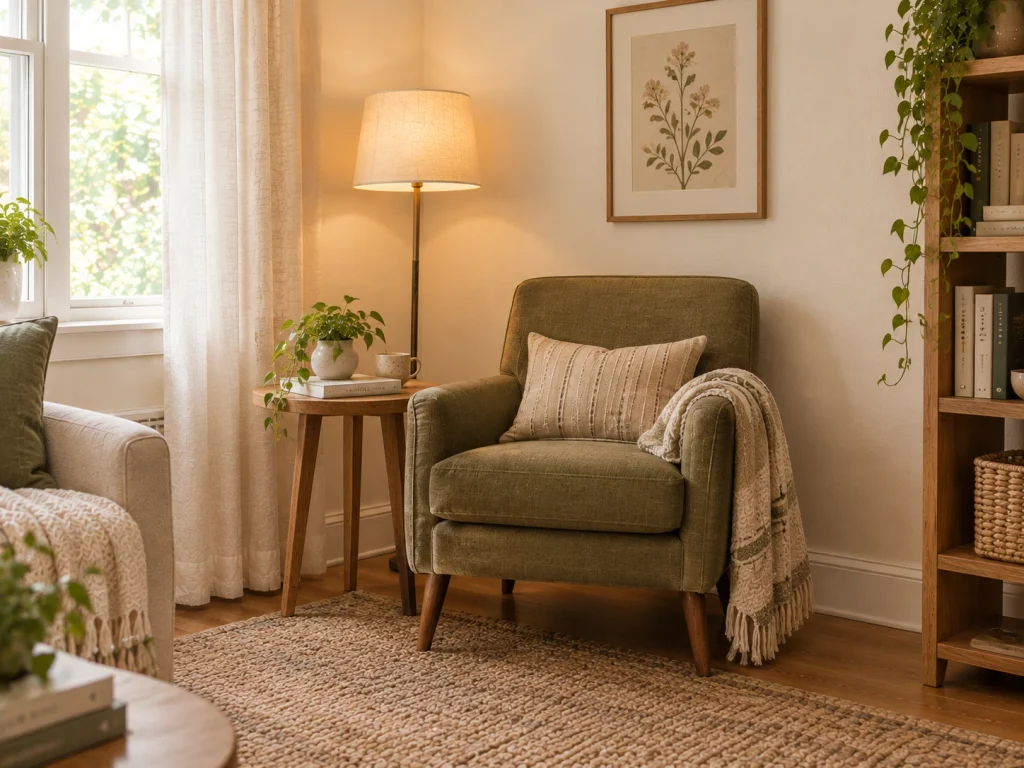
18. Update Old Furniture With New Hardware
A dated sideboard, media cabinet, or small drawer unit can often be refreshed by changing its handles or knobs. Choose hardware that fits the existing holes whenever possible so you do not have to drill new ones or fill old holes. Matte black, brushed brass, and simple wood knobs can each create a different look.
Clean the furniture first and inspect the condition of the surface. New hardware will not repair damaged structure, but it can make a sound, older piece feel more deliberate. Try updating one item before changing several pieces, and choose finishes that complement the other metals in the room.
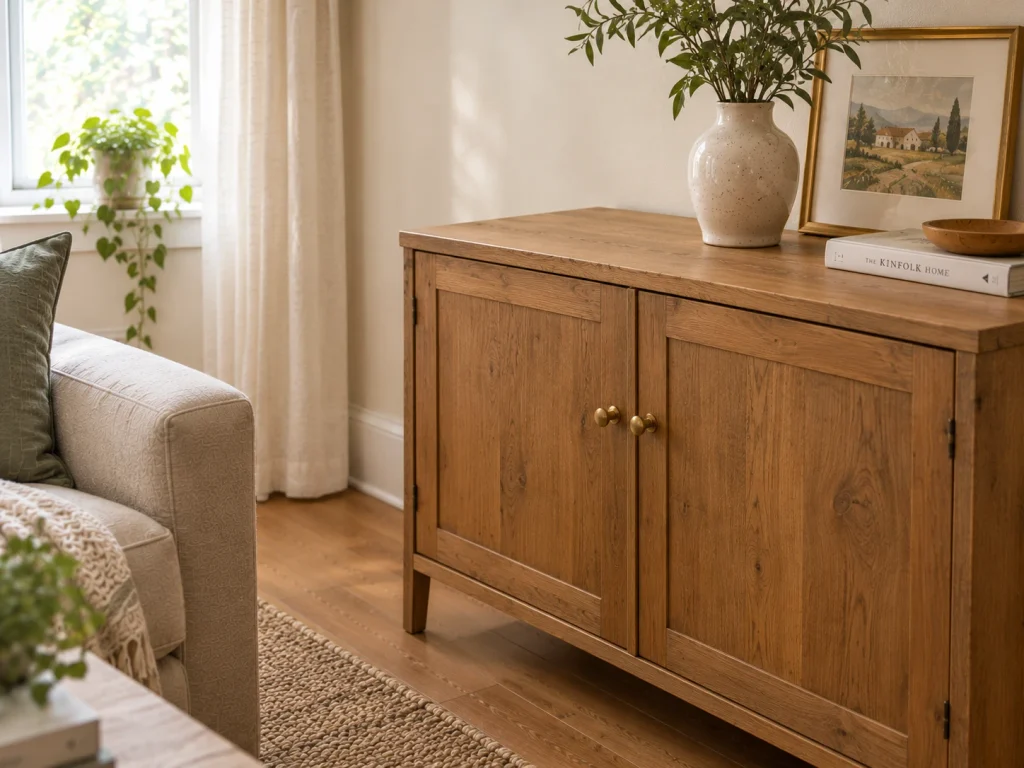
19. Style the TV Wall Without Expensive Built Ins
A television can dominate a small living room if the surrounding wall is crowded with furniture and accessories. A simple low media unit, a tidy cable arrangement, and one or two carefully placed decorative pieces can make the wall feel more finished without custom cabinetry.
Choose a unit that is proportionate to the television and leaves enough room to access cables and devices. If you rent, use removable cable management products where suitable and avoid drilling into walls without permission. Keep the area around the screen relatively simple so it remains practical for everyday viewing.
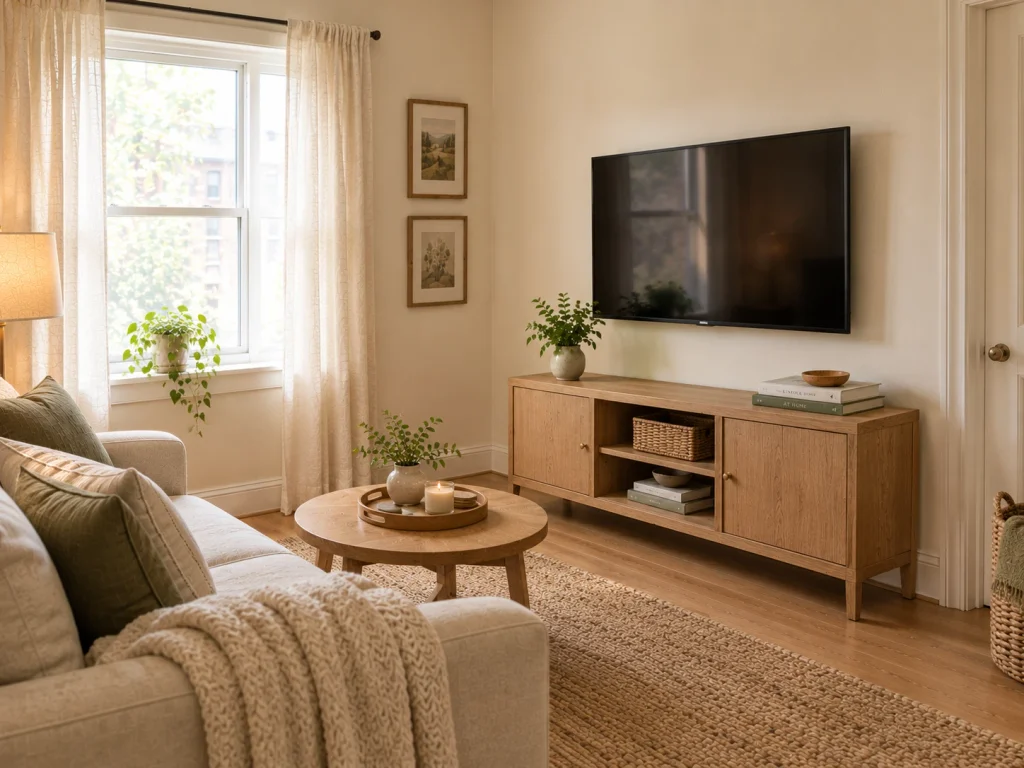
20. Use Removable Decor in a Rental
Renters can personalize a living room without making permanent changes. Removable wall decals, lightweight framed prints, freestanding shelves, cushion covers, and lamps can all introduce personality while keeping the room adaptable. Before using adhesive products, check the product instructions and test them in an inconspicuous area because paint and wall finishes vary.
Focus on the elements you can take with you when you move. A consistent palette, a rug, and a few favorite accessories can make a temporary space feel more personal. Keep larger investments flexible unless you know you will be able to use them in your next home.
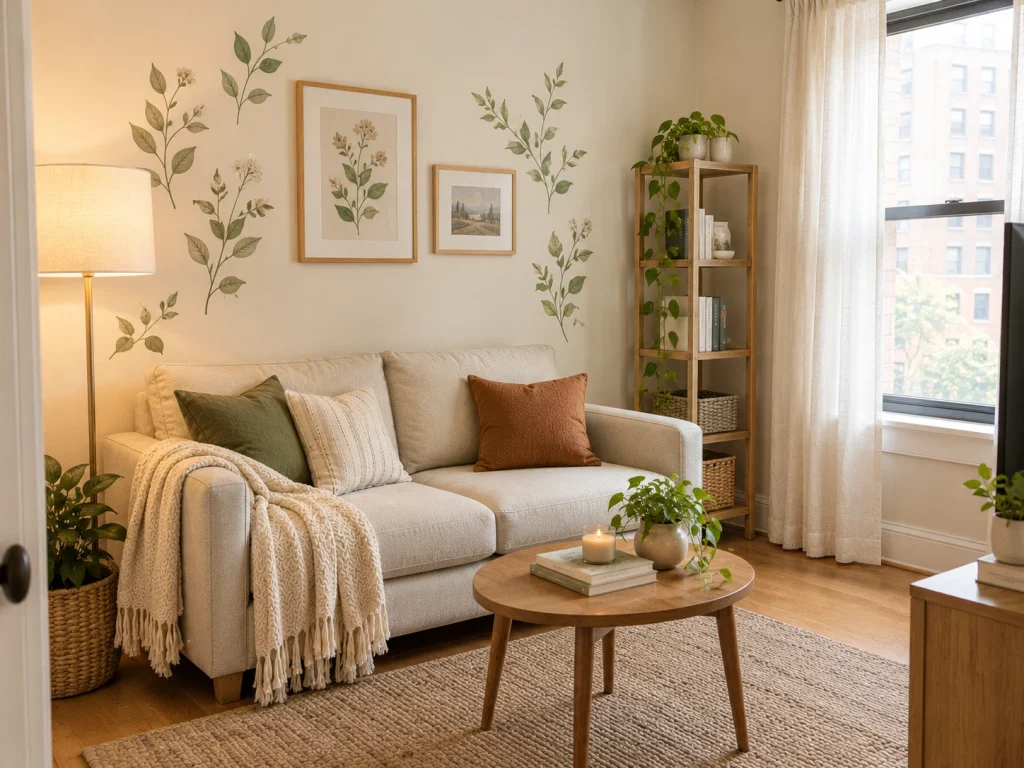
21. Try a Two Tone Color Scheme
A two tone color scheme adds interest without requiring a complicated decorating plan. Pair a light neutral with one deeper color, such as warm white and sage, cream and muted blue, or beige and terracotta. You can introduce the second color through textiles and artwork if painting is not possible.
If you want to paint, consider a single feature wall or a carefully chosen lower wall section rather than using several competing colors. Test paint samples in the room at different times of day because natural and artificial light can change how a color looks. Keep the larger furniture pieces relatively simple so the accent color feels intentional.
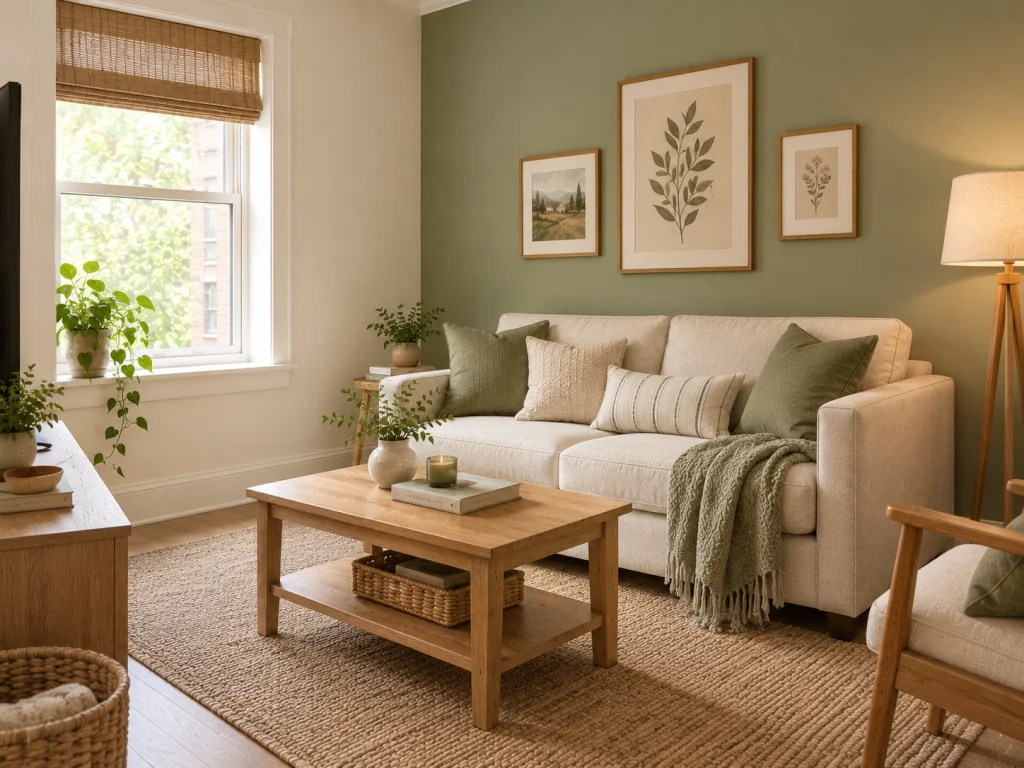
22. Decorate With Thrifted Finds
Secondhand shops, local resale listings, and community marketplaces can be useful places to find affordable decor. Look for sturdy side tables, frames, lamps, baskets, and small cabinets that suit your room’s measurements. A piece does not need to be new to look attractive, but it should be clean, safe, and in suitable condition.
Before purchasing anything, measure the space and decide where the item will go. This helps prevent impulse buys that create more clutter. You can mix one vintage piece with simpler modern furniture so the room feels collected over time rather than overly coordinated.
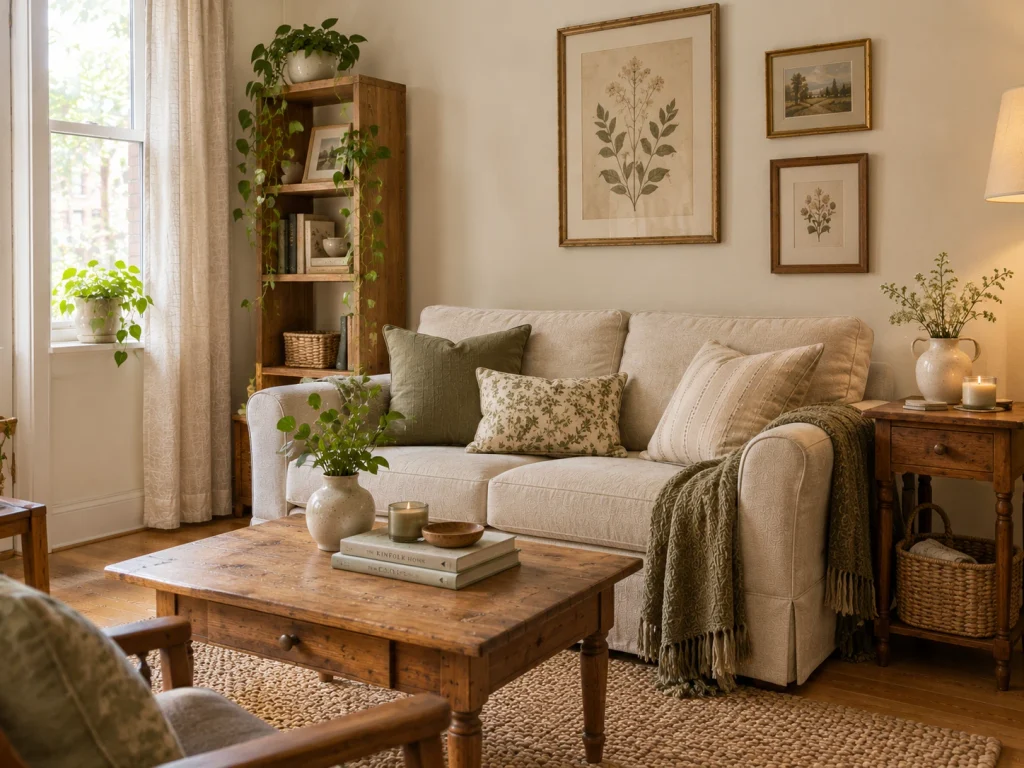
23. Add a DIY Accent Wall Without a Major Renovation
An accent wall can create a focal point behind the sofa without changing the entire room. Depending on your budget and whether you own or rent, you could use paint, removable wallpaper, or a carefully arranged collection of framed prints. Choose a treatment that works with the room’s existing furniture and does not overwhelm the limited space.
Plan the wall before beginning. Test the color or pattern, measure the area, and estimate the materials you need so you do not overspend. For more affordable decorating projects throughout the home, see our guide to DIY home decor ideas on a budget.
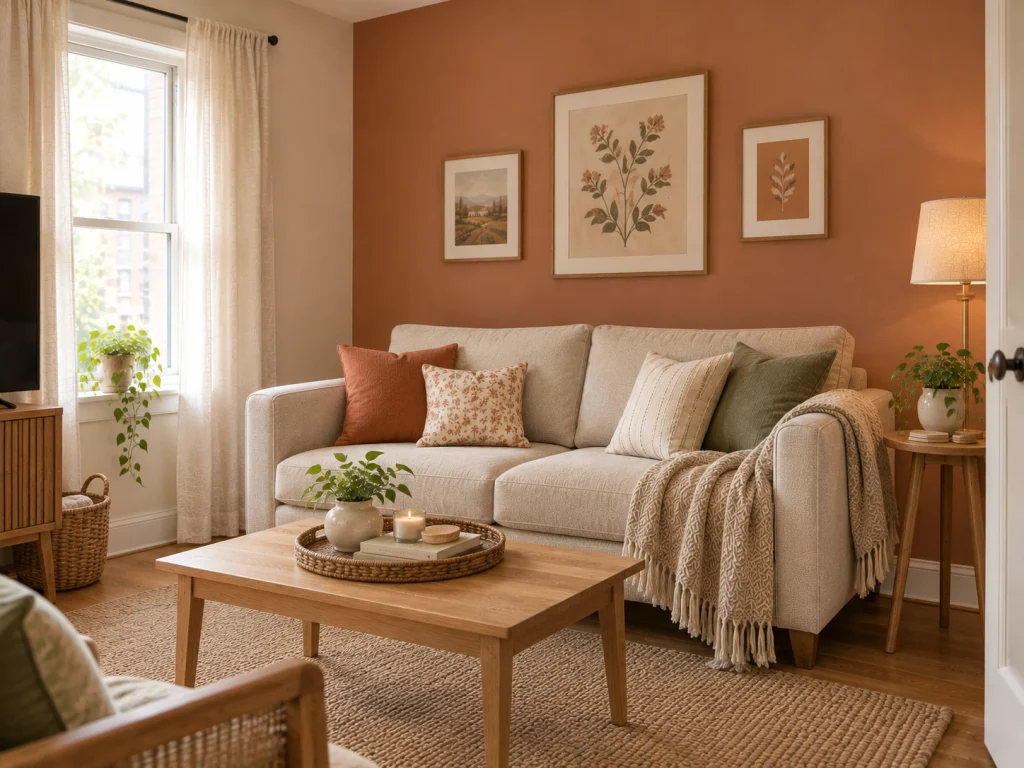
24. Make a Small Living Room Work for Multiple Purposes
A small living room may need to serve as a place to relax, work, read, or host guests. Instead of adding furniture for every activity, choose pieces that can adapt. A compact desk that doubles as a console, a nesting table, or an ottoman that provides extra seating can make the space more flexible.
Define each activity without dividing the room unnecessarily. A small rug can identify the seating area, while a desk lamp and storage tray can keep work items organized. When an activity is finished, put away the items you do not need so the living room can return to a comfortable shared space.
25. Finish With a Simple, Coordinated Decor Arrangement
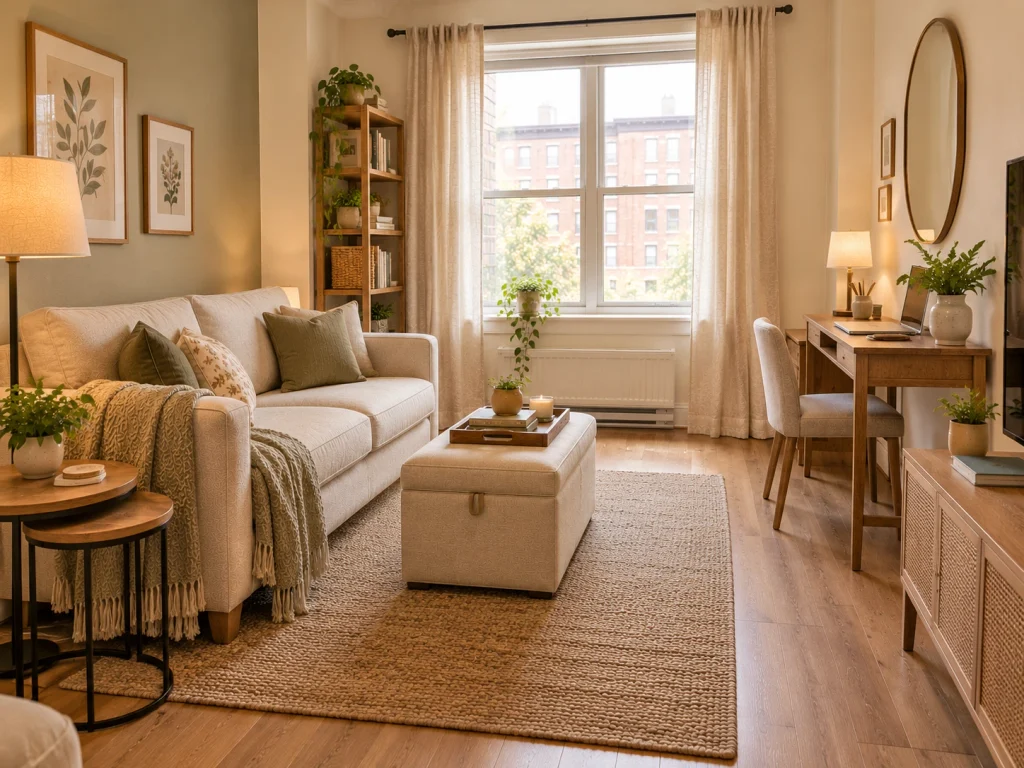
Once the larger pieces are in place, edit the smaller details. A coffee table might need only a tray, one book, and a small vase. A side table may look better with a lamp and a single useful object instead of several unrelated decorations. Leaving some surfaces clear makes the room easier to use and helps the pieces you keep stand out.
Step back and look at the whole room rather than styling each corner separately. Repeat a few colors and materials so the space feels connected, then remove anything that blocks a walkway or has no useful or personal purpose. A well edited room can feel more stylish than one filled with inexpensive accessories.
How to Decorate a Small Living Room on a Very Tight Budget
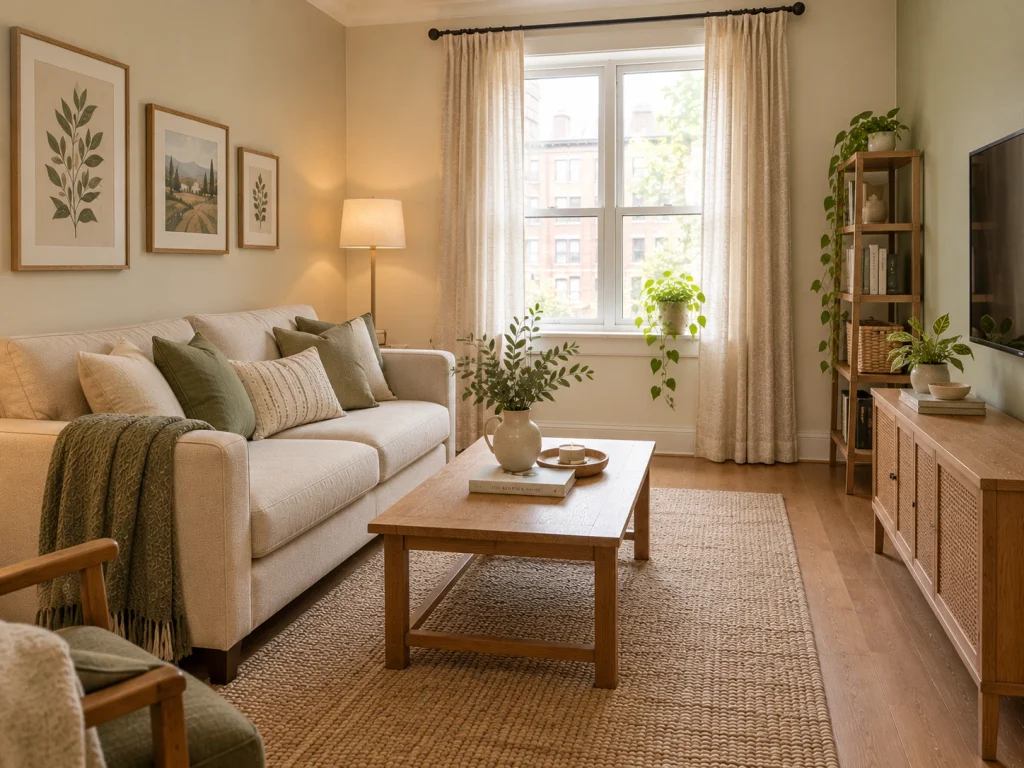
You can make progress even if you cannot afford a major purchase. Start by identifying what bothers you most about the room. Is the furniture difficult to walk around? Does the lighting feel harsh? Are everyday objects making the space look messy? Solve the biggest problem first instead of buying decor at random.
Start With Free Changes
Rearrange furniture, clear the surfaces, move accessories from other rooms, and remove items you no longer use. Take photos of a few layouts so you can compare them. These steps help you decide what the room actually needs before spending money.
Choose One Affordable Upgrade
Once the layout works, select one improvement that will have a clear impact. This could be cushion covers, a lamp, a mirror, a secondhand side table, or a few frames. Buying one useful item at a time helps you stay within your budget and avoid clutter.
Save for Larger Purchases
Some items, such as a well sized rug or a compact sofa, can have a bigger effect but may cost more. Measure carefully, compare options, and consider secondhand furniture in good condition. Avoid buying an inexpensive piece simply because it is on sale if it does not fit your room or solve a real problem.
Common Mistakes to Avoid in a Small Living Room
Buying furniture before measuring: Check the width, depth, and height of furniture, and consider the route it must travel through doors and hallways.
Choosing a rug that is too small: A tiny rug can make the seating area feel disconnected. Measure the furniture arrangement before shopping.
Relying on one harsh light: Add another suitable light source if the room feels flat or dark in the evening.
Filling every empty corner: Empty space is not wasted space if it keeps the room comfortable and easy to move through.
Using too many competing colors and patterns: Repeat a small selection of colors and textures for a more connected look.
Ignoring storage: Everyday items need a practical home. Baskets, drawers, and multifunctional furniture can help keep clutter under control.
Frequently Asked Questions
How can I make a small living room look expensive on a budget?
Use a coordinated color palette, keep the room uncluttered, add warm layered lighting, hang curtains at a suitable height, and choose a few attractive textures. A tidy arrangement and well maintained furniture can make a bigger difference than buying many decorative accessories.
What is the cheapest way to decorate a small living room?
Start with free changes such as rearranging furniture, decluttering, and moving decor from other rooms. If you can spend a little, consider cushion covers, a secondhand lamp, affordable framed prints, or a small plant.
Which colors work well in a small living room?
Warm white, cream, beige, pale greige, and muted colors can help create a calm backdrop. You can add deeper shades through cushions, artwork, plants, or one accent wall. The best choice depends on the natural light, existing furniture, and atmosphere you want.
How should I arrange furniture in a small living room?
Begin with the main seating area and keep the route through the room clear. Choose a coffee table that leaves enough space to move around it, and avoid adding furniture that blocks windows or doors. Test different layouts before purchasing anything.
How can I decorate a small rental living room without damaging the walls?
Use portable lamps, rugs, cushions, freestanding shelves, lightweight artwork, and removable wall products that suit your wall finish. Always check the product instructions and rental agreement before attaching anything to the walls.
Final Thoughts
A stylish small living room does not have to come with a large price tag. Start with the furniture and decor you already own, improve the layout, and make small changes that solve real problems. Add affordable lighting, useful storage, coordinated textiles, and a few personal details as your budget allows.
Choose the ideas that fit your room rather than trying to use all 25 at once. A thoughtful layout and a few well chosen updates can make a compact living room feel more comfortable, useful, and personal.
2 Comments