Pixie Hairstyles for Women Over 60: 20 Fresh Ideas with Shape and Texture
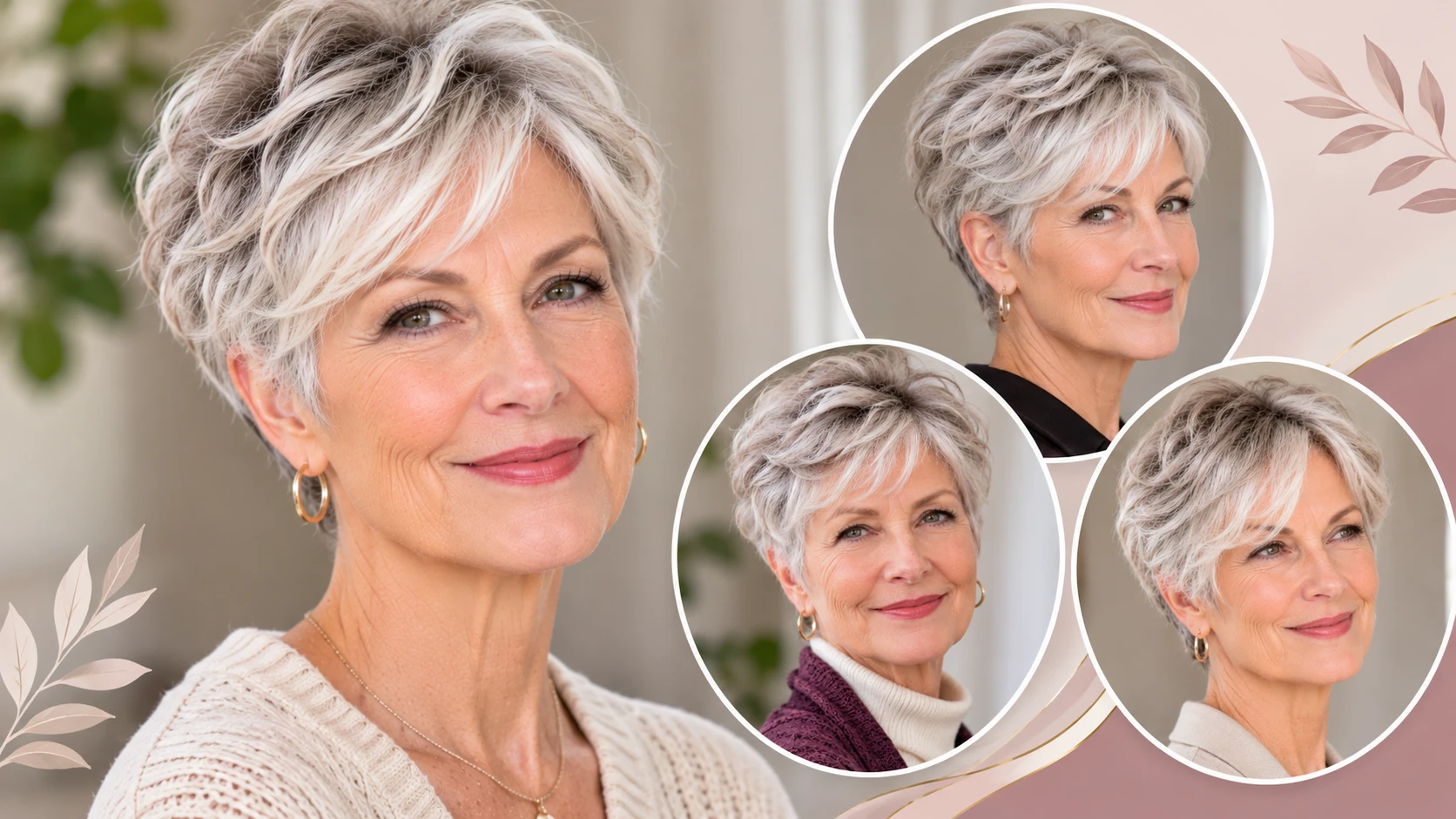
Choosing a short haircut can be an exciting way to try something different, especially when you want a style that feels comfortable, expressive, and easy to work with. Pixie hairstyles for women over 60 offer plenty of variety, from softly layered cuts and elegant silver styles to textured crops with longer, face-framing pieces.
A pixie does not have to mean one particular length or shape. Some versions are close and neat around the ears, while others leave extra length at the crown or fringe for more styling options. The best choice depends on your natural hair texture, preferred length, daily routine, and the overall look you enjoy.
In this guide, you will find 20 different pixie haircut ideas, including classic, modern, softly textured, curly, and longer variations. Each style includes details to help you understand its shape and what you might ask your hairstylist to customize.
20 Pixie Hairstyles for Women Over 60
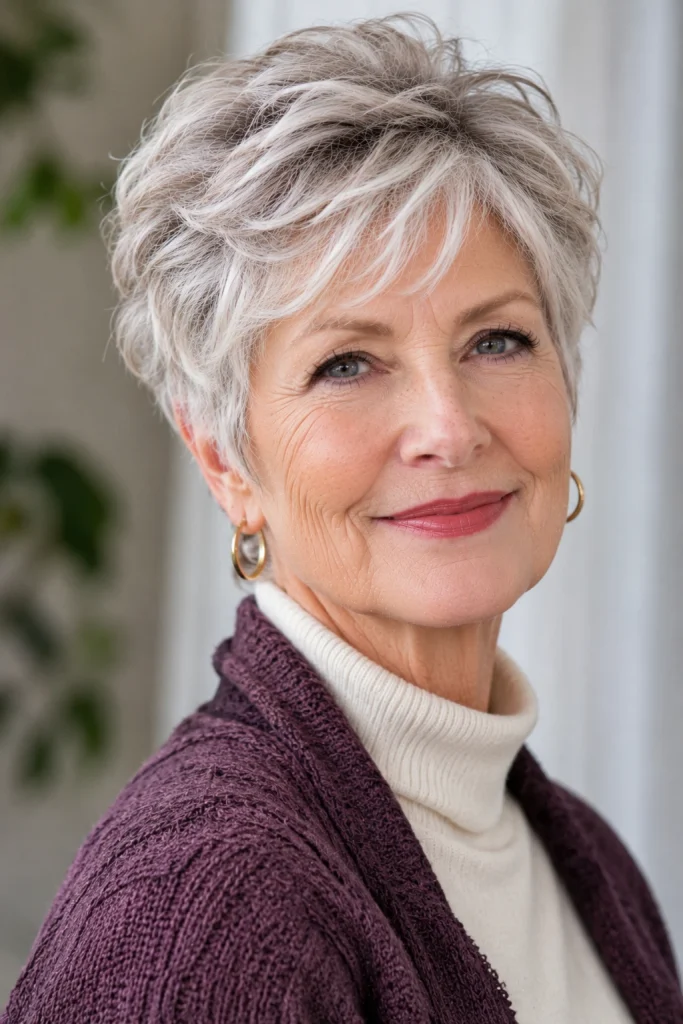
1. Soft Layered Pixie with Side-Swept Bangs
A soft layered pixie combines a tidy back with slightly longer pieces across the top. Side-swept bangs create a gentle diagonal line, giving the haircut movement without making the fringe look too heavy.
This style is a lovely option if you enjoy a short haircut but still want some length around the forehead. The layers can be adjusted to suit fine or medium hair, depending on how much natural fullness you have.
Styling idea: Use a lightweight styling cream and guide the front section gently to one side with your fingers or a small brush.
2. Classic Tapered Pixie
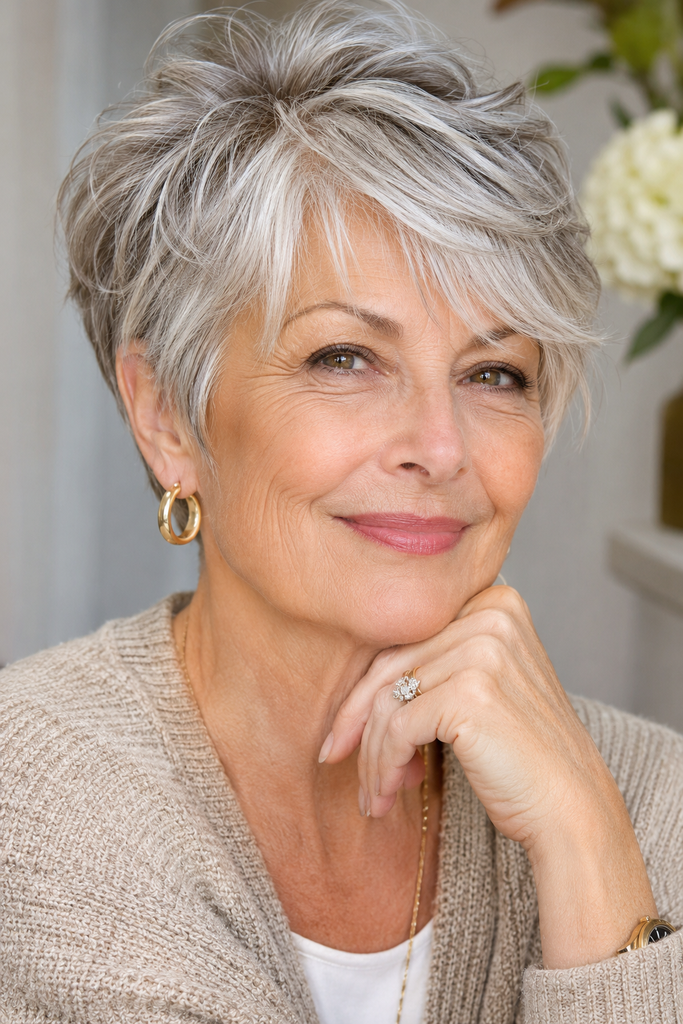
The classic tapered pixie has shorter sides and a neatly shaped neckline, while the top remains slightly longer. Its balanced outline makes it a versatile choice for someone who prefers a clean, timeless haircut.
The top can be brushed forward, softly lifted, or directed to one side. Ask your stylist to keep the transition between the sides and crown blended rather than creating a harsh contrast.
Styling idea: Apply a small amount of lightweight cream and smooth the top into your preferred direction.
3. Feathered Pixie with Wispy Fringe
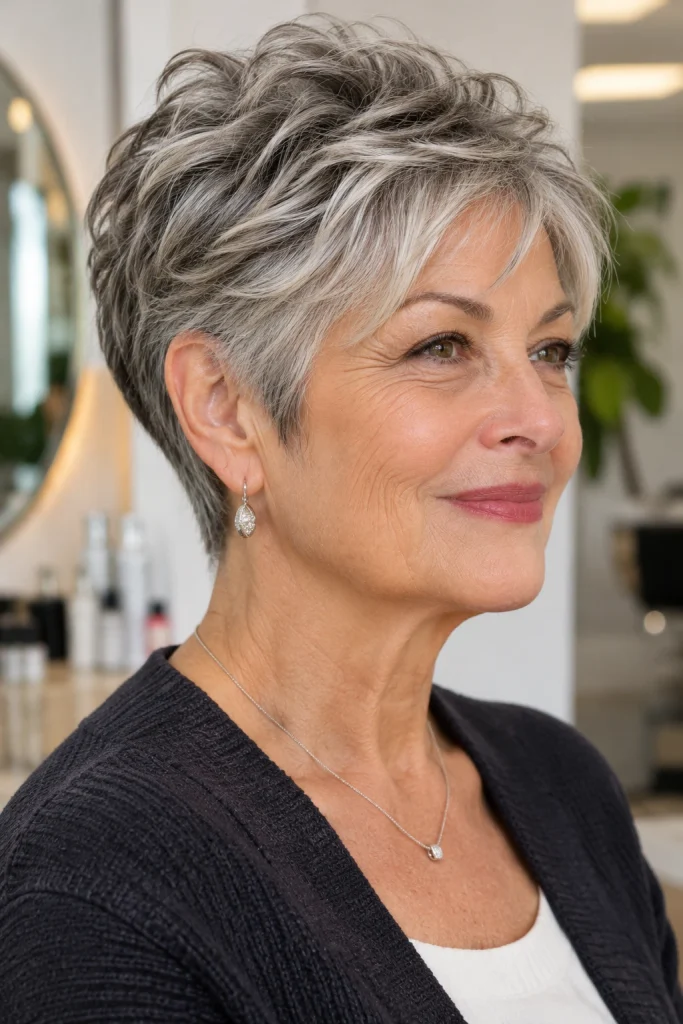
Feathered layers create a light, separated finish instead of a solid, heavy shape. In this version, the fringe is cut into soft pieces that blend naturally with the top and sides.
It can be customized for different hair densities. If your hair is naturally fine, discuss keeping enough fullness through the ends so the haircut does not become overly wispy.
Styling idea: Work a little lightweight mousse through damp hair and use your fingers to guide the fringe into place.
4. Long Pixie with Face-Framing Layers
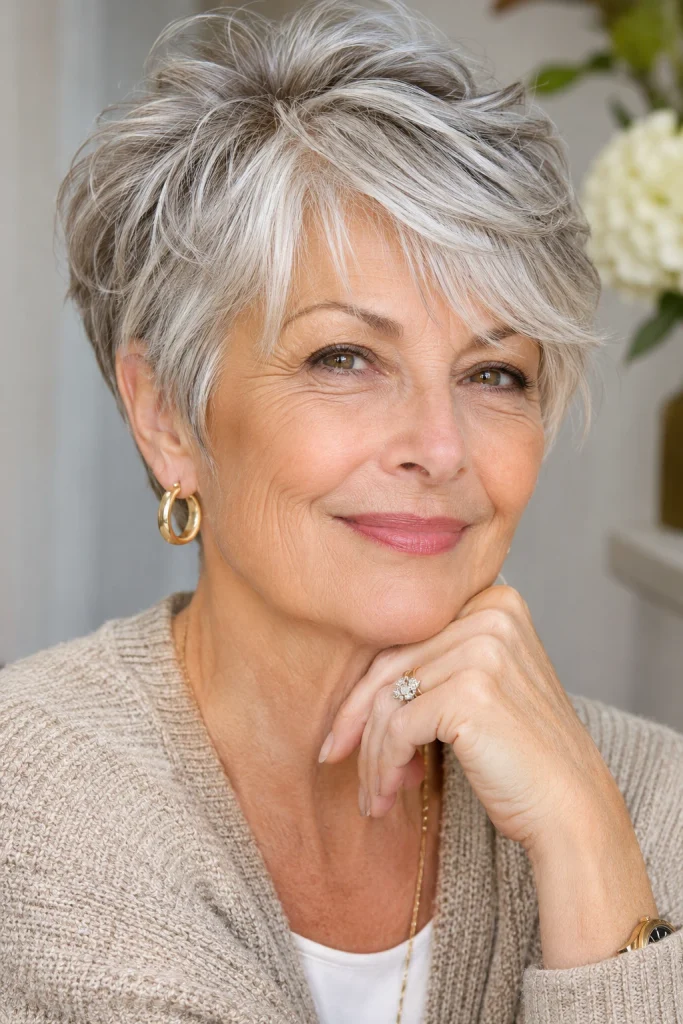
If you are not ready for a very short crop, a longer pixie offers a comfortable middle ground. The front and top retain extra length, while the back and sides are shaped to keep the haircut from feeling too bulky.
Face-framing pieces can be worn forward, tucked behind the ears, or swept to one side. This flexibility makes the style worth considering if you enjoy changing your part or styling direction.
Styling idea: Use a round brush to give the front pieces a gentle curve while keeping the finish natural.
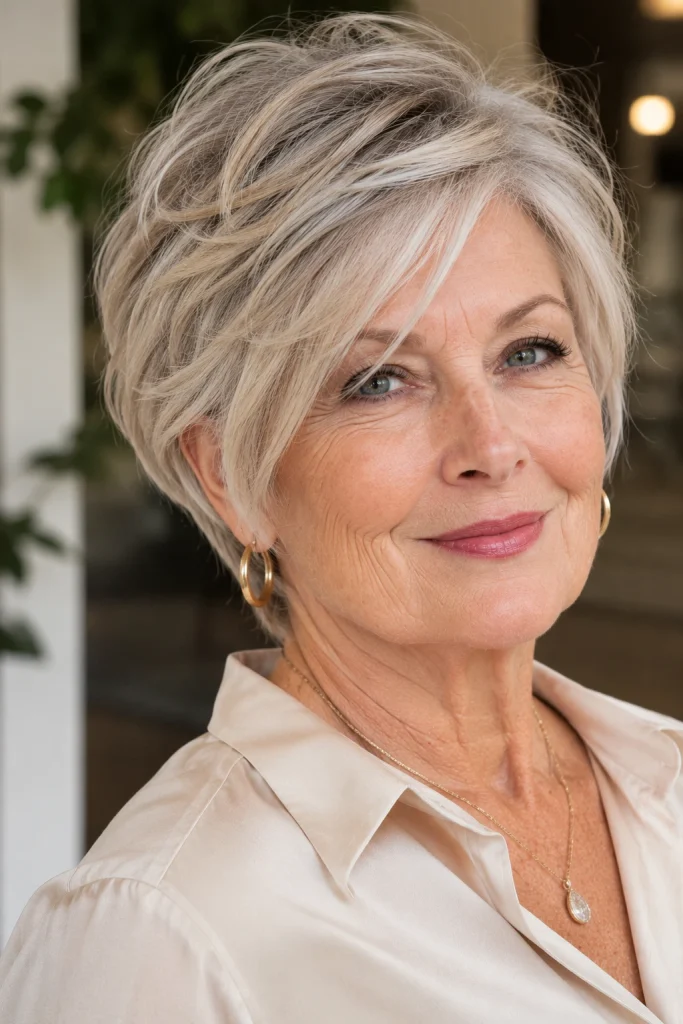
5. Textured Crop with a Piecey Top
This haircut uses short, separated layers to create a more relaxed finish. The crown has enough length to show texture, while the sides remain close and tidy.
A piecey top can be styled in several directions, making it suitable for people who prefer an informal look rather than a perfectly smooth finish.
Styling idea: Apply a tiny amount of flexible styling paste to dry hair and separate a few sections with your fingertips.
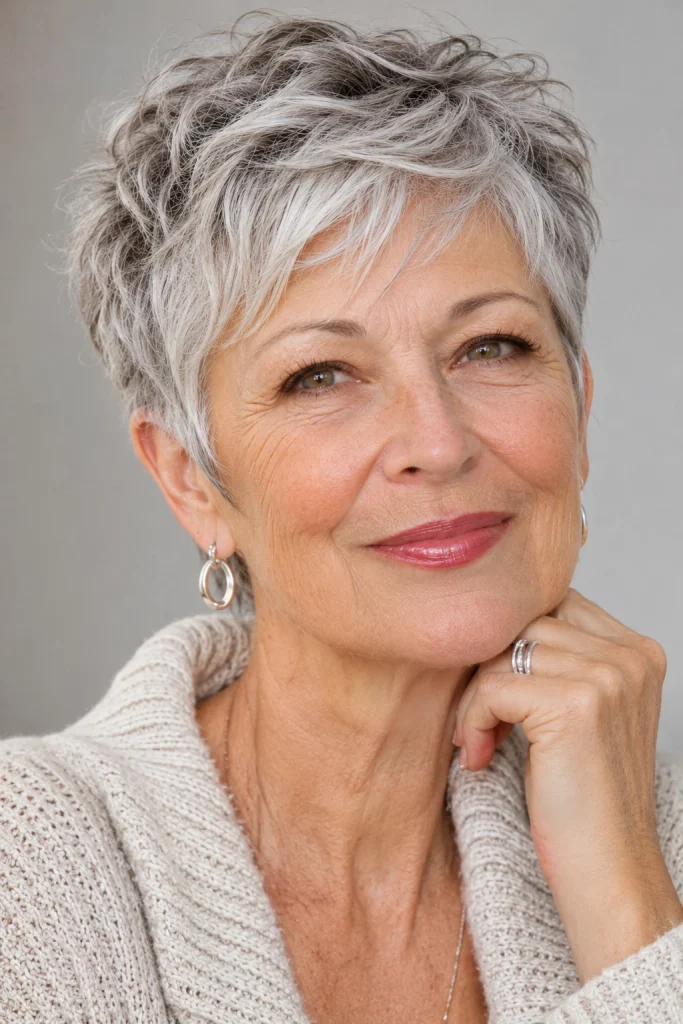
6. Rounded Pixie with a Full Crown
A rounded pixie has a softly curved outline rather than sharp, disconnected layers. The crown is left fuller, while the sides and neckline are shaped to create a balanced silhouette.
This option can work particularly well for people who prefer a smooth, softly structured haircut. The amount of layering should be adjusted to the hair’s natural density.
Styling idea: Blow-dry with a small round brush, following the natural direction of the hair.
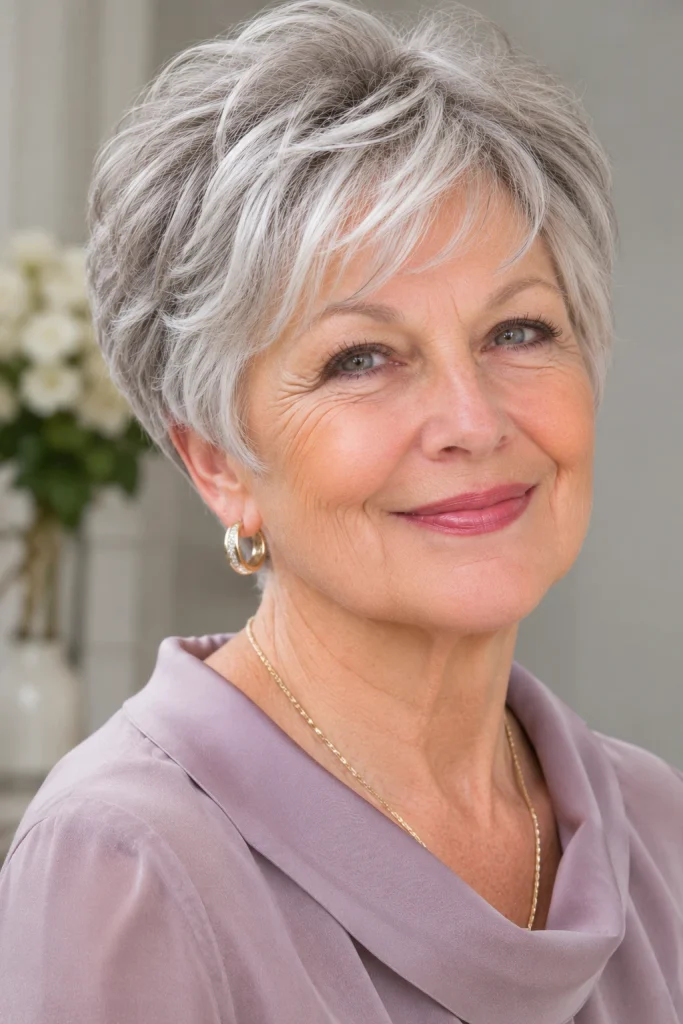
7. Asymmetrical Pixie with a Longer Front
An asymmetrical pixie uses slightly different lengths on either side to create an interesting shape. One front section is kept longer, while the opposite side is cut closer.
The contrast gives the haircut a modern character without requiring dramatic color or complicated styling. Ask your stylist how much difference in length would suit your preferred level of maintenance.
Styling idea: Sweep the longer section across the forehead and use a flexible product to keep it in place.
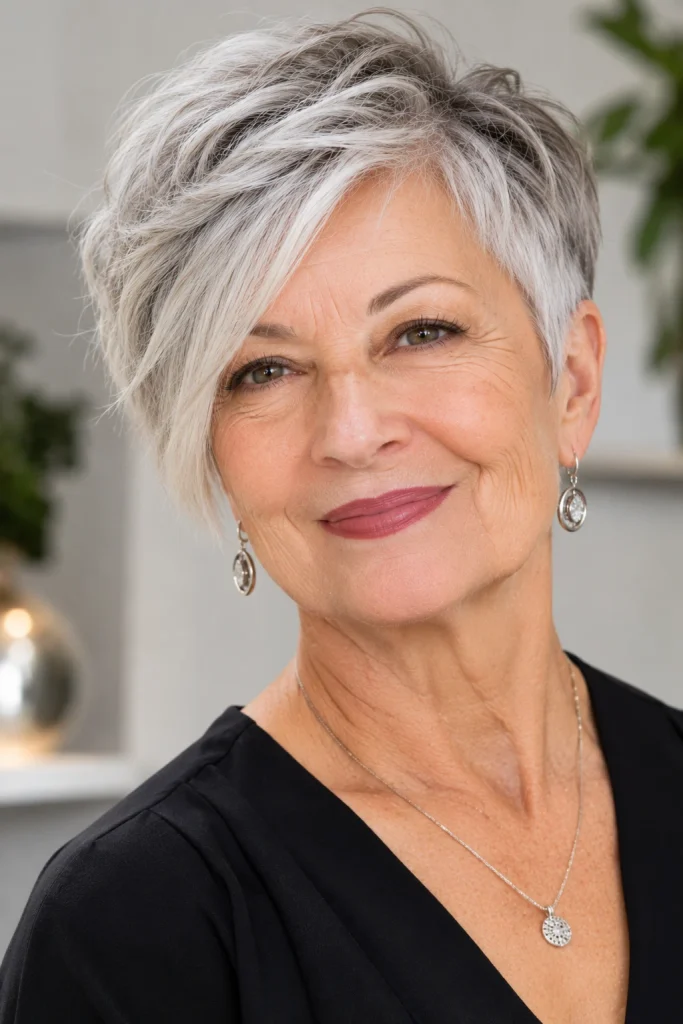
8. Wavy Pixie with Natural Movement
A wavy pixie allows natural bends and movement to become part of the haircut. Instead of trying to make every strand perfectly straight, the layers are shaped to work with the hair’s natural pattern.
The top can remain slightly longer to show the waves, while the back is shaped to maintain a neat outline.
Styling idea: Apply a lightweight curl cream to damp hair and let the natural texture form as it dries.
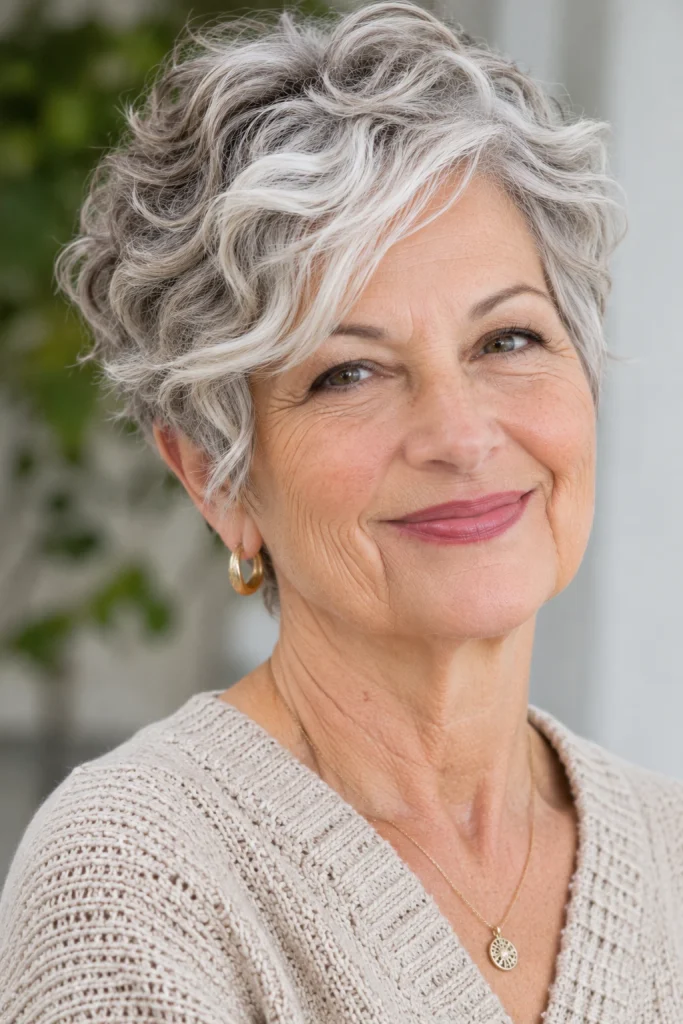
9. Silver Pixie with a Deep Side Part
A deep side part changes the direction and balance of a short haircut. The longer top section sweeps across the head, while the sides stay neatly shaped.
Natural silver or white hair can make the part and layered texture especially noticeable. The overall finish can be smooth and polished or slightly relaxed.
Styling idea: Create the part while the hair is damp, then guide the top into place with a brush.
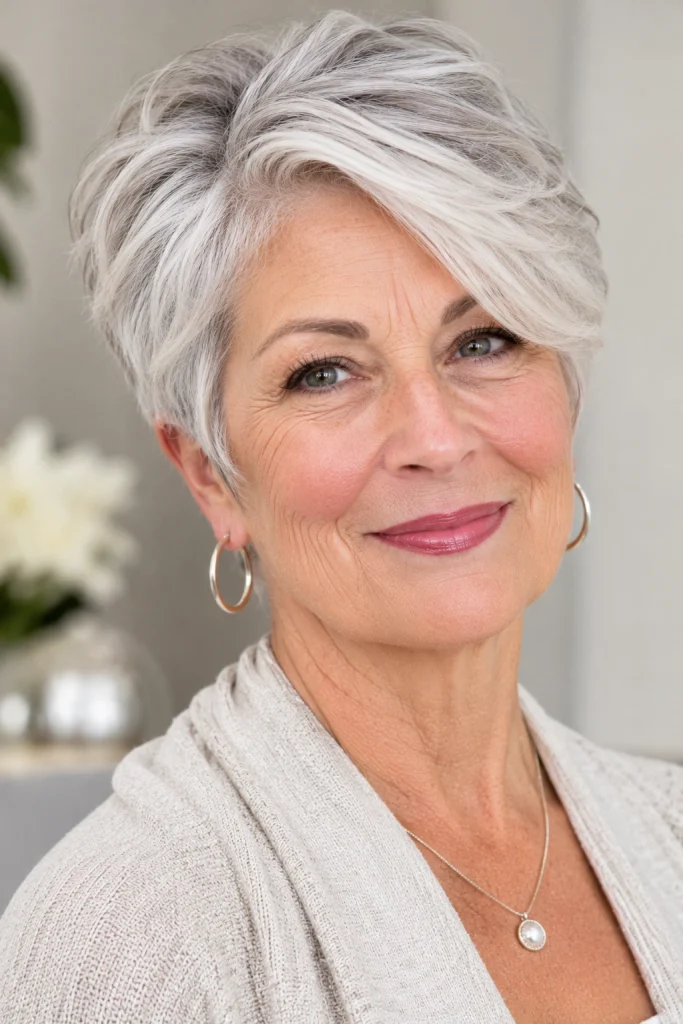
10. Short Pixie with Micro Bangs
Micro bangs are cut noticeably shorter than a traditional fringe. Paired with a short pixie, they create a distinctive outline and put more attention on the haircut’s shape.
This is a more statement-making option, so it is worth discussing fringe length and maintenance with your stylist before choosing it.
Styling idea: Keep the fringe neat with a small brush and use minimal product to avoid making it look stiff.
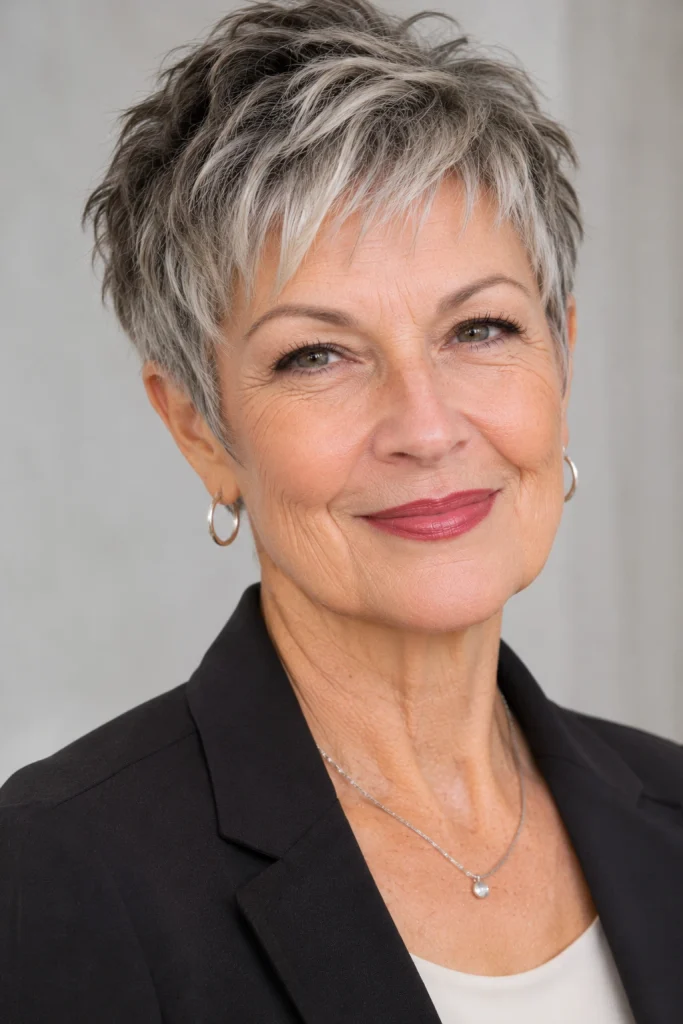
11. Curly Pixie with a Soft Taper
A curly pixie keeps the natural curl pattern visible while shaping the sides and neckline. The top is left long enough to show the curls, creating a haircut with movement and definition.
Curl patterns can vary considerably, so the cut should be planned around how the hair naturally sits when dry. Ask your stylist about shaping the curls without removing too much length.
Styling idea: Use a moisturizing curl product and avoid brushing the curls when dry.
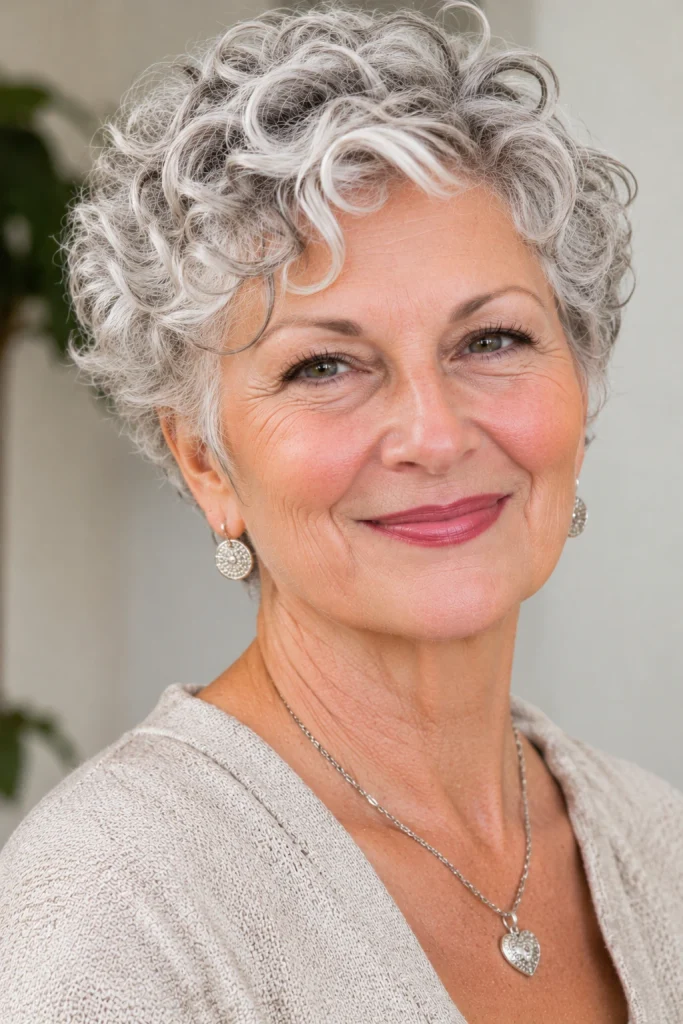
12. Bixie-Inspired Short Cut
A bixie blends elements of a bob and a pixie. It usually keeps more length around the sides and front than a traditional short pixie, creating a softer, slightly fuller outline.
This can be a useful option if you want to experiment with shorter hair without going for a closely cropped shape.
Styling idea: Use a round brush to create a gentle bend through the longer side sections.
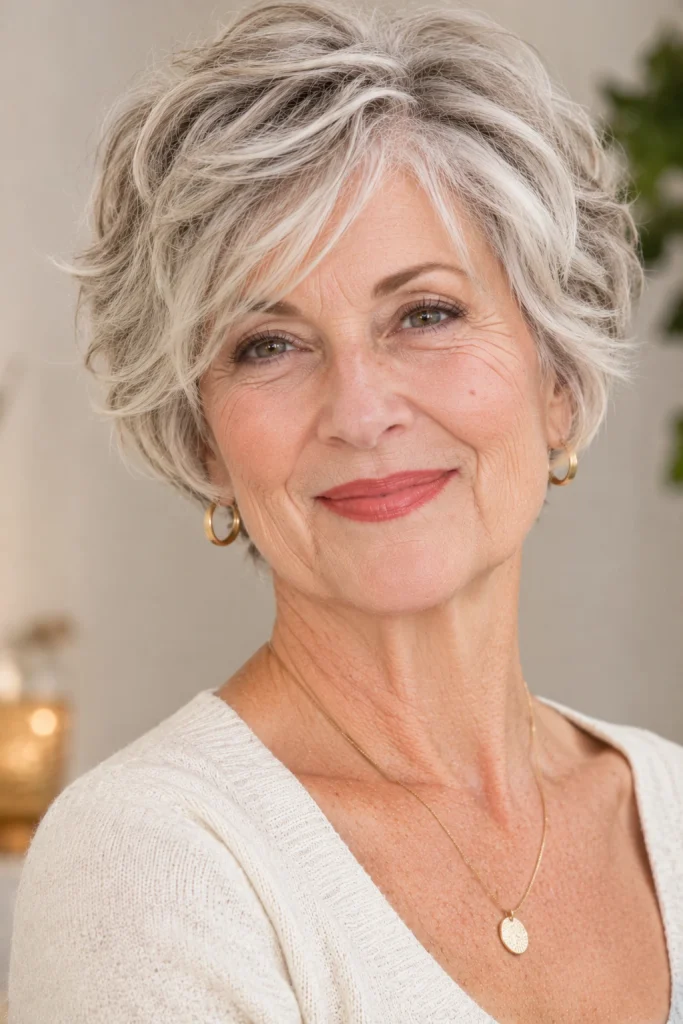
13. Choppy Pixie with Side Fringe
Choppy layers give a pixie a more defined, textured appearance. A side fringe balances the shorter sections and creates a little movement across the forehead.
The cut can be subtle or more piecey depending on how the layers are shaped. If you prefer a softer finish, ask for blended texture rather than very disconnected sections.
Styling idea: Use a flexible styling cream to separate the crown without making the hair feel crunchy.
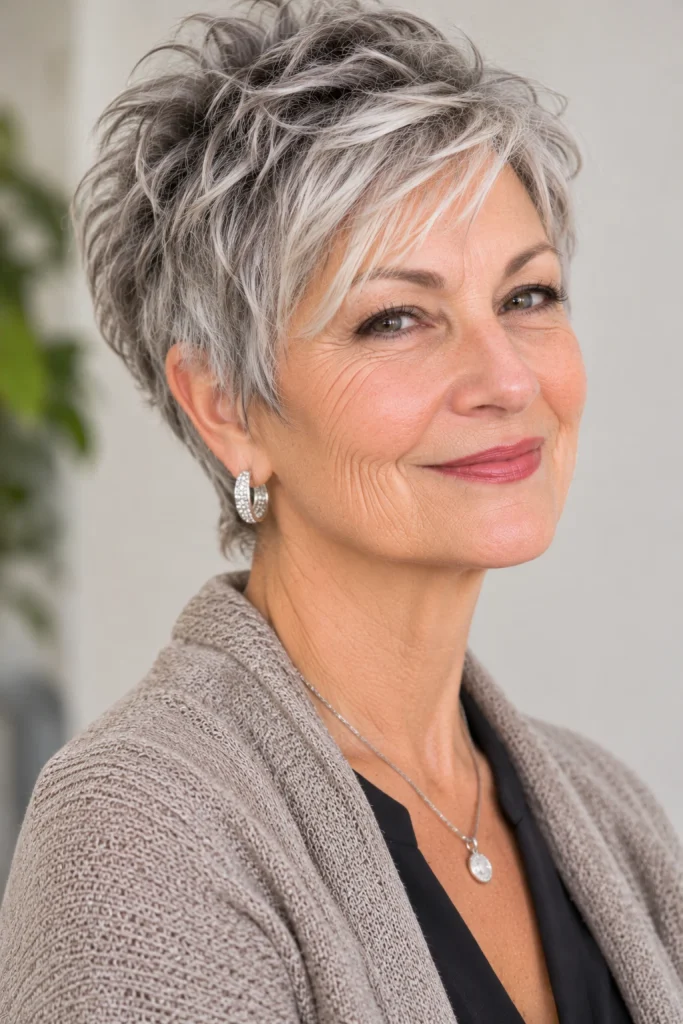
14. Elegant Pixie with a Swept-Back Top
This version keeps the sides and neckline tidy while the top is directed gently away from the forehead. It creates a more open, polished shape without requiring an extremely short haircut.
The top length can be adjusted to suit the hair’s natural movement and the amount of styling you enjoy.
Styling idea: Apply a light styling mousse at the roots and guide the top backward while blow-drying.
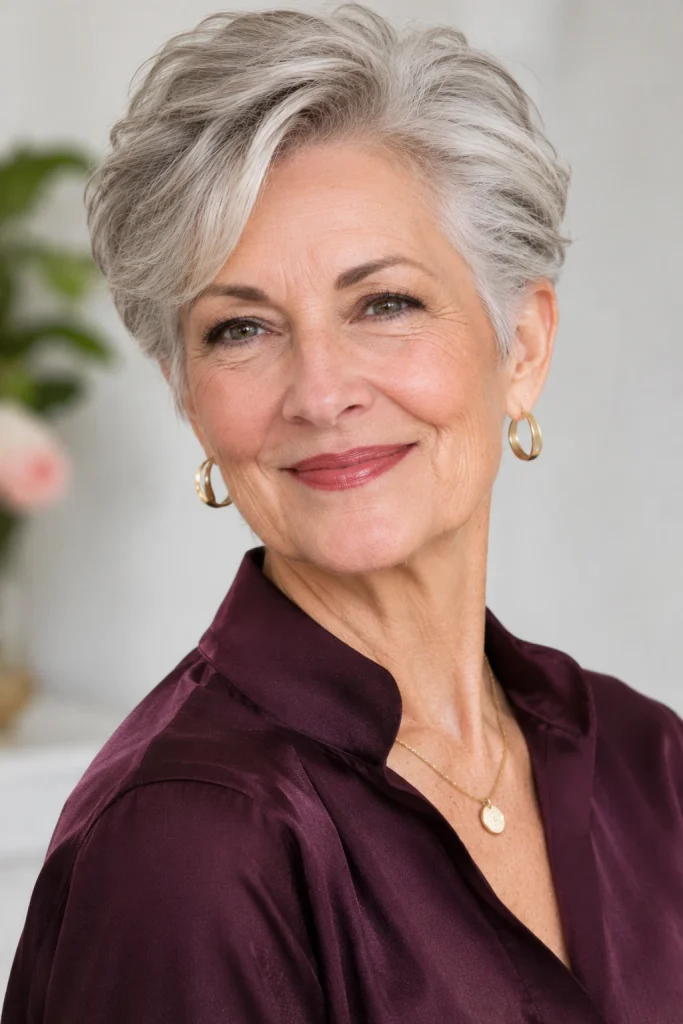
15. Pixie Shag with Soft Layers
A pixie shag combines a shorter silhouette with loose, layered texture. The crown and fringe have a slightly undone finish, while the neckline keeps the overall cut recognizable as a pixie.
This can be an interesting choice for people who like a relaxed, less structured hairstyle. The amount of layering should be adjusted so the ends retain enough fullness.
Styling idea: Scrunch a small amount of lightweight styling cream into damp hair to encourage natural movement.
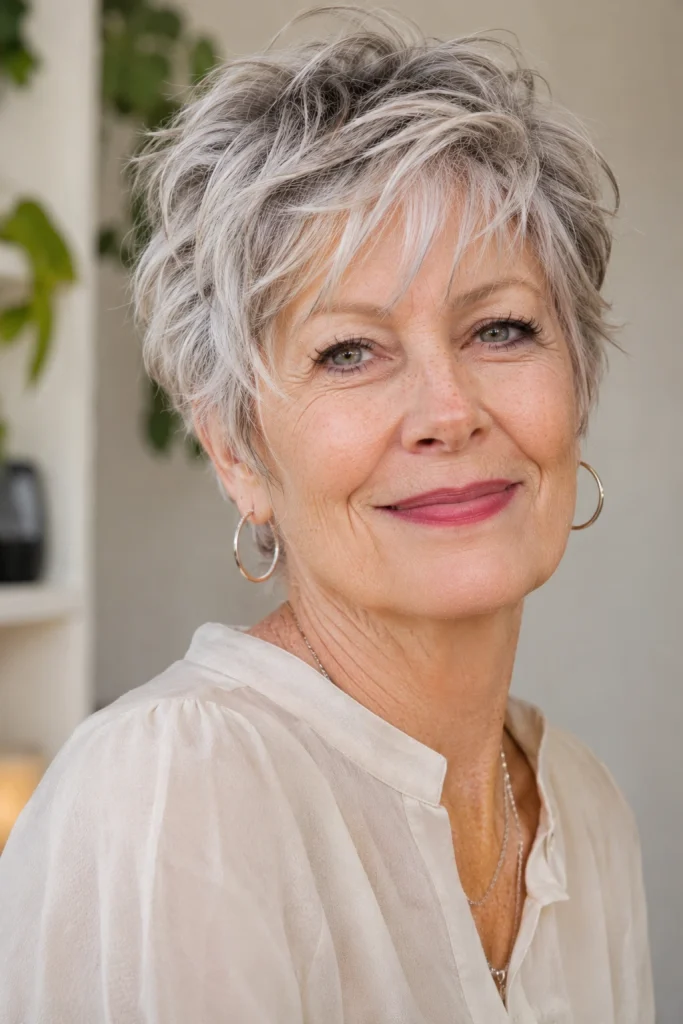
16. Sleek Pixie with a Side-Swept Top
A sleek pixie uses smooth, carefully directed layers to create a refined finish. The top is left longer and swept to one side, while the sides and back remain neatly shaped.
This style works well for someone who enjoys a more controlled appearance and does not mind spending a little time arranging the front section.
Styling idea: Use a small amount of smoothing cream and a brush to guide the top into a soft side sweep.
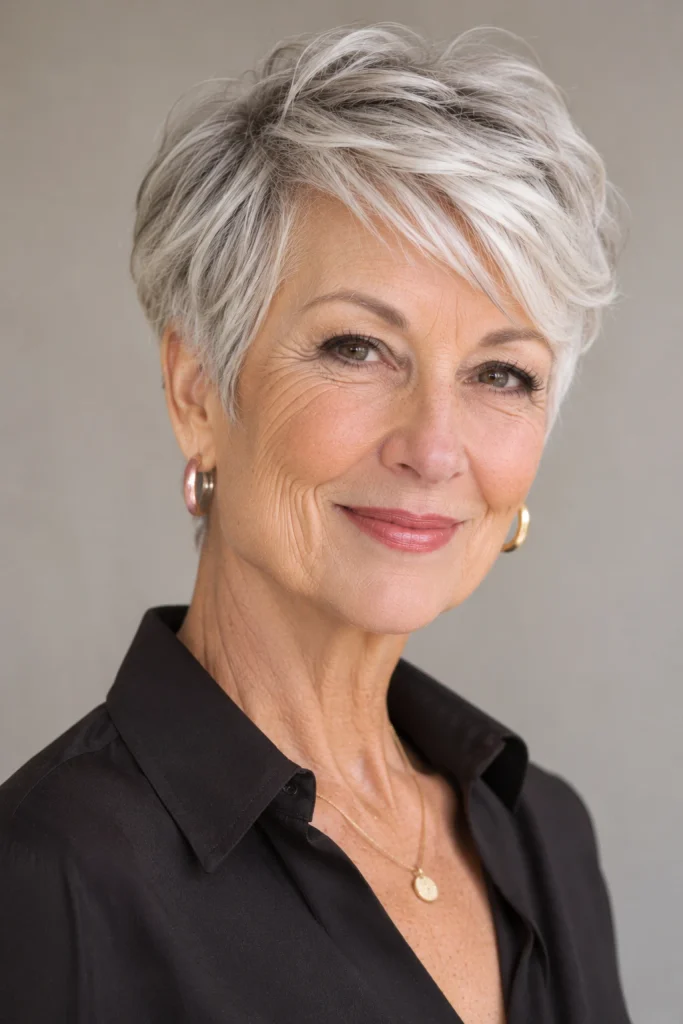
17. Pixie with Long Curtain Bangs
Curtain bangs are divided around the center or slightly off-center and fall toward the sides of the face. On a pixie, they can be left longer than the rest of the fringe and blended into the front layers.
This creates a softer transition between the top and sides. It is also a useful option if you like having a little extra length around the forehead.
Styling idea: Use a small round brush to direct each side away from the center part.
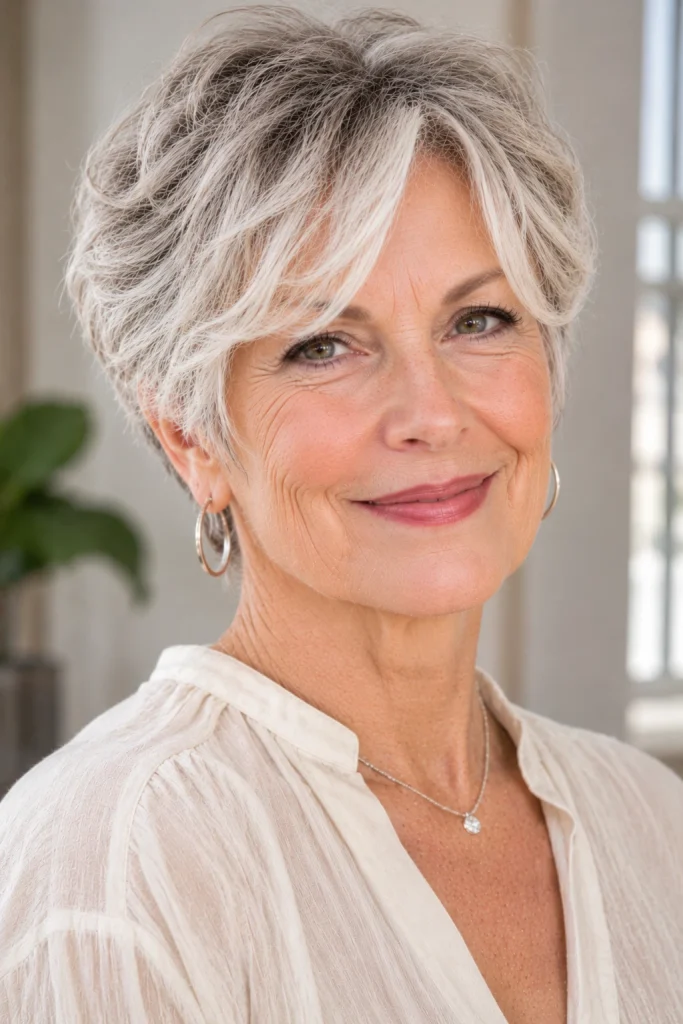
18. Textured Pixie with a Tapered Nape
This haircut combines a textured crown with a cleanly shaped neckline. The top has enough length to create separation, while the back follows the natural curve of the head.
It is a balanced option for people who want visible texture without an extremely dramatic shape.
Styling idea: Work a little lightweight paste through the crown and leave the neckline smooth.
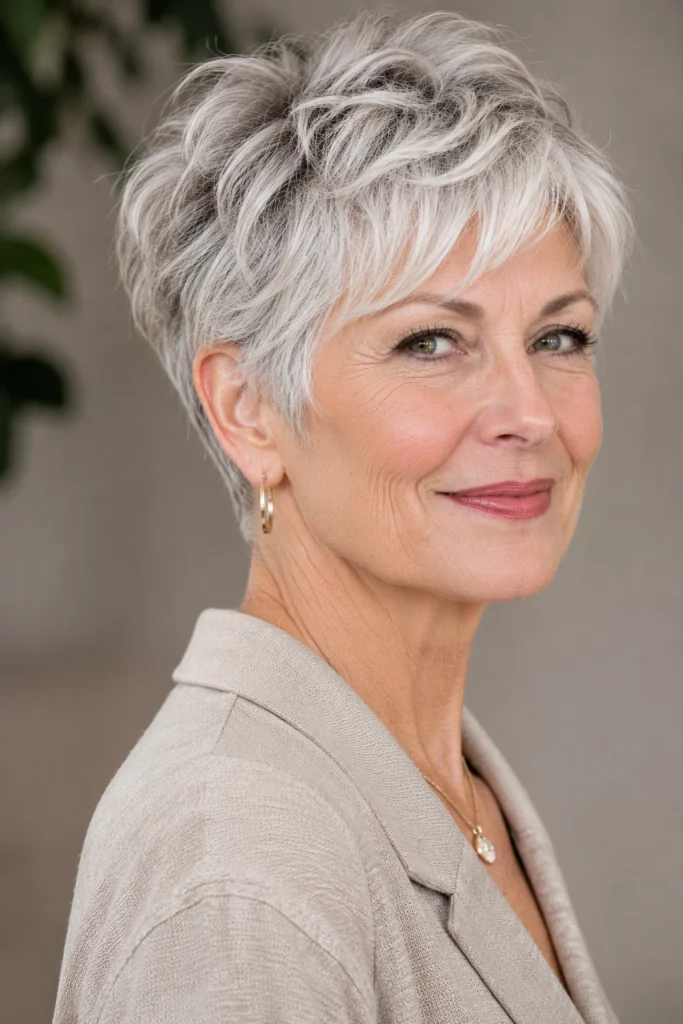
19. Soft Pixie with Long Side Pieces
This pixie keeps the hair around the temples and ears slightly longer than a closely cropped style. Those longer side pieces create a gentle outline and can be tucked behind the ears when desired.
It is worth considering if you like the convenience of short hair but want to preserve some length around the sides of your face.
Styling idea: Use a light cream to smooth the side pieces or tuck them behind the ears.
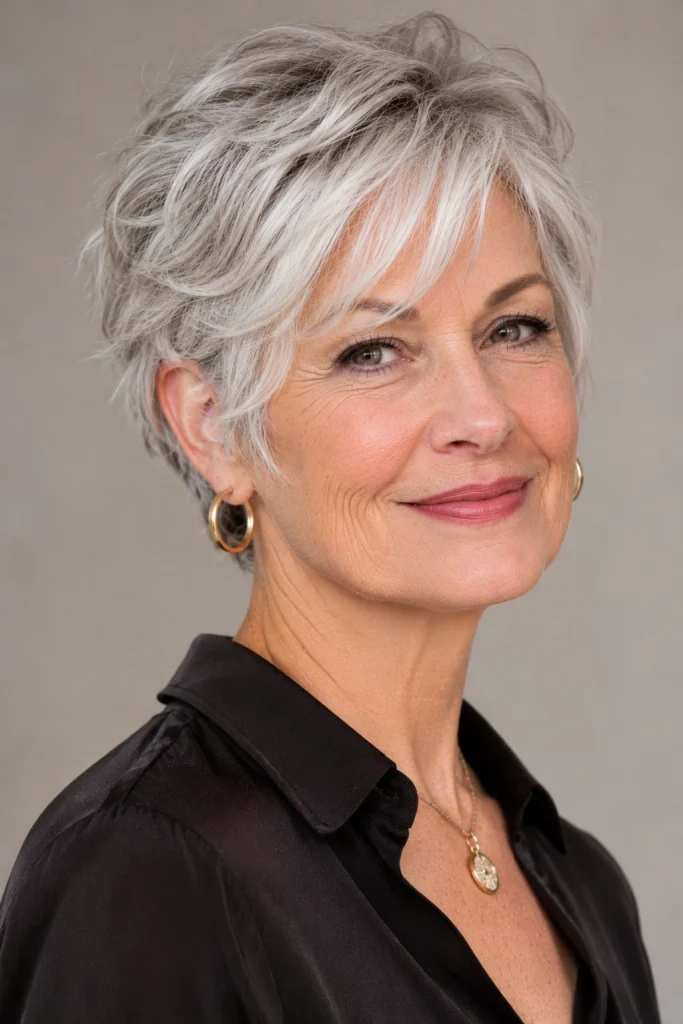
20. Voluminous Pixie with a Layered Crown
A layered crown gives this pixie a rounded, dimensional shape. The top is shaped to show natural movement, while the sides and back are kept controlled to maintain the short silhouette.
The final result depends on the hair’s density and natural direction. Ask your stylist to demonstrate how the crown will sit without professional salon styling.
Styling idea: Apply lightweight mousse at the roots and lift the crown gently with your fingers while drying.
How to Choose a Pixie Haircut That Suits Your Hair
A haircut photo can be a helpful starting point, but the same style may look different on different hair textures. Before choosing a pixie, think about how your hair behaves naturally and how much styling you want to do.
For Fine Hair
If your hair is fine, discuss keeping enough length and fullness through the top and ends. A softly layered pixie or rounded shape may be worth exploring. Very heavy thinning can make the ends look less substantial, so ask your stylist how they plan to create texture.
For Thick Hair
Thick hair may need carefully placed layers to reduce bulk and create a balanced outline. A tapered pixie, textured crop, or longer pixie can be customized to manage the sides while retaining movement on top.
For Naturally Wavy Hair
A wavy pixie can work with your natural texture instead of requiring a smooth finish every day. Ask for a shape that allows the waves to sit comfortably and does not create unwanted bulk around the sides.
For Curly Hair
Curly hair needs a cut that accounts for how much the curls shrink as they dry. A stylist familiar with your curl pattern can help decide where to keep length and how to shape the crown.
For Gray or Silver Hair
Natural gray and silver shades can look beautiful with a range of pixie shapes. A layered cut can show different tones and textures, while a smoother style creates a more polished finish. Choose a haircut based on the shape you enjoy rather than feeling that gray hair requires one particular style.
What to Discuss with Your Hairstylist Before Getting a Pixie
A little preparation can make a big difference when changing to a shorter haircut. Save two or three reference photos and point out the specific details you like.
Consider discussing:
- Top length: Do you want enough length to sweep the hair sideways or brush it backward?
- Fringe: Would you prefer a side fringe, wispy bangs, curtain bangs, or no fringe?
- Neckline: Should the nape be softly tapered or left slightly longer?
- Natural texture: Will the haircut work with your natural waves, curls, or straight hair?
- Styling time: How much effort will the cut need on an ordinary day?
- Maintenance: How often will you need a trim to keep the shape?
A good consultation should include how the haircut will look when you style it yourself, not only how it looks immediately after a salon appointment.
How to Maintain a Pixie Haircut
Short hair can be straightforward to style, but a pixie still needs some attention to keep its shape.
Keep Up with Regular Trims
Pixies can lose their outline as the hair grows, particularly around the ears and neckline. Ask your stylist how frequently your particular cut needs reshaping. The timing will depend on the length, growth pattern, and finish you prefer.
Choose Lightweight Styling Products
A small amount of mousse, styling cream, or flexible paste may be enough for everyday styling. Heavy products can weigh down some hair types, so start with a little and add more only if needed.
Work with Your Natural Texture
You do not need to create the same finish every day. Some pixies look polished when brushed into place, while textured and wavy versions can be styled more loosely.
Protect Hair When Using Heat
If you use a hair dryer or heated styling tool, follow the product’s heat-protection instructions and avoid unnecessarily high temperatures. A gentle approach can help keep hair looking healthy.
Frequently Asked Questions
Are pixie hairstyles a good option for women over 60?
A pixie can be a practical and stylish option at any age. The important part is choosing a length and shape that suit your hair texture, personal preferences, and daily routine.
Which pixie haircut works well for fine hair?
A softly layered pixie, rounded pixie, or longer pixie may be worth discussing with your stylist. Keeping enough length through the crown and ends can help preserve the haircut’s shape.
Can a pixie haircut work with naturally curly hair?
Yes. A curly pixie can show natural curl definition while keeping the sides and neckline shaped. It is important to work with a stylist who understands how your curls behave when dry.
Is a longer pixie easier to style than a very short pixie?
It depends on your hair texture and the shape of the cut. A longer pixie gives you more ways to arrange the front and top, but it may require additional styling. A shorter version can feel simpler for some people but may need more frequent reshaping.
Can I keep my natural gray hair with a pixie cut?
Absolutely. Pixie cuts can be worn with natural gray, silver, white, or salt-and-pepper hair. The haircut’s shape and finish matter more than choosing a particular hair color.
What should I bring to a pixie haircut appointment?
Bring a few reference photos showing the front, sides, and back if possible. Explain what you like about each photo and discuss your natural hair texture, preferred length, and everyday styling routine.
Final Thoughts
A pixie haircut can be much more than one short, cropped style. From a softly layered shape to a longer bixie-inspired cut, there are many ways to make the silhouette feel personal and comfortable.
As you explore these ideas, pay attention to the details that appeal to you: perhaps it is a side-swept fringe, a rounded crown, natural curls, or a neatly tapered neckline. Save your favorite references and discuss how they could be adapted to your hair.
The most useful haircut is one that feels like your own and fits naturally into your everyday routine.
One Comment